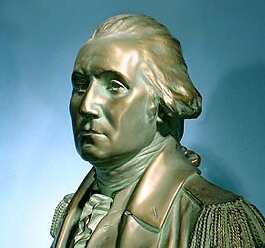
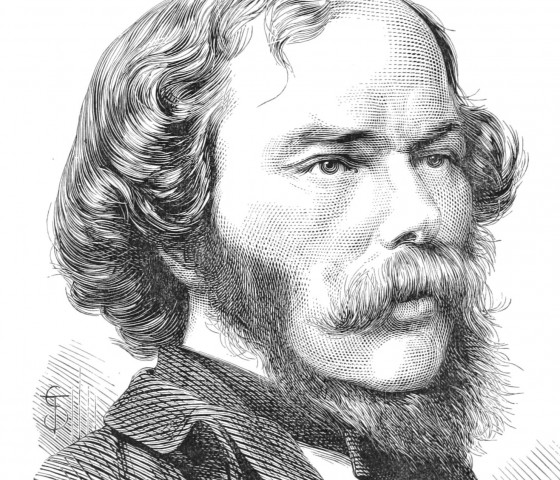
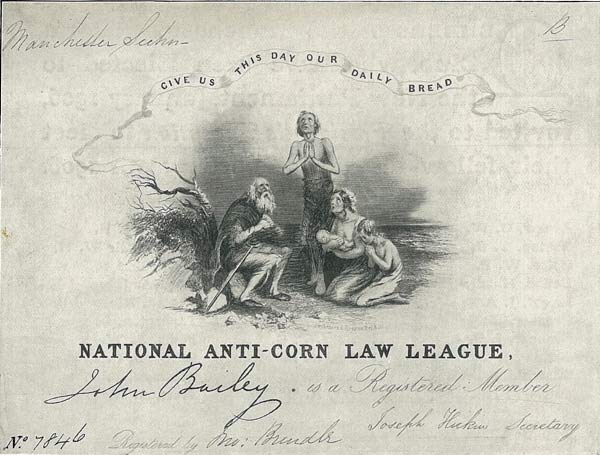
On August 28, 1833, the Slavery Abolition Act received Royal Assent, formally abolishing slavery throughout most the British Empire.
Slavery Abolished
On August 28, 1833, the Slavery Abolition Act received Royal Assent, formally abolishing slavery throughout most the British Empire.
Although scientific and technical progress change the world before our very eyes, it is, in fact, based on a very narrow social foundation. The more significant scientific successes become, the sharper will be the contrast between those who achieve and exploit them and the rest of the world. Soviet rockets have reached Venus, while in the village where I live potatoes are still dug by hand.
Andrei Amalrik, Will the Soviet Union Survive Until 1984?, 1970, p. 66.
An interesting challenge to the Green Party’s presidential candidate, and her expert response:
https://youtu.be/WbX7v246Ynk
On August 27, 1991, the European Community recognized the independence of the Baltic states of Estonia, Latvia and Lithuania, and Moldova after they had declared their independence from the USSR.
Among the calamities of war may be justly numbered the diminution of the love of truth, by the falsehoods which interest dictates and credulity encourages.
Dr. Johnson, The Idler, No. 30 (November 11, 1758).
Why is it that people never change their mind — until they do?
Douglass North, as quoted by Mike Munger on EconTalk, “Munger on Slavery and Racism,” August 22, 2016.
On August 26, 1920, the 19th amendment to United States Constitution took effect, giving women the right to vote in every state of the union.
Prior to the passage of this amendment, 15 states allowed women to vote. Most of them were west of the Mississippi. The territory of Wyoming was the first to extend voting rights to women in 1869.
Only humans can set aims and achieve them by their activities if they know the laws of nature and set up various processes based on them and organise them purposively.
Rein Vihalemm, “Chemistry as an Interesting Subject for the Philosophy of Science,” Estonian Studies in the History and Philosophy of Science, Rein Vihalemm, ed., Dordrecht / Boston / London: Kluwer Academic Publishers, 2001, p. 192.
On August 25, 1945, the Cold War began (some say) when, ten days after World War II ended with the Japanese surrender, armed supporters of the Chinese Communist Party killed Baptist missionary Capt. John Birch (1918-1845).
Every other sin hath some pleasure annexed to it, or will admit of an excuse; envy alone wants both. Other sins last but for awhile; the gut may be satisfied, anger remits, hatred hath an end, envy never ceaseth.
Robert Burton, The Anatomy of Melancholy, Part I, Section 2, member 3, subsection 7, Envy, Malice, Hatred, Causes (1621).
Image: Albrecht Dürer, Cain Killing Abel (1511), detail.