On March 25, 1965, civil rights activists led by Martin Luther King, Jr., successfully completed their four-day, 50-mile march from Selma to the capitol in Montgomery, Alabama.
Categories
From Selma to Montgomery
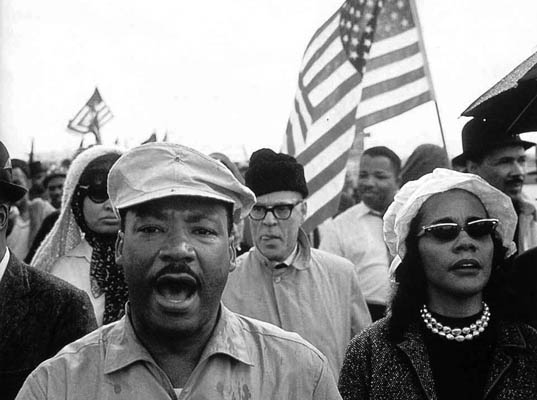
On March 25, 1965, civil rights activists led by Martin Luther King, Jr., successfully completed their four-day, 50-mile march from Selma to the capitol in Montgomery, Alabama.
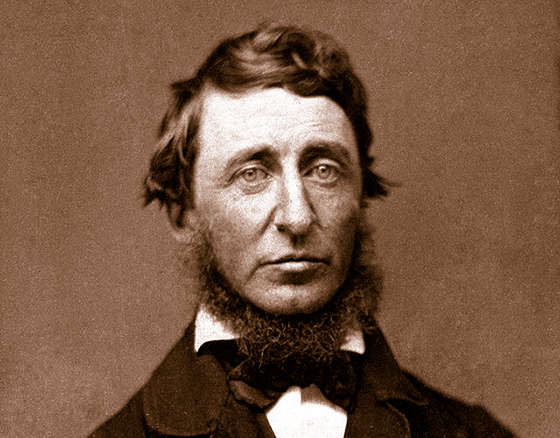
Some circumstantial evidence is very strong, as when you find a trout in the milk.
Henry David Thoreau, journal, Nov. 11, 1850, presumably playing off of rumors of dairymen diluting their product with water during a milk shortage.
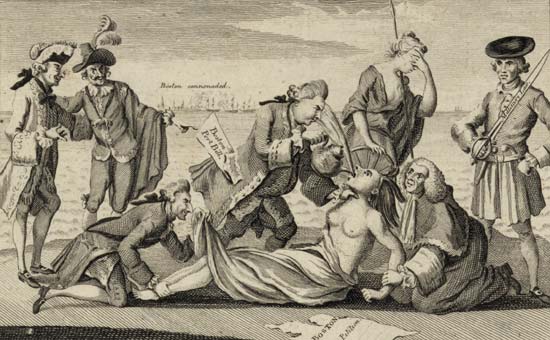
On March 24, 1765, the Kingdom of Great Britain passed the Quartering Act, which required the Thirteen Colonies to house British troops.
On the same date in 1855, slavery was abolished in Venezuela.
The Intolerable Acts (among which was the Quartering Act) was the American Patriots’ name for a series of punitive laws passed by the British Parliament in 1774 after the Boston Tea party. They were meant to punish the Massachusetts colonists for their defiance in throwing a large tea shipment into Boston harbor. In Great Britain, these laws were referred to as the Coercive Acts.
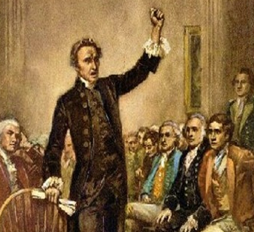
Suspicion is a virtue as long as its object is the public good, and as long as it stays within proper bounds. . . . Guard with jealous attention the public liberty. Suspect every one who approaches that jewel.
Patrick Henry, Virginia Ratifying Convention (June 5, 1788), speech regarding the Federal Constitution.
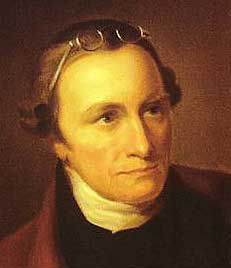
On March 23, 1775, Patrick Henry delivered his “Give me Liberty, or give me Death!” speech at St. John’s Church in Richmond, Virginia.
On this date in 1992, economist and social philosopher Friedrich August von Hayek died.

On March 22, 1630, the Massachusetts Bay Colony outlawed the possession of cards, dice, and gaming tables. Exactly eight years later, the colony expelled Anne Hutchinson for religious dissent.
In 1812 on this date, Stephen Pearl Andrews was born. Andrews would go on to become an important American abolitionist, free love advocate, and theorist of “individual sovereignty,” promulgating the reforms of Josiah Warren.
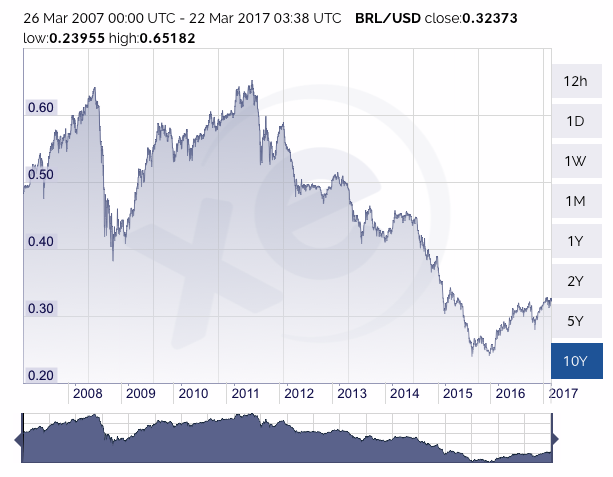
Today we are practically living a trade war, a currency war because the exchange rate today is one of the important factors to determine the competitiveness or not of products. Generalized currency depreciation in my view is an explicit strategy used by countries and that threatens us.
Guido Mantega, “The Role of Industry in the Growth of Brazil” organized by the Getulio Vargas Foundation, September 27, 2010. This statement from Brazil’s Finance Minister is eerily similar to statements made by folks around the world — about other countries’ monetary policies. Donald Trump bases his complaints against China on precisely these grounds. Pictured: the Brazilian Real against the U.S. Dollar from 2007 to 2017, courtesy xe.com.
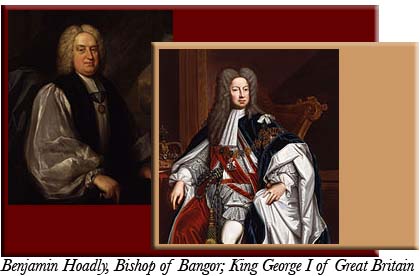
On March 31, 1717, a sermon on “The Nature of the Kingdom of Christ,” by Benjamin Hoadly, the Bishop of Bangor, provoked the Bangorian Controversy.
The sermon’s text was John 18:36, “My kingdom is not of this world,” and from that Hoadly deduced — supposedly at the request of King George I himself, who was present in the assembly — that there was no Biblical justification for any church government. Hoadly identified the church with the kingdom of Heaven, noting that Christ had not delegated His authority to any representative.
King George’s preference for the Whig Party, and for latitudinarianism in ecclesiastical policy, is widely thought to have been a strategic maneuver to degrade church power in political government.
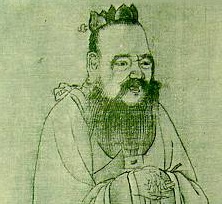
When a country is well governed, poverty and a mean condition are things to be ashamed of. When a country is ill governed, riches and honor are things to be ashamed of.
Master Kong, The Analects, eighth chapter.
On March 21, 1965, Dr. Martin Luther King, Jr. led 3,200 people on the start of the third and finally successful civil rights march from Selma to Montgomery, Alabama.
Nearly two decades earlier, the Twenty-second Amendment (Amendment XXII) of the United States Constitution, passed Congress. The date was March 21, 1947. The amendment, ratified on February 27, 1951, set a term limit for election and overall time of service to the office of President of the United States. This was an obvious reaction to the more than three terms in office of Franklin Delano Roosevelt.
The first section of the amendment reads as follows:
No person shall be elected to the office of the President more than twice, and no person who has held the office of President, or acted as President, for more than two years of a term to which some other person was elected President shall be elected to the office of the President more than once. But this Article shall not apply to any person holding the office of President, when this Article was proposed by the Congress, and shall not prevent any person who may be holding the office of President, or acting as President, during the term within which this Article becomes operative from holding the office of President or acting as President during the remainder of such term.