Categories
Today

Monroe Doctrine

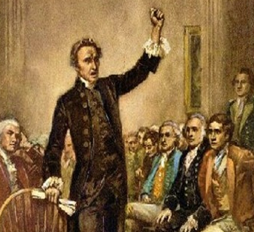
On December 2, 1823, U.S. President James Monroe delivered a speech establishing American neutrality in future European conflicts. The policy became known as the Monroe Doctrine.

Though a much-discussed principle of American foreign policy, it was undermined by the Spanish-American War, and proved a dead letter as the U. S. entered World War I.

Categories
Thought

James Madison

A popular government without popular information or the means of acquiring it is but a prologue to a farce or a tragedy, or perhaps both. Knowledge will forever govern ignorance: And a people who mean to be their own Governors, must arm themselves with the power which knowledge gives.

Categories
Thought

John Milton

Though all the winds of doctrine were let loose to play upon the earth, so Truth be in the field, we do injuriously, by licensing and prohibiting, to misdoubt her strength. Let her and Falsehood grapple; who ever knew Truth put to the worse, in a free and open encounter?


John Milton, Areopagitica; A speech of Mr. John Milton for the Liberty of Unlicenc’d Printing, to the Parlament of England (1644).

Categories
Today

The “Stolen Election”

On December 1, 1824, with neither John Quincy Adams nor Andrew Jackson receiving a majority of the total electoral college votes in the election, the United States House of Representatives was given the task of deciding the winner in accordance with the Twelfth Amendment to the United States Constitution.

The House selected Adams. Jackson and his supporters felt deeply aggrieved, and immediately set about preparing for the next election, which Jackson won handily. Jacksonian supporters referred to the election of 1824 as “the Stolen Election,” in no small part because Jackson had received more popular votes.

Categories
Today

Chase and Clemens

On November 30, 1804, the United States House of Representatives began impeachment hearings against Supreme Court Justice Samuel Chase. The House thought he was too partisan, too “Federalist.”

The Senate later acquitted Chase.

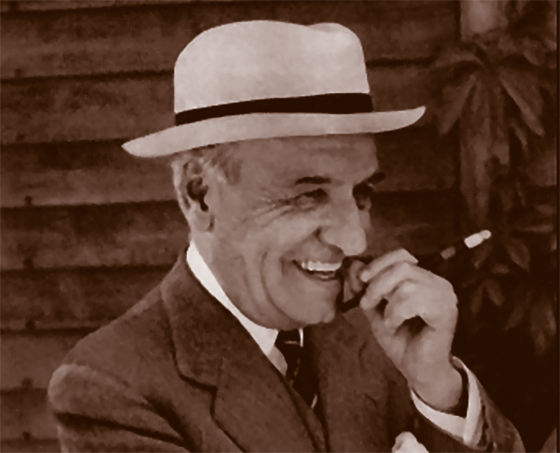
On 1835 on this date, Samuel Clemens was born, later to achieve world fame as author and humorist Mark Twain (pictured above). His most beloved books include The Adventures of Tom Sawyer (1876) and his masterpiece, Adventures of Huckleberry Finn (1885). He died in 1910.

Categories
Thought

Euripides

This is true liberty, when free-born men,
Having to advise the public, may speak free,
Which he who can, and will, deserves high praise;
Who neither can, nor will, may hold his peace:
What can be juster in a state than this?


Euripides, The Suppliant Women (c. 420-415 BC), as used by John Milton as epigraph to his Areopagitica (1644). A modern translation of this passage, and a few lines immediately preceding, by Frank William Jones, runs as follows:

Nothing . . .
Is worse for a city than an absolute ruler.
In earliest days, before the laws are common,
One man has power and makes the law his own:
Equality is not yet. With written laws,
People of small resources and the rich
Both have the same recourse to justice. Now
A man of means, if badly spoken of,
Will have no better standing than the weak;
And if the little man is right, he wins
Against the great. This is the call of freedom:
“what man has good advice to give the city,
And wishes to make it known?” He who responds
Gains glory; the reluctant hold their peace.
For the city, what can be more fair than that?

Categories
Today

C. S. Lewis

Irish-English medievalist, theologian, and novelist Clive Staples Lewis was born on November 29, 1898. Among his best known works are Out of the Silent Planet, The Problem of Pain, Miracles, and the “Narnia” fantasies for children. His retelling of the Psyche myth, Till We Have Faces, and political essays such as “The Humanitarian Theory of Punishment” and The Abolition of Man, will almost certainly stand the test of time.

Categories
Thought

John Milton

 . . . as good almost kill a Man as kill a good Book; who kills a Man kills a reasonable creature, Gods Image; but hee who destroyes a good Booke, kills reason it selfe, kills the Image of God, as it were in the eye. Many a man lives a burden to the Earth; but a good Booke is the pretious life-blood of a master spirit, imbalm’d and treasur’d up on purpose to a life beyond life.


John Milton, Areopagitica; A speech of Mr. John Milton for the Liberty of Unlicenc’d Printing, to the Parlament of England (1644).

Categories
Today

Henry Hazlitt

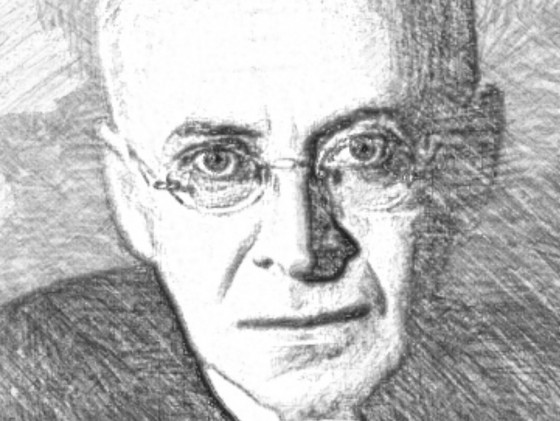
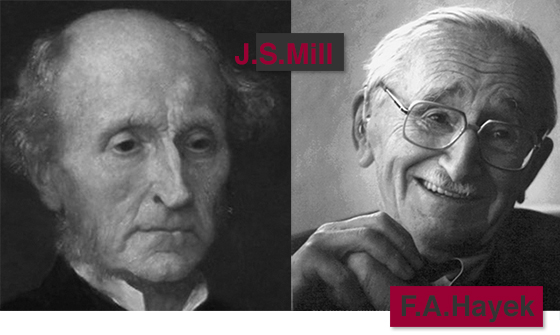
In 1894, on November 28, economics journalist Henry Hazlitt was born. Halitt went on to write Economics in One Lesson, Time Will Run Back, and several books criticizing Keynesianism. He was the main proponent of the work of Ludwig von Mises and F.A. Hayek in America during the 1940s and 1950s.

Exactly one year earlier, women voted in a national election for the first time . . . in New Zealand. On the same date in 1917, the Estonian Provincial Assembly declared itself the sovereign power of Estonia. November 28 also marks the independence of Mauritania from France (1960), and East Timor from Portugal.

Categories
Thought

C. S. Lewis

Since it is so likely that children will meet cruel enemies, let them at least have heard of brave knights and heroic courage.


C. S. Lewis, On Stories: And Other Essays on Literature (1966).