Categories
Today

Passy, Dunant and Huck

On December 10, 1884, Mark Twain’s Adventures of Huckleberry Finn was first published. This novel, narrated in the first person by the title character, is a dark comedy of the antebellum South and slavery, and has been considered by many American critics and writers to qualify as the “Great American Novel.”

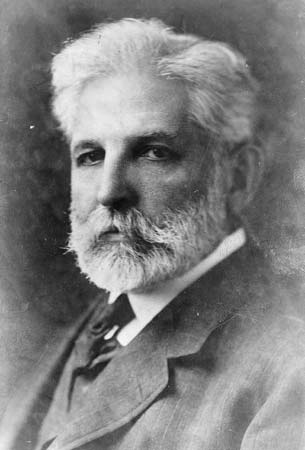
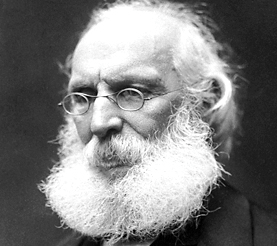
On this date in 1901, the first Nobel Peace Prizes were awarded — to economist Frédéric Passy (pictured above), co-founder of the Inter-Parliamentary Union; and to Henry Dunant the founder of the International Committee of the Red Cross.

Passy was an admirer of Richard Cobden and an active member in the French Liberal School of Political Economy that developed in the tradition of J.B. Say, Destutt de Tracy, and Frédéric Bastiat. His published works include Leçons d’économie politique (1860-61); La Démocratie et l’Instruction (1864); L’Histoire du Travail (1873); Malthus et sa Doctrine (1868); and La Solidarité du Travail et du Capital (1875).

Categories
video

Bitcoin — whew!

The cyber/crypto currency Bitcoin has been going through downs and ups, recently. This discussion from a few weeks ago might help unpack some of the issues:

Categories
Thought

Baruch Spinoza

Be not astonished at new ideas; for it is well known to you that a thing does not therefore cease to be true because it is not accepted by many.

Categories
Today

Mutual Aid & the Areopagitica

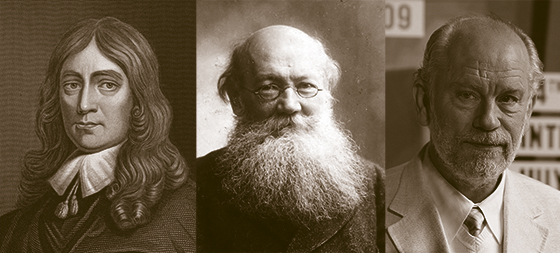
On December 9, 1958, the John Birch Society was founded in the United States. December 9 also marks the birthdays of

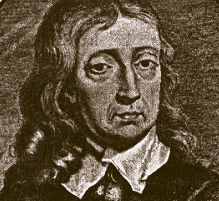
  • Poet and anti-censorship advocate John Milton (1608), author of the masterpiece of blank verse narrative, Paradise Lost (1667) and a classic prose defense of free speech and the press, Areopagitica (1644).
  • Russian prince and anarchist theoretician Peter Kropotkin (1842), author of Mutual Aid and other books and pamphlets.
  • John Malkovich (1953), who directed The Dancer Upstairs (2002) and starred in the odd eponymous film Being John Malkovich (1999) . . . and many other movies.
Categories
Thought

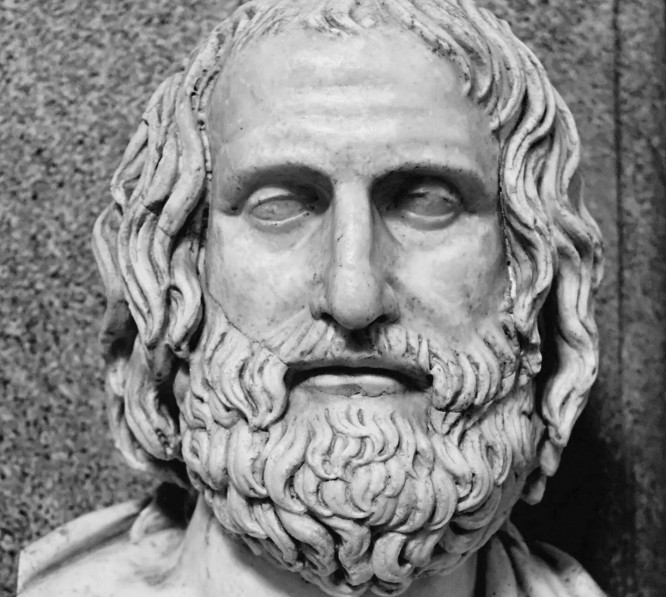
Euripides

This is true liberty, when free-born men,
Having to advise the public, may speak free,
Which he who can, and will, deserves high praise;
Who neither can, nor will, may hold his peace:
What can be juster in a state than this?


Euripides, The Suppliant Women (c. 420-415 BC), as used by John Milton as epigraph to his Areopagitica (1644). A modern translation of this passage, and a few lines immediately preceding, by Frank William Jones, runs as follows:

Nothing . . .
Is worse for a city than an absolute ruler.
In earliest days, before the laws are common,
One man has power and makes the law his own:
Equality is not yet. With written laws,
People of small resources and the rich
Both have the same recourse to justice. Now
A man of means, if badly spoken of,
Will have no better standing than the weak;
And if the little man is right, he wins
Against the great. This is the call of freedom:
“what man has good advice to give the city,
And wishes to make it known?” He who responds
Gains glory; the reluctant hold their peace.
For the city, what can be more fair than that?

Categories
Today

The Brookings

On December 8, 1927, one of the United States’ oldest think tanks was founded through the merger of three organizations that had been created by philanthropist Robert S. Brookings. Called the Brookings Institution, it would provide a blueprint for future work by research and advocacy organizations in the modern era.

On this date in 1974, a plebiscite abolished the monarchy in Greece.

Categories
Thought

John Milton

He who reigns within himself and rules passions, desires, and fears is more than a king.

Categories
Today

Maj. Gen. Lafayette

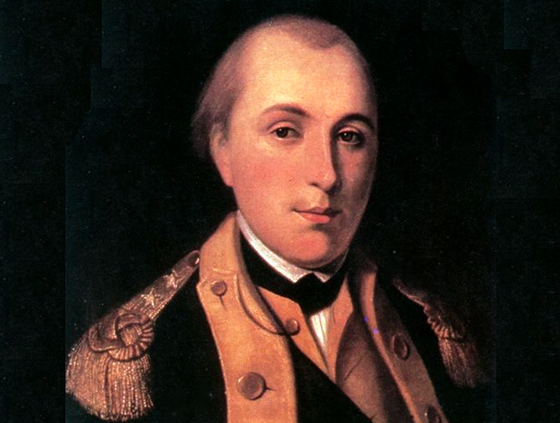
On December 7, 1776, the Marquis de Lafayette arranged to enter the American military as a major general. On the same date in 1787, Delaware became the first state to ratify the United States Constitution.

The 1941 date marks, of course, “the day that will live in infamy,” when Japan bombed Pearl Harbor.

Categories
Thought

Vladimir Nabokov

Literature was not born the day when a boy crying ‘wolf, wolf’ came running out of the Neanderthal valley with a big gray wolf at his heels; literature was born on the day when a boy came crying ‘wolf, wolf’ and there was no wolf behind him.

Vladimir Nabokov, Lectures on Literature (1980).
Categories
Today

Slavery, Finland, Lolita

On December 6, 1865, the Thirteenth Amendment to the United States Constitution was ratified, banning slavery in all states and territories. One-hundred-and-nineteen years later, to the day, in 1984, Paul Jacob (of ThisIsCommonSense.com, LibertyiFund.org, and the Citizens in Charge Foundation) was arrested by the FBI for his refusal to register with Selective Service System (the draft people). The Government was probably not attempting to make a commemorative point about involuntary servitude.

In 1917 on this date, Finland declared independence from Russia.

Vladimir Nabokov completed his controversial novel Lolita on the Sixth of December in 1953, and would soon find himself embroiled in censorship and related publishing difficulties, though with no trouble in the United States when it was eventually published by G. P. Putnam’s Sons in 1958.