Categories
links

Townhall: The ‘Victory Problem’ in Afghanistan

Where is there an end to it? Time to rethink. Begin at Townhall, then come back here.


Yahoo News: Trump faces a ‘victory problem’ in Afghanistan

Newsweek: Panetta’s Memoir Blasts Obama on His Leadership, Blames Him for State of Iraq and Syria

Donald J. Trump Tweet (2013): “Let’s get out of Afghanistan”

Donald J. Trump on YouTube (2016): Get out of Afghanistan

https://youtu.be/Z-41lk435WY

CNN: Gary Johnson – Get out of Afghanistan

Washington Post: Leon Panetta: Obama has ‘lost his way,’ created ‘vacuum’ for Islamic State

http://dailycaller.com/2017/05/08/taliban-controls-one-third-of-afghan-population-as-trump-considers-sending-more-troops/

Military Times: A timeline of U.S. troop levels in Afghanistan since 2001

MSNBC: On Assignment with Richard Engel about Iraq


Categories
Thought

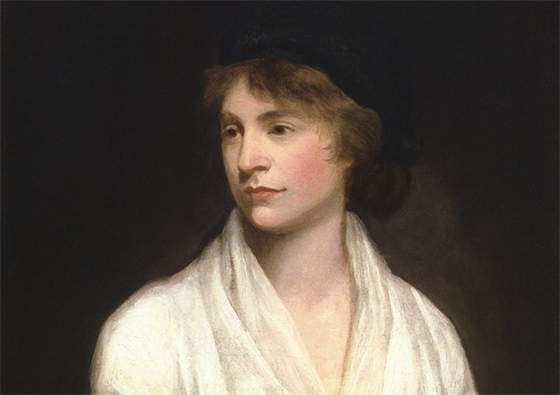
Sarah Grimké

Had Adam tenderly reproved his wife, and endeavored to lead her to repentance instead of sharing in her guilt, I should be much more ready to accord to man that superiority which he claims; but as the facts stand disclosed by the sacred historian, it appears to me that to say the least, there was as much weakness exhibited by Adam as by Eve. They both fell from innocence, and consequently from happiness, but not from equality.

Categories
Today

Ethiopia

On July 16, 1931, Ethiopia’s Emperor Haille Selassie I signed a new Constitution. Not exactly a model of limited government, the new document proved that the emperor was in keeping with the time, which was a period of weakening constitutional limits in America, Europe, and Britain. A flavor of the document can be gained by its most “rights-oriented” measures:

Art. 22. Within the limits laid down by the law, Ethiopian subjects have the right to pass freely from one place to the other.
Art. 23. No Ethiopian subject may be arrested, sentenced, or imprisoned except in pursuance of the law.
Art. 24. No Ethiopian subject may, against his will, be deprived of his right to be tried by a legally established court.
Art. 25. Except in cases provided for by law, no domiciliary searches may be made.
Art. 26. Except in cases provided by the law, no one shall have the right to violate the secrecy of the correspondence of Ethiopian subjects.
Art. 27. Except in cases of public necessity determined by the law, no one shall have the right to deprive an Ethiopian subject of any movable or landed property which he owns.Art. 28. All Ethiopian subjects have the right to present to the Government petitions in legal form.
Art. 29. The provisions of the present chapter shall in no way limit the measures which the Emperor, by virtue of his supreme power, may take in the event of war or public misfortunes menacing the interests of the nation.

Categories
video

Game of Bones

Tucker Carlson doesn’t like being called a Hitler sympathizer for showing some skepticism about neoconservative plans to engage with bad guys everywhere while demonizing Russia. Make no bones about it!

http://youtu.be/rpJZh92hsaY

The humorists over at Reason TV look at bad foreign and domestic policy without jesting using the argumentum ad Hitlerum. They go all the way to referencing House Lannister! (NSFW)

Categories
Today

“Malaise”

On July 15, 1976, Jimmy Carter accepted the nomination of the Democratic Party to run for the presidency.

Three years later, as president, he gave his infamous “malaise” speech, in which he focused on energy but did not mention the one thing that actually helped turn the ’70s’ energy crisis around: the phased deregulation of oil prices that had started three months earlier, under his own directive. Instead of touting this deregulatory effort, Carter did the usual politic thing and promised a number of new government programs, extensively ground home a “crisis of confidence” message, and vaguely talked of a spiritual challenge.

The deregulation was startlingly effective, in the long run — though the immediate effect was a rocketing of prices. These high prices presented profit opportunities, and (lo and behold!) domestic production greatly increased, allowing for many, many years of lower prices. Those high prices would have worked better as market signals had not Carter and Congress also established “windfall profits” taxes, to take away those temporary gains to existing business.

Had Carter deregulated prices earlier, he would probably have been re-elected president. Had he emphasized deregulation, he probably would have beat back Ronald Reagan’s free market rhetoric — with actual action.

The price controls had been put in place earlier in the decade by the Republican president at the time, Richard M. Nixon, with the great help of his aides Dick Cheney and Donald Rumsfeld.

Categories
Thought

Arthur Kenyon Rogers

“Anything whatever can be made ridiculous; to see this side of it, and nothing more, is to become the mere jester, whose claim to be regarded as the ideal moralist is certainly very slight. But between a too solemn sense of high importance, and that conviction of the intrinsic smallness of everything in particular which some of our satirists have displayed, there is a middle ground.”


Arthur Kenyon Rogers, The Theory of Ethics (New York: The Macmillan Company, 1922).

Categories
Today

The Bastille

On July 14, 1789, Paris citizens stormed the Bastille. On the same date nine years later, in America, the Sedition Act prohibited the writing, publishing, or speaking false or malicious statements about the United States government.

The passage of this repressive law spurred the formation of the first opposition party in the United States, with Thomas Jefferson [above] as its leader and figurehead.

Categories
Thought

Will Rogers

Ancient Rome declined because it had a Senate; now what’s going to happen to us with both a Senate and a House?

Categories
Thought

Arthur Kenyon Rogers

“There is no real paradox in the claim that satisfaction is open only to the man who stands prepared to give up pleasures. This only means, again, that satisfaction as a human goal is not an abstract ideal of limitless good, but presupposes a determinate human nature set to work out its destiny in determinate surroundings. That at which a sensible, human being aims is no unimaginable state of the intensest possible pleasure unaccompanied by pain, but the realization that he is making the very most of life that it is possible for him, with his particular interests and limitations, to make, considering the means at his disposal. If one is not willing to accept these qualifications, he is not yet prepared to set out intelligently to secure satisfaction.”


Arthur Kenyon Rogers, The Theory of Ethics (New York: The Macmillan Company, 1922).

Categories
Today

The Nixon Tapes

On July 13, 1973, the minority (Republican) counsel on the Senate Watergate investigative committee, Donald Sanders, asked Nixon aide Alexander Butterfield if he knew of any recordings made in the Nixon White House, and Butterfield responded, “everything was taped” at least while Nixon was in attendance, and that “there was not so much as a hint that something should not be taped.”

This revelation of the Nixon Tapes transformed the Watergate scandal into a major legal as well as political event, and proved to be one of the most astounding examples of “government transparency” in modern times — indeed, it helped demystify and desanctify the Office of the Presidency, a very republican (if not pro-Republican Party) development.