Categories
Today

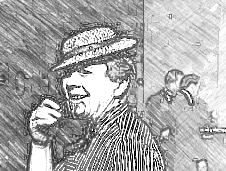
Will Rogers

On November 4, 1879, American humorist Will Rogers was born. Aside from his cowboy act, and his work as an actor in Hollywood, he gained much fame for being a topical comedian “just reporting what’s in the papers.” Among his most famous quips? “Be thankful we’re not getting all the government we’re paying for.”

Categories
Today

Army Disbands

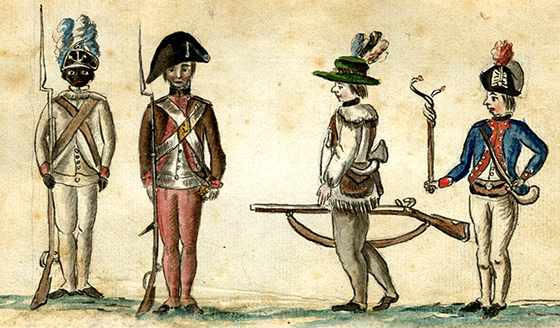
On November 3, 1783, the American Continental Army — its mission fulfilled — was disbanded.

On November 3, 1969, U.S. President Richard M. Nixon made a television and radio appearance, asking the “silent majority” to join him in solidarity on the Vietnam War effort.

Categories
Thought

Arthur Kenyon Rogers

“Anything whatever can be made ridiculous; to see this side of it, and nothing more, is to become the mere jester, whose claim to be regarded as the ideal moralist is certainly very slight. But between a too solemn sense of high importance, and that conviction of the intrinsic smallness of everything in particular which some of our satirists have displayed, there is a middle ground.”


Arthur Kenyon Rogers, The Theory of Ethics (New York: The Macmillan Company, 1922).

Categories
Today

Committee of Correspondence

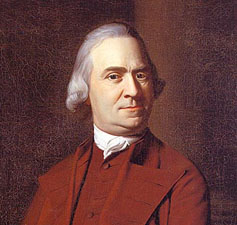
On November 2, 1772, Samuel Adams (pictured) and Joseph Warren formed the first Committee of Correspondence, which were instrumental in preparing the colonies from their 1776 breakaway from the British Empire of George III.

Categories
Thought

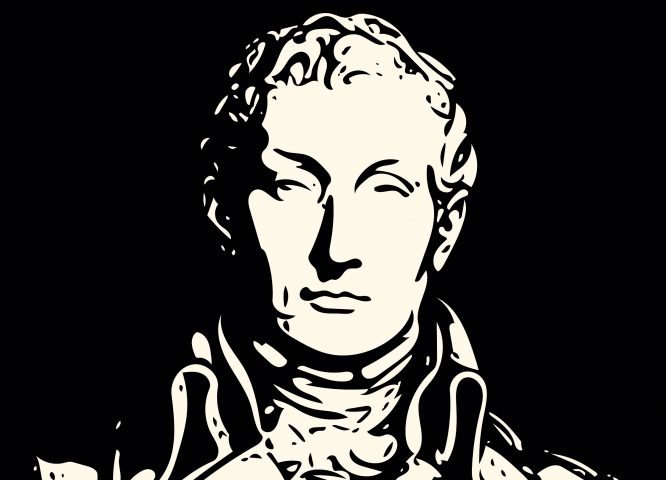
Comte de Volney

Politics is like the human body, beautiful when viewed from the outside, but if you open it up and look inside, it’s disgusting.

C.-F. Volney, as quoted by Thomas C. Williams, author of English-Turn: The Ruins of Empires.
Categories
Today

The French Revolution

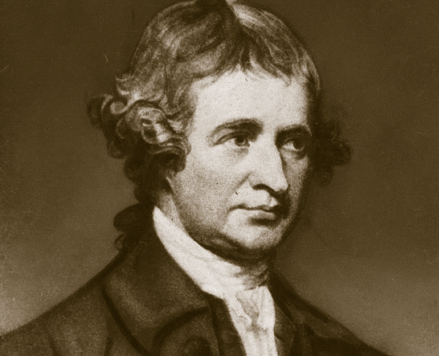
On November 1, 1790, Edmund Burke published his Reflections on the Revolution in France, predicting that the French Revolution would end in disaster. Though many have disputed his premises and reasoning, few dispute his prophecy, which proved spot on.

Categories
Today

Second Congress of the Confederation

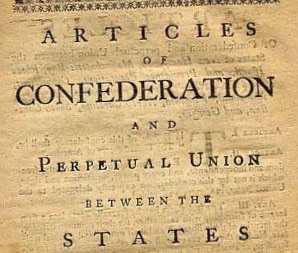
On November 5, 1781, the second session of the United States in Congress Assembled began, in Philadelphia, Pennsylvania. This “Second Confederation Congress,” as it is popularly known, ended on November 2, 1782.

And on that Fifth of November, 1781, John Hanson of Maryland was elected to serve as president of the United States in Congress Assembled. He would become the first president of Congress to serve a full one-year term as specified under the Articles of Confederation, for the second session of the Confederation Congress. Of course, this presidency was nothing like the presidencies under the Constitution. Hanson merely presided over Congress.


On November 5, 1872, Susan B. Anthony defied the law to vote, and was later fined $100.
Categories
Today

Halloween

Ireland, Canada, United Kingdom, United States and other nations celebrate Halloween on October 31.

The word Halloween or Hallowe’en dates to about 1745 and is of Christian origin, meaning “hallowed evening” or “holy evening.” It comes from a Scottish term for All Hallows’ Eve (the evening before All Hallows’ Day). In Scots, the word “eve” is “even,” and this is contracted to “e’en” or “een.” Over time, (All) Hallow(s) E(v)en shortened into Halloween.

It is one of those darker-themed celebrations, often conjuring up images of death and horror. As if in keeping with this theme, Josef Stalin’s body was removed from Lenin’s Tomb on October 31, 1961.

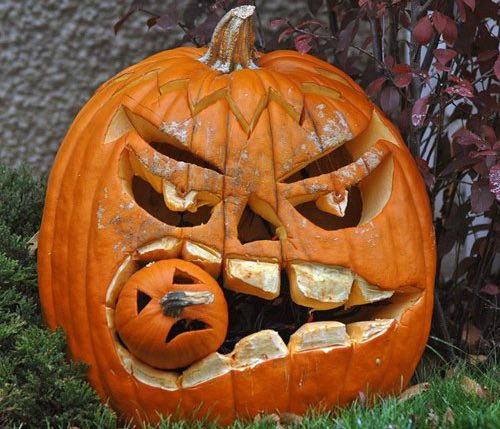
N.B. The carving of pumpkins into mock-horrific faces is an old tradition. This Jack-o’-Lantern photo is taken from Dose of Funny.

Categories
Thought

Wendy McElroy

Freedom means self-fulfillment. It also means putting up with others’ irritating pursuit of the same. It means being confronted with disturbing images and ideas.

Categories
Thought

Isabel Paterson

Nothing increases the number of jobs so rapidly as labor-saving machinery, because it releases wants theretofore unknown, by permitting leisure.


Isabel Paterson, The God of the Machine (1943)