Talking with most people usually involves a search for truth. Talking with congressmen is strictly special effects.
Jack McDevitt, Odyssey (2006), Chapter 5.

Talking with most people usually involves a search for truth. Talking with congressmen is strictly special effects.
Jack McDevitt, Odyssey (2006), Chapter 5.
On December 28, 1797, Thomas Paine was arrested in France for treason, after being tried in absentia on December 26 and convicted. Before moving to France, Paine had been an instrumental figure in the American Revolution as the author of Common Sense. Paine then moved to Paris to become involved with the French Revolution, but the chaotic political climate turned against him. Paine had not earned friends in the Revolution with his vocal opposition to capital punishment.
“During the whole of my imprisonment,” Paine later wrote, “prior to the fall of Robespierre, there was no time when I could think my life worth twenty-four hours, and my mind was made up to meet its fate. The Americans in Paris went in a body to the convention to reclaim me, but without success.”
Paine’s imprisonment in France caused a general uproar in America. Future President James Monroe used all of his diplomatic connections to get Paine released in November 1794.
With the publication of Paine’s The Age of Reason — a great part of which he wrote in French prison — the American population turned against him,and he died penniless in New York in 1809.
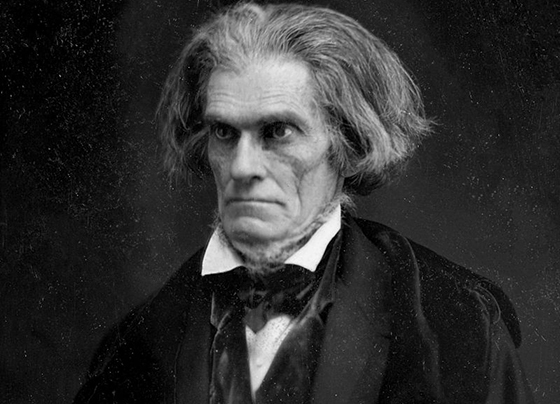
On this date in 1832, John C. Calhoun (pictured above, in his most famous but hardly most becoming portrait) resigned as Vice President of the United States, the first to do so.
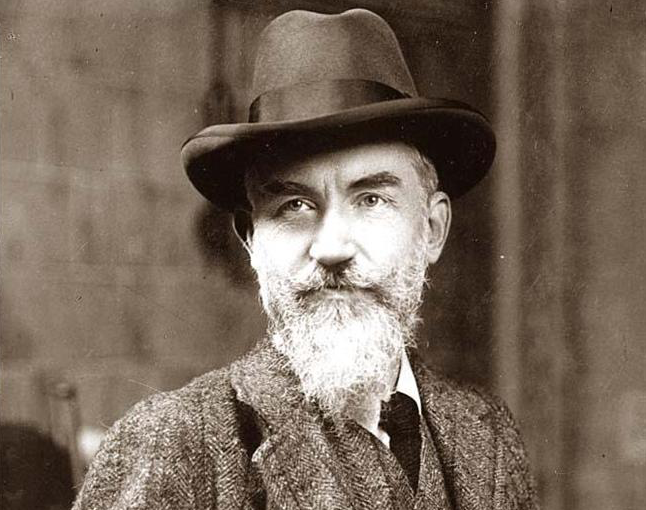
A government which robs Peter to pay Paul, can always count on the support of Paul.
Political freedom means the absence of coercion of a man by his fellow men. The fundamental threat to freedom is power to coerce, be it in the hands of a monarch, a dictator, an oligarchy, or a momentary majority. The preservation of freedom requires the elimination of such concentration of power to the fullest possible extent and the dispersal and distribution of whatever power cannot be eliminated — a system of checks and balances.
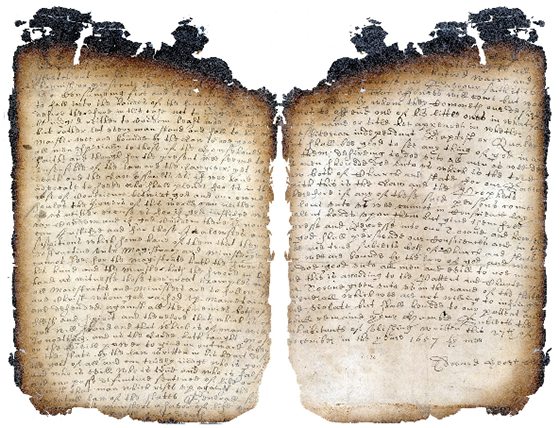
On December 27, 1657, a group of English citizens in Flushing, New York, who were not themselves Quakers, signed a petition protesting the persecution of Quakers, a document that has become known as the Flushing Remonstrance. An eloquent statement of the principle of religious liberty, it is widely regarded as a forerunner to the U.S. Constitution’s First Amendment.
The petition was delivered to Director-General of New Netherlands, Peter Stuyvesant.
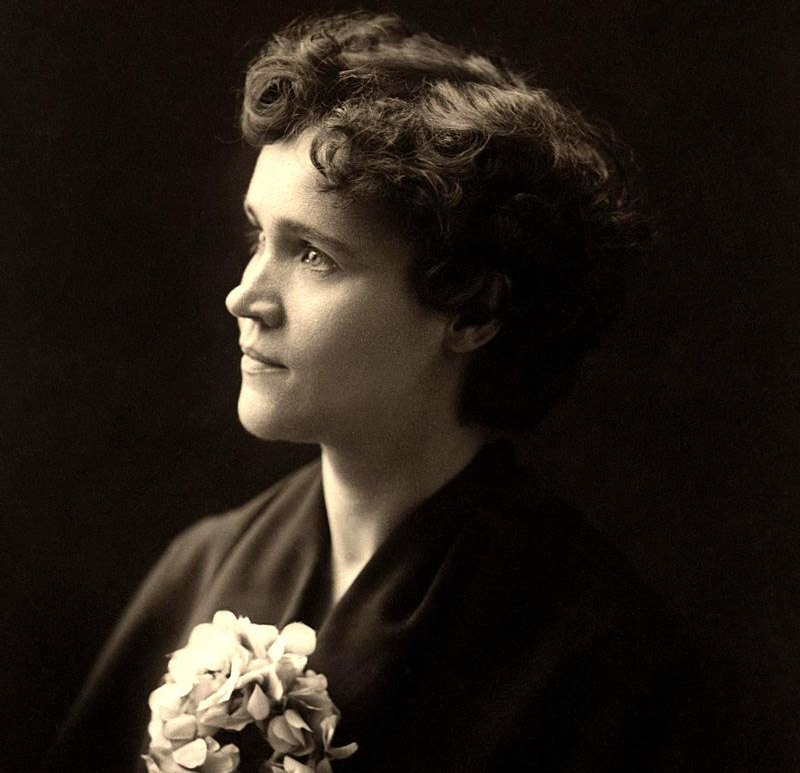
A great ethical teacher once wrote words like unto these: ‘I have within me the capacity for every crime.’
Few, reading them, believe that he meant what he said. Most take it as the sententious utterance of one who, in an abandonment of generosity, wished to say something large and leveling. But I think he meant exactly what he said. I think that with all his purity Emerson had within him the turbid stream of passion and desire; for all his hard-cut granite features he knew the instincts of the weakling and the slave; and for all the sweetness, the tenderness, and the nobility of his nature, he had the tiger and the jackal in his soul. I think that within every bit of human flesh and spirit that has ever crossed the enigma bridge of life, from the prehistoric racial morning until now, all crime and all virtue were germinal. Out of one great soul-stuff are we sprung, you and I and all of us; and if in you the virtue has grown and not the vice, do not therefore conclude that you are essentially different from him whom you have helped to put in stripes and behind bars. Your balance may be more even, you may be mixed in smaller proportions altogether, or the outside temptation has not come upon you.
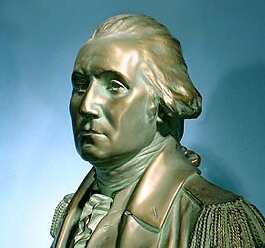
On December 26, 1799, four thousand people attended George Washington’s funeral where Henry Lee III honored him as ”first in war, first in peace and first in the hearts of his countrymen.”
The Decembrist revolt againt Tsar Nicholas I occurred on the 26th of December in 1825. It was, alas, put down. Later revolts would prove less liberty-minded, more communist, and far bloodier.
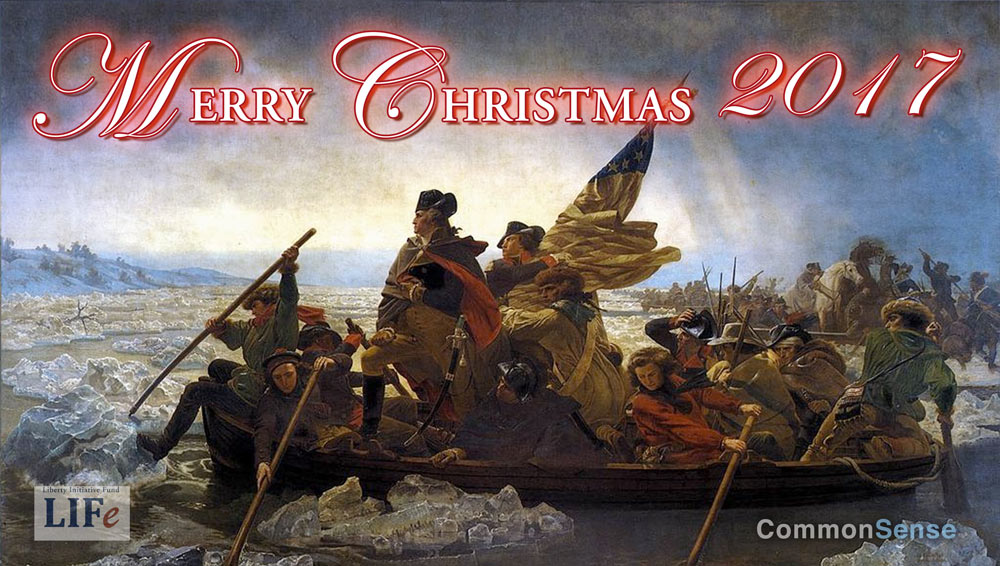
In addition to the religious significance of Christmas, Americans share an excellent historical reason to celebrate this day.
In January of 1776, Thomas Paine published his smash hit, “Common Sense.” This pamphlet galvanized public opinion in favor of the American Revolution, which had begun the previous year at Lexington and Concord with the shot heard ’round the world.
That July, the Declaration of Independence was written, signed and proclaimed to the new nation by the Continental Congress.
But by December of the same year, the prospects for the American cause were looking bleak.
British forces, along with their mercenary Hessian reinforcements, had manhandled the Continental Army. Gen. George Washington’s troops were routed at Long Island, pushed out of Manhattan, forced to retreat across the Hudson to New Jersey, and then run out of Jersey across the Delaware River to Pennsylvania “exhausted, demoralized and uncertain of [their] future.”
Soon, the British believed, the American revolt would be extinguished.
“To compound Washington’s problems,” recounts the EyeWitnesstoHistory.com website, “the enlistments of the majority of the militias under his command were due to expire at the end of the month and the troops return to their homes.”
Yet, on Christmas night, Washington marshaled his ragtag soldiers and crossed the icy Delaware, marching his men nine miles to Trenton. In the wee hours of the morning on Dec. 26, the Continentals attacked, catching more than 1,000 Hessian soldiers by surprise and taking nearly all of them captive.
In strictly military terms, the victory was not terribly significant. But in terms of American morale, as well as the perception of important potential allies such as France, the win was an absolutely perfect Christmas gift to the new Republic.
Our Republic, dedicated to liberty and justice for all, continues to this day.
And today, you and I are left to defend it — just like the barefoot minutemen who walked through the snow to face the most powerful military force of their world.
Merry Christmas, America!

On Christmas Day in 1991, Mikhail Gorbachev resigned as president of the Soviet Union. Ukraine’s referendum was also finalized and Ukraine officially left the Soviet Union.
The Soviet Union itself dissolved the next day, in what might be described as the “best belated Christmas present ever.”
On December 25, 1910, economist Rose Director Friedman was born. She may be best known as the wife of Nobel Laureate economist Milton Friedman, and co-author with her husband of the bestseller Free to Choose.
There are four ways in which you can spend money. You can spend your own money on yourself. When you do that, why then you really watch out what you’re doing, and you try to get the most for your money. Then you can spend your own money on somebody else. For example, I buy a birthday present for someone. Well, then I’m not so careful about the content of the present, but I’m very careful about the cost. Then, I can spend somebody else’s money on myself. And if I spend somebody else’s money on myself, then I’m sure going to have a good lunch! Finally, I can spend somebody else’s money on somebody else. And if I spend somebody else’s money on somebody else, I’m not concerned about how much it is, and I’m not concerned about what I get. And that’s government. And that’s close to 40 percent of our national income.