Categories
Today

Ballet & Political Economy

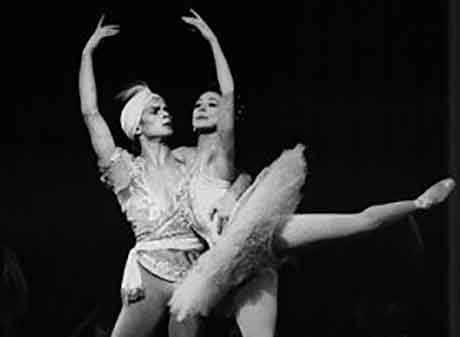
On June 16, 1961, dancer Rudolf Nureyev defected from the Soviet Union.

The great Scottish moral philosopher, political economy pioneer, and Enlightenment intelectual Adam Smith (1723-1790), best known for authoring the 1776 masterwork The Wealth of Nations, was born on June 16.

Categories
Today

Pig War!

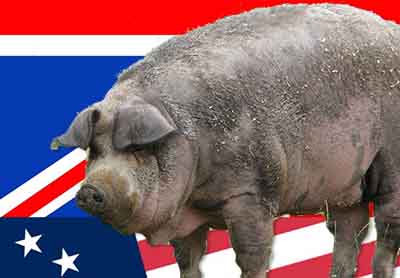
The Oregon Treaty, signed June 15, 1846, established the boundary between Great Britain’s Canadian territory and the United States of America, from the Rocky Mountains to the Strait of Juan de Fuca, using the 49th Parallel as the handy marker. However, the treaty was not exactly clear on the territorial status of the San Juan Islands, so exactly 13 years later, to the day, a war erupted . . . over a shot pig.

An American farmer shot a pig rooting through his garden. The pig belonged to an Irishman. The two did not agree upon compensation, and “the authorities” were called in, with infantry mustering from the south and the Governor of Vancouver Island instructing marines to land on San Juan Island — though the rear admiral in charge refused to comply with the order, on the reasonable grounds that war over a pig was not worth it. Local troops from both sides lined up against each other, but under command to defend themselves only and not shoot first. All that was exchanged in this war were insults. It turned out to be a bloodless war, discounting the pig, so it might qualify as the best war in American history.


On June 15, 1992, Vice President Dan Quayle incorrectly added an “e” to the end of a Trenton, N.J., sixth grader’s correctly spelled “potato.”

Categories
Thought

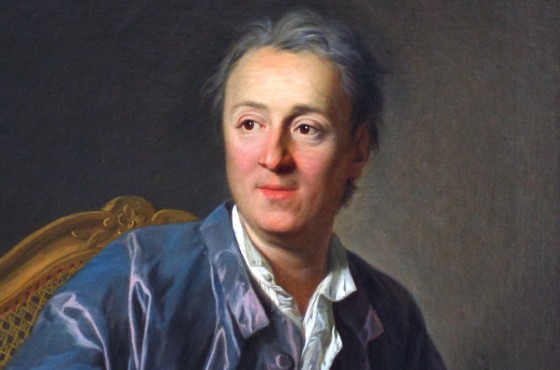
Denis Diderot

Beware of the man who wants to set things in order. Setting things in order always involves acquiring mastery over others — by tying them hand and foot.

Denis Diderot, as translated by Derek Coleman, in Diderot’s Selected Writings (1966).
Categories
Thought

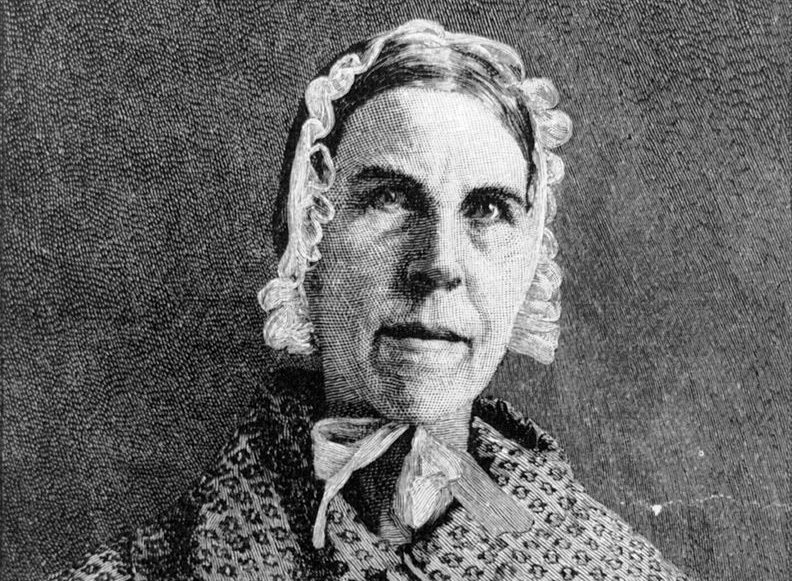
Sarah M. Grimké

The system of slavery is necessarily cruel. The lust of dominion inevitably produces hardness of heart, because the state of mind which craves unlimited power, such as slavery confers, involves a desire to use that power, and although I know there are exceptions to the exercise of barbarity on the bodies of slaves, I maintain that there can be no exceptions to the exercise of the most soul-withering cruelty on the minds of the enslaved. All around is the mighty ruin of intellect, the appalling spectacle of the down-trodden image of God.


Sarah M. Grimké, from An Epistle to the Clergy of the Southern States, New-York, 12th Mo. 1836.

Categories
Today

Stars and Stripes

On June 14, 1777, U.S. Congress adopted the Stars and Stripes as the United States Flag.

Categories
Thought

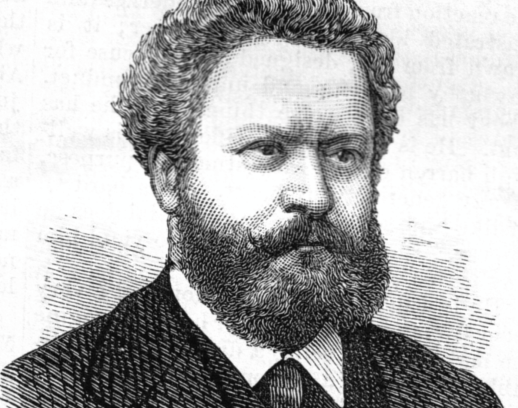
Edmond About

Each of us enters at birth into the heritage of a sovereignty which renders his person inviolable. In principle, if not in fact, we are all equal, because we all share the same august character. We are all free-born in this sense, that no one has a title to subject another to his will by force.


Edmond About, Handbook of Social Economy; or, The Worker’s A B C, (New York: D. Appleton & Co., translated from the final French edition, 1873), p. 3.

Categories
Today

Anti-slavery

On June 13, 1774, Rhode Island became the first British colony in the Americas to prohibit the importation of slaves.

Categories
Thought

Denis Diderot

No man has received from nature the right to give orders to others. Freedom is a gift from heaven, and every individual of the same species has the right to enjoy it as soon as he is in enjoyment of his reason.


Denis Diderot, Article on Political Authority, Vol. 1, (1751) as quoted in Selected Writings (1966) edited by Lester G. Crocker.

Categories
Today

Rights

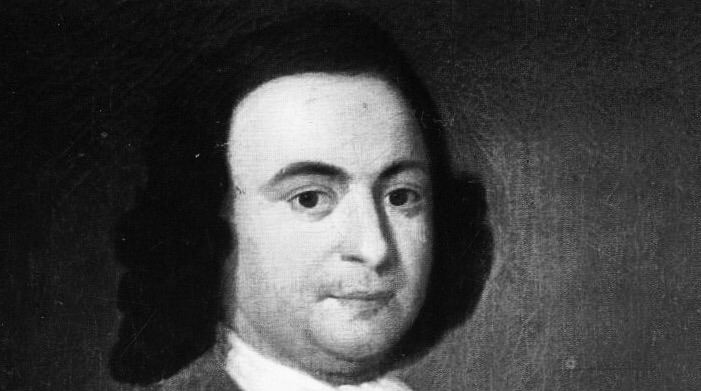
In 1776, on June 12, the Fifth Virginia Convention at Williamsburg, Virginia, unanimously adopted a Declaration of Rights, several weeks prior to the adoption of the state’s constitution. George Mason (pictured above), who drafted the document, stated clearly in the preamble that rights must be “the basis and foundation of Government.”

The first four planks run as follows:

I. That all men are by nature equally free and independent, and have certain inherent rights, of which, when they enter into a state of society, they cannot, by any compact, deprive or divest their posterity; namely, the enjoyment of life and liberty, with the means of acquiring and possessing property, and pursuing and obtaining happiness and safety.

II. That all power is vested in, and consequently derived from, the people; that magistrates are their trustees and servants, and at all times amenable to them.

III. That government is, or ought to be, instituted for the common benefit, protection, and security of the people, nation or community; of all the various modes and forms of government that is best, which is capable of producing the greatest degree of happiness and safety and is most effectually secured against the danger of maladministration; and that, whenever any government shall be found inadequate or contrary to these purposes, a majority of the community hath an indubitable, unalienable, and indefeasible right to reform, alter or abolish it, in such manner as shall be judged most conducive to the public weal.

IV. That no man, or set of men, are entitled to exclusive or separate emoluments or privileges from the community, but in consideration of public services; which, not being descendible, neither ought the offices of magistrate, legislator, or judge be hereditary.
Categories
Common Sense

George Mason

Introduced by George Mason at the Virginia Convention in the Capitol in Williamsburg.
Unanimously adopted June 12, 1776:

A DECLARATION OF RIGHTS made by the representatives of the good people of Virginia, assembled in full and free Convention, which rights do pertain to them, and their posterity, as the basis and foundation of government.

  1. THAT all men are by nature equally free and independent, and have certain inherent rights, of which, when they enter into a state of society, they cannot, by any compact, deprive or divest their posterity; namely, the enjoyment of life and liberty, with the means of acquiring and possessing property, and pursuing and obtaining happiness and safety.
  2. That all power is vested in, and consequently derived from, the people; that magistrates are their trustees and servants, and at all times amenable to them.
  3. That government is, or ought to be, instituted for the common benefit, protection, and security, of the people, nation, or community; of all the various modes and forms of government that is best, which is capable of producing the greatest degree of happiness and safety, and is most effectually secured against the danger of mal-administration; and that whenever any government shall be found inadequate or contrary to these purposes, a majority of the community hath an indubitable, unalienable, and indefeasible right, to reform, alter, or abolish it, in such manner as shall be judged most conducive to the publick weal.
  4. That no man, or set of men, are entitled to exclusive or separate emoluments or privileges from the community, but in consideration of publick services; which, not being descendible, neither ought the offices of magistrate, legislator, or judge, to be hereditary.
  5. That the legislative and executive powers of the state should be separate and distinct from the judicative; and, that the members of the two first may be restrained from oppression, by feeling and participating the burthens of the people, they should, at fixed periods, be reduced to a private station, return into that body from which they were originally taken, and the vacancies be supplied by frequent, certain, and regular elections, in which all, or any part of the former members, to be again eligible, or ineligible, as the laws shall direct.
  6. That elections of members to serve as representatives of the people, in assembly, ought to be free; and that all men, having sufficient evidence of permanent common interest with, and attachment to, the community have the right of suffrage, and cannot be taxed or deprived of their property for publick uses without their own consent, or that of their representatives so elected, nor bound by any law to which they have not, in like manner, assented, for the publick good.
  7. That all power of suspending laws, or the execution of laws, by any authority without consent of the representatives of the people, is injurious to their rights, and ought not to be exercised.
  8. That in all capital or criminal prosecutions a man hath a right to demand the cause and nature of his accusation, to be confronted with the accusers and witnesses, to call for evidence in his favour, and to a speedy trial by an impartial jury of his vicinage, without whose unanimous consent he cannot be found guilty, nor can he be compelled to give evidence against himself; that no man be deprived of his liberty except by the law of the land, or the judgement of his peers.
  9. That excessive bail ought not to be required, nor excessive fines imposed, nor cruel and unusual punishments inflicted.
  10. That general warrants, whereby any officer or messenger may be commanded to search suspected places without evidence of a fact committed, or to seize any person or persons not named, or whose offence is not particularly described and supported by evidence, are grievous and oppressive, and ought not to be granted.
  11. That in controversies respecting property, and in suits between man and man, the ancient trial by jury is preferable to any other, and ought to be held sacred.
  12. That the freedom of the press is one of the greatest bulwarks of liberty, and can never be restrained but by despotick governments.
  13. That a well regulated militia, composed of the body of the people, trained to arms, is the proper, natural, and safe defence of a free state; that standing armies, in time of peace, should be avoided, as dangerous to liberty; and that, in all cases, the military should be under strict subordination to, and be governed by, the civil power.
  14. That the people have a right to uniform government; and therefore, that no government separate from, or independent of, the government of Virginia, ought to be erected or established within the limits thereof.
  15. That no free government, or the blessings of liberty, can be preserved to any people but by a firm adherence to justice, moderation, temperance, frugality, and virtue, and by frequent recurrence to fundamental principles.
  16. That religion, or the duty which we owe to our CREATOR and the manner of discharging it, can be directed only by reason and conviction, not by force or violence; and therefore all men are equally entitled to the free exercise of religion, according to the dictates of conscience; and that it is the mutual duty of all to practice Christian forbearance, love, and charity towards each other.