Categories
links

Townhall: Freedom’s Essential Hierarchy

Our “first freedom” is first for a reason: it establishes the most basic hierarchy possible. Which is why those who pretend to be against ALL hierarchies, or insist upon instituting only one hierarchy — the precise one among many that suits them especially — oppose free speech so strongly. These days, such folks are apt to insist that “hate speech” (which they and they alone get to define) does not mean “free speech.”

Click on over to Townhall, a real free-speech zone, to read the argument. Then, after reading, come back here to read a bit more:

This column will appear on this site on Tuesday.

Categories
Today

Bitter Bierce

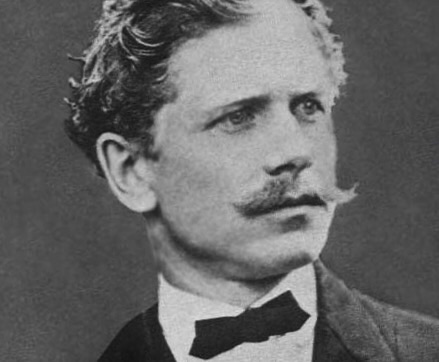
June 24 birthdays include Henry Ward Beecher, clergyman and reformer (1813); Ambrose Bierce [pictured], author of “An Occurrence at Owl Creek Bridge” and The Devil’s Dictionary — his dark, cynical wit earned him the epithet “Bitter Bierce” (1842); Karin Pilsäter, Swedish politician of the Liberal People’s Party (1960).

Categories
Thought

Walter Bagehot

In certain respects each born generation is not like the last born; and in certain other respects it is like the last. But the peculiarity of arrested civilisation is to kill out varieties at birth almost; that is, in early childhood, and before they can develop. The fixed custom which public opinion alone tolerates is imposed on all minds, whether it suits them or not.

Walter Bagehot, Physics and Politics (1872).
Categories
by Paul Jacob video

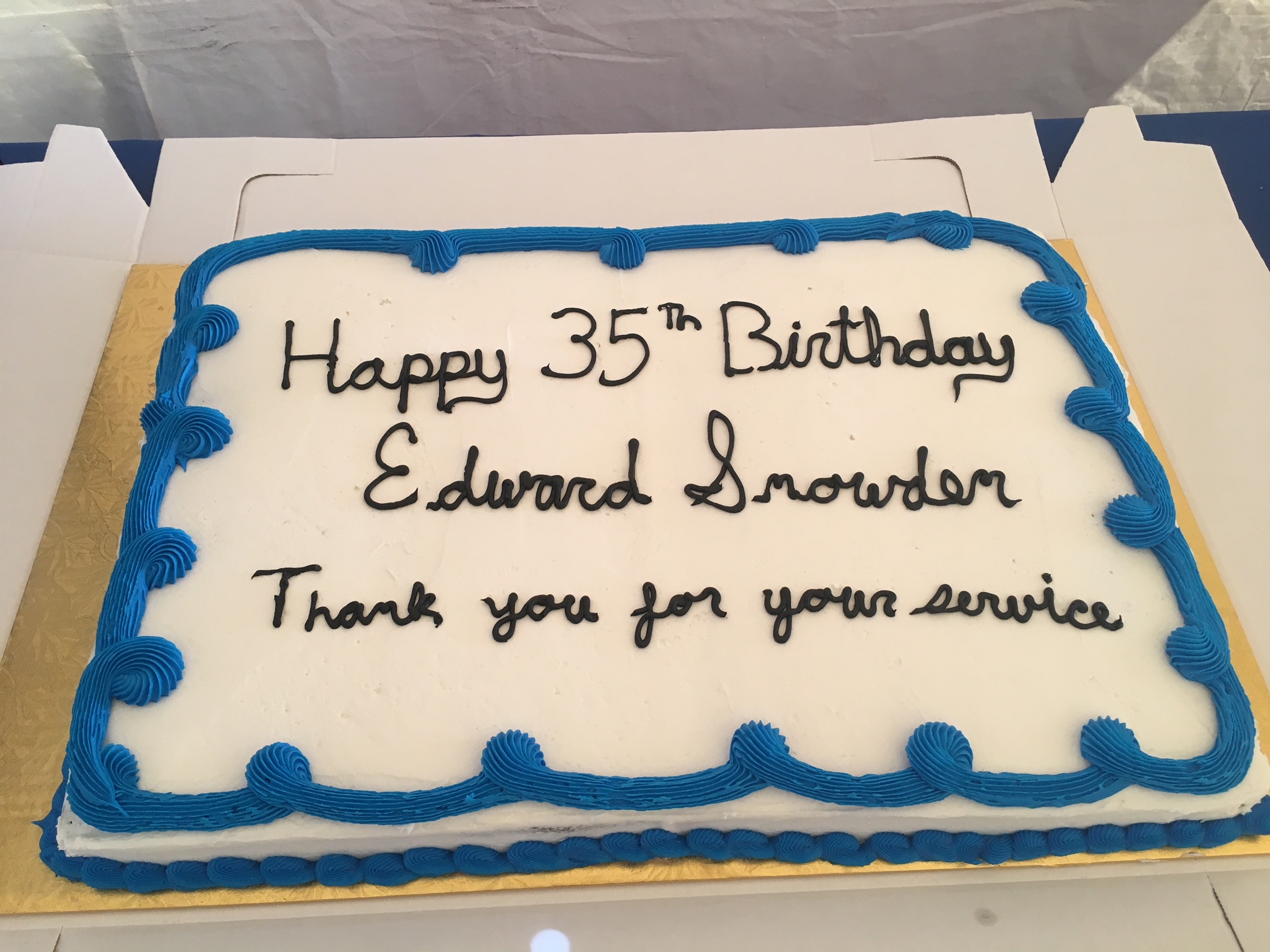
Happy Birthday, Mr. Snowden!

This week, Edward Snowden turned 35 — making him old enough to run for the U.S. presidency next election cycle! (Call that a “Fun Fact.”) But he is stuck in Russia, an exile from the country whose Constitution — and the people whose freedoms — he did more to save than perhaps any politician alive. So in New Hampshire this week, at the Fifteenth Annual Porcupine Freedom Festival, a song was sung and a birthday cake was cut.

Too bad that Ed Snowden couldn’t be there to eat the cake.

The video is also on BitChute.

Categories
Thought

Ambrose Bierce

Conservative, n.
A statesman enamored of existing evils, as opposed to a Liberal, who wants to replace them with others.
Cynic, n.
A blackguard whose faulty vision sees things as they are, not as they ought to be. Hence the custom among the Scythians of plucking out a cynic’s eyes to improve his vision.
Egotist, n.
A person of low taste, more interested in himself than in me.
Idiot, n.
A member of a large and powerful tribe whose influence in human affairs has always been dominant and controlling. The Idiot’s activity is not confined to any special field of thought or action, but “pervades and regulates the whole.” He has the last word in everything; his decision is unappealable. He sets the fashions and opinion of taste, dictates the limitations of speech and circumscribes conduct with a dead-line.
Mayonnaise, n.
One of the sauces that serve the French in place of a state religion.
Once, adj.
Enough.

Ambrose Bierce, The Devil’s Dictionary (1911)

Categories
Today

Victory Day

Today is Estonia’s Victory Day, which has been celebrated on June 23 every year since 1934. The date recalls the victory in the 1919 Battle of Vonnu of the Estonian military forces (and Latvian North brigade) and their allies over German forces (Baltische Landeswehr) who sought to re-assert Baltic-German control over the region. The battle was part of the 1918-1920 Estonian War of Independence, where the main adversary of the newly independent Estonia was Communist Russia.

Today, Victory Day also marks the contributions of all Estonians in their fight to regain and retain their independence. Estonian celebration of June 23 is ceremonially tied to the following Midsummer Day celebrations on June 24.

According to Estonian laws, the state flags are not to be lowered during the night between days.

Categories
Today

Giants

On June 22, 1633, astronomer Galileo Galilei recanted his belief in heliocentrism, the idea that the Earth revolves around the sun. He didn’t do this based on scientific research, but under pressure from the Holy Office in Rome.

Three hundred forty-five years later, to the date, American astronomer James W. Christy discovered Charon, a moon for what was then called “the ninth planet,” Pluto. This put Christy in an august company of satellite discovers, including Galileo, who had discovered four of Jupiter’s moons in 1610.

When Pluto was later “demoted” to “dwarf planet” status, in 2006, no one was put under house arrest for objecting, or for not changing his or her mind, as had Galileo been centuries before.

Categories
Thought

Georgia O’Keeffe

Anyone with any degree of mental toughness ought to be able to exist without the things they like most for a few months at least.


Georgia O’Keeffe, letter to Anita Pollitzer (December 1915)

Categories
Thought

Walter Bagehot

“The great difficulty which history records is not that of the first step, but that of the second step. What is most evident is not the difficulty of getting a fixed law, but getting out of a fixed law; not of cementing (as upon a former occasion phrased it) a cake of custom, but of breaking the cake of custom; not of making the first preservative habit, but of breaking through it, and reaching something better.”


Walter Bagehot, Physics and Politics (1872).

Categories
Today

Grandfather clauses

On June 21, 1915, the U.S. Supreme Court struck down an Oklahoma law denying the right to vote to some citizens. In Guinn v. United States, the Supreme Court found “grandfather clauses” in effect in several formerly slave states to be little more than sneaky ways of allowing illiterate white folks to vote while disallowing illiterate black folks.