Let us not attribute to malice and cruelty what may be referred to less criminal motives.
Jane West, The Loyalists (1812), clearly expressing the principle today referred to as Hanlon’s Razor.

Let us not attribute to malice and cruelty what may be referred to less criminal motives.
Jane West, The Loyalists (1812), clearly expressing the principle today referred to as Hanlon’s Razor.

Back in the 1970s, the late Phyllis Schlafly charged that, if the Equal Rights Amendment (ERA) were ratified, women would be subject to the military draft.
Funny thing, though — the ERA was not ratified, yet any return to the draft means our daughters would be forced into combat just like our sons.
The 14th Amendment already requires equal protection of the laws.
Congress proposed the amendment in 1972 with a seven-year period for ratification by the necessary 38 states. Even with an extension, the ERA fell three states short . . . well, make that eight, since five states* rescinded their initial ratifications.
“One thing we are going to need to do right away,” declared Senate Democratic leader Dick Saslaw, “is pass the Equal Rights Amendment in Virginia.”
But it’s back, sorta. In recent years, Nevada and Illinois have ratified the timed-out amendment. And with Democrats taking control of both chambers of the Virginia Legislature in this year’s election, the state could now become the 38th to ratify.
Not so fast. Even Supreme Court justice and progressive action-hero Ruth Bader Ginsberg has made it clear that the amendment has expired, that the process must begin anew. No amendment should be bum-rushed into the Constitution.
Though some conservatives warn the ERA may undermine women’s rights. I support the language of the amendment as it plainly reads: “Equality of rights under the law shall not be denied or abridged by the United States or by any State on account of sex.”**
Possible wrinkle: can anyone read plainly?
This is Common Sense. I’m Paul Jacob.
* Idaho, Kentucky, Nebraska, South Dakota, and Tennessee.
** There were two boilerplate clauses, in addition: Section 2. The Congress shall have the power to enforce, by appropriate legislation, the provisions of this article. Section 3. This amendment shall take effect two years after the date of ratification.


Wittgenstein, Elizabeth Taylor, Bertrand Russell, Thomas Merton, Yogi Berra, Allen Ginsberg, Harry Wolfson, Thoreau, Casey Stengel, The Lubavitcher Rebbe, Picasso, Moses, Einstein, Hugh Hefner, Socrates, Henry Ford, Lenny Bruce, Baba Ram Dass, Gandhi, Sir Edmund Hillary, Raymond Lubitz, Buddha, Frank Sinatra, Columbus, Freud, Norman Mailer, Ayn Rand, Baron Rothschild, Ted Williams, Thomas Edison, H.L. Mencken, Thomas Jefferson, Ralph Ellison, Bobby Fischer, Emma Goldman, Peter Kropotkin, you, and your parents. Is there really one kind of life which is best for each of these people?
Anarchy, State, and Utopia (1974), Ch. 10 : A Framework for Utopia; The Framework, p. 310.

November 22 marks the death dates of a number of eminent writers, including that of English-American novelist and essayist Aldous Huxley and Irish-English novelist, theologian and medieval scholar C.S. Lewis, both of whom died in 1963, the same day as the assassination of American President John F. Kennedy. British novelist Anthony Burgess died exactly 30 years later.
The date also marks the birth of the great British novelist George Eliot (Mary Ann Evans), in 1819.
Recommended reading from these authors include:
Silas Marner (1861), a short and brilliant novel by George Eliot. Her most generally esteemed classic is the much longer Middlemarch (1872).
Earthly Powers (1980), a massive novel about life in the 20th century, by the ever-iconoclastic and hard-to-pin-down Anthony Burgess. His most famous novel is undoubtedly A Clockwork Orange (1963).
“The Humanitarian Theory of Punishment” (1949) and Till We Have Faces (1956), the former being C.S. Lewis’s thoughtful essay on the nature of modern tyranny, and the latter being what some regard his best fiction effort, a retelling of the Psyche myth. He is most famously known for The Screwtape Letters (1942) and The Chronicles of Narnia (1950-1956).
Brave New World (1931) and Brave New World Revisited (1958), the former is Aldous Huxley’s classic dystopian satire on technological tyranny-by-hedonism, and the latter is the author’s survey of the issues raised by — and the degrees to which reality conforms to — his earlier fictional prophecy. The two books have been printed under one cover as well as separately.

One reason to talk about corruption a lot is that there is a lot of corruption to talk about.
The scheme was to get Kaiser Permanente to buy 20,000 copies of her children’s book, Healthy Holly, at a decidedly non-discounted price of $5 a pop, while the health provider was negotiating a contract with UMMS and while she was serving on the UMMS board deciding that contract.
It’s been several months since I’ve discussed Baltimore, Maryland, a hotbed of Big Government degeneracy. Now that former Mayor Catherine Pugh has been indicted — this Tuesday — on multiple federal charges, we should take a moment to appraise her own tricky larceny against the city’s taxpayers and the patients of University of Maryland Medical System (UMMS).
What a scam.
And not her only one. She leveraged this scam to fund her mayoral campaign, for example.
So, it is good that she is being prosecuted.
Odd, though, that it is the federal government doing the prosecuting. Baltimore is a corporate entity under the sovereignty of the State of Maryland, not the United States.
What have state and local investigators and prosecutors been doing?
While this might seem a picky point, the federalization of law and order is, as the college crowd says, ‘problematic.’ Tasking the Federal Government to the rescue is great, insofar as it actually rescues. Yet, it is also an unmistakable sign not only of the corruption of the criminal justice system, but also of a failure of representative democracy to hold government officials accountable in that state or locality.
This is certain: government, removed from citizens’ vigilance, almost necessarily breeds corruption . . . and not just in Baltimore.
This is Common Sense. I’m Paul Jacob.

See all recent commentary
(simplified and organized)
See recent popular posts

There are philosophers who have given their minds to the phenomenon of disregard of laws and have sought out its causes. Much more surprising, however, is the opposite phenomenon of respect for laws and deference to authority. . . . It is as true today as it was ten thousand years ago that a Power from which the magic virtue has gone out, falls.
Bertrand de Jouvenel des Ursins (1903 – 1987), On Power

On November 21, 1620, Plymouth Colony settlers signed the Mayflower Compact.
On this day in 1922, Rebecca Latimer Felton of Georgia took the oath of office, becoming the first female United States Senator.
November 21st birthdays include:
1694 – Voltaire, French philosopher (d. 1778) — portrait above
1729 – Josiah Bartlett, American signer of the Declaration of Independence (d. 1795)
1870 – Alexander Berkman, anarchist (d. 1936), who shot but did not kill industrialist Henry Clay Frick
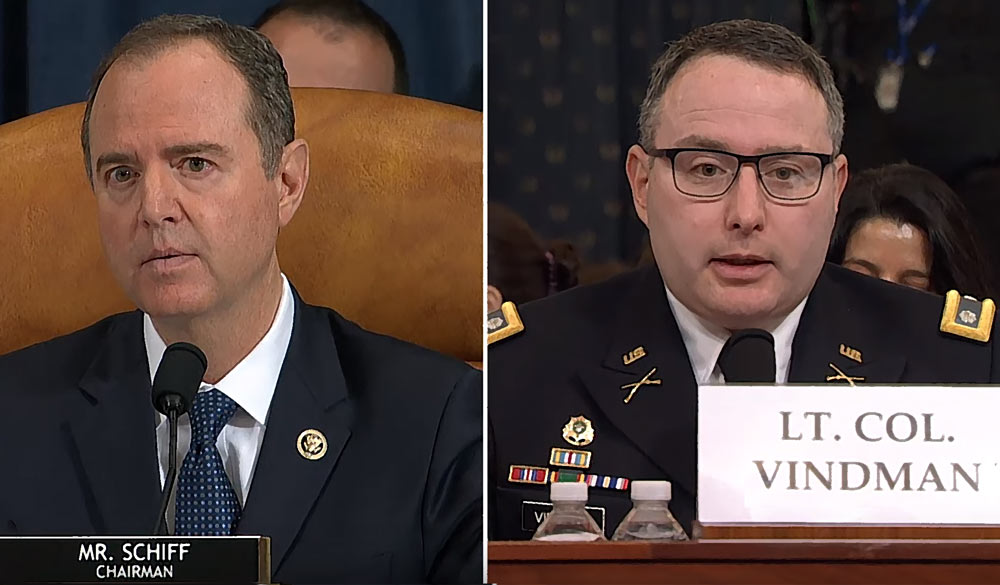
Donald Trump was not elected with a mandate to “drain the ‘interagency consensus.’”
You can’t “drain” a “consensus.” More importantly, “the Swamp” that Trump promised to “drain,” is not the same thing as that “interagency consensus.” That latter, new phrase better serves as something coextensive with — or subset of — something distinct, “the Deep State.”
But the Swamp and Deep State are related.
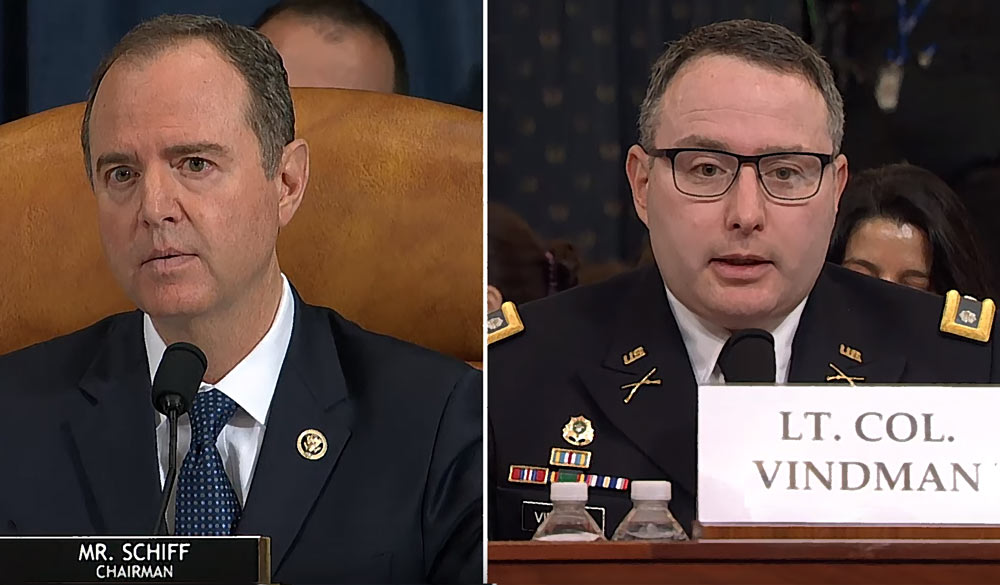
Though the term, interagency consensus, was floated earlier, this new bit of jargon hit public consciousness as a result of the impeachment proceedings, the testimony of Alexander Vindman in particular.
Mr. Vindman — excuse me, Lt. Colonel Vindman — is an Army officer assigned to the National Security Council who became alarmed at “outside influences” in the Trump Administration that were upsetting the “interagency consensus” on the subject of his homeland. The new “narrative,” he testified, “was harmful to U.S. government policy. While my interagency colleagues and I were becoming increasingly optimistic on Ukraine’s prospects, this alternative narrative undermined U.S. government efforts to expand cooperation with Ukraine.”
The problem with this is obvious. It is not the job of junior diplomats and spies to work against the policies of a constitutionally-elected and -authorized U.S. president.
Sophisticates in Washington and in the press corps sometimes pooh-pooh the term “Deep State.” Vindman’s testimony justifies the term. Yet, he sure seems earnest in thinking that government hirelings should develop policy that must be defended from tampering, including by we who wade in the shallow end of government, stuck with our piddling votes.
This is Common Sense. I’m Paul Jacob.
See all recent commentary
(simplified and organized)
See recent popular posts
On November 20, 1789, New Jersey became the first U.S. state to ratify the Bill of Rights.
In 1805 on this date, Ludwig van Beethoven’s only opera, Leonore, oder Der Triumph der ehelichen Liebe (in English, Leonore, or The Triumph of Marital Love, later renamed Fidelio), premiered in Vienna. Beethoven wrote four overtures for the opera, all part of the orchestral concert repertoire. The opera tells the tale of the rescue from unjust imprisonment of Florestan by his wife Leonore, who disguises herself as a boy, Fidelio.
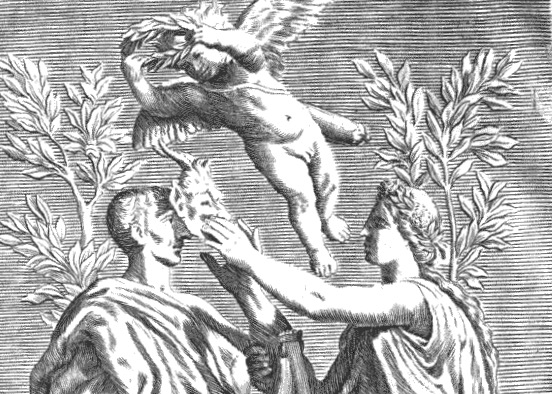
Mens sana in corpore sano.
“You should pray for a sound mind in a sound body.” (From the tenth satire of Decimus Iunius Iuvenalis.)