Categories
individual achievement progress

The Power of Man’s Mind

Can you communicate with your mind alone, without moving a muscle?

Setting aside fantasy and wishful thinking, my answer is, at least presumptively, “No.”

But the paralyzed man known as T5 was not alone when the sentences he imagined appeared on screen at a rate of 18 words per minute with an accuracy of about 94 percent.

He had the help of inventive scientists. And, by some definitions, I suppose T5 did move a muscle: his brain. 

Normally, though, we must also move other muscles to get what’s on our mind out into the world and communicate it to others.

After suffering a spinal cord injury in 2007, T5 became almost entirely paralyzed. Several years later, he enrolled in a clinical trial called BrainGate2 to research brain-computer interfaces.

Two small microchips were implanted in his brain.

Scientist Frank Willett of Stanford University and his colleagues asked T5 to imagine that he was writing individual letters and punctuation marks. They found that the patterns of neural activity they recorded were distinct for each letter, period, and comma.

Now all they had to do — a trifle! — is train an algorithm to predict, based on T5’s neural patterns, what letter or punctuation mark he was writing in his imagination.

It worked. Initial accuracy: 94 percent. With autocorrect that percentage went up to 99.

As yet, the technology is said to be too rudimentary to be practically applied. But the basic approach has been shown to be viable. The work also communicates the power of human ingenuity.

This is Common Sense. I’m Paul Jacob.


PDF for printing

art credit: binary

See all recent commentary
(simplified and organized)
See recent popular posts
Categories
Thought

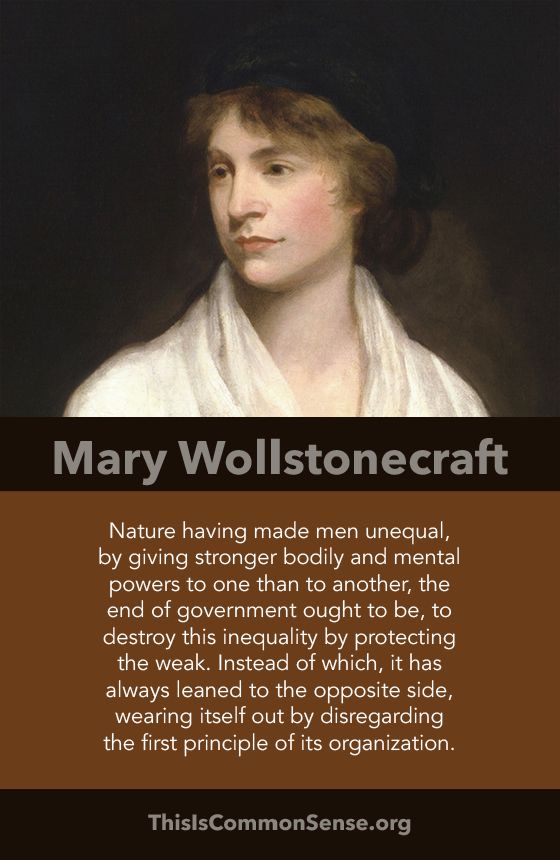
Mary Wollstonecraft

Nature having made men unequal, by giving stronger bodily and mental powers to one than to another, the end of government ought to be, to destroy this inequality by protecting the weak. Instead of which, it has always leaned to the opposite side, wearing itself out by disregarding the first principle of its organization.

Mary Wollstonecraft, An Historical and Moral View of the French Revolution (1794), p. 7.
Categories
Today

Only Nine?

On July 22, 1937, the U.S. Senate voted down Franklin Delano Roosevelt’s court packing scheme.

Categories
free trade & free markets international affairs

Embargo Socialism?

As the people of Cuba have revolted, this month, taking to the streets in huge marches, complete with waving of American flags, leftists in America — who love socialism and hate the Stars and Stripes — have been put in an awkward position. 

The Biden administration, in its continual prostration before progressives, initially attributed Cuban unrest to lack of COVID vaccine access. But then leftists began blaming the United States’ embargo for that and for Cuba’s sorry economic mess, blaming the U.S. as the cause of Cuban misery. 

Not Cuba’s Castro communist government! 

The problem is U.S. foreign policy, or so the memes assert. Some claim that the embargo amounts to a blockade of all international trade with Cuba.

Is this true?

“Embargo is the official term used by the U.S. government to describe the sanctions on Cuba,” Politifact explains. “While the nuances in the U.S. embargo can make it difficult for foreign companies to trade with the country, there is no evidence that they can’t,” concluding with “We rate this claim False.”

Indeed, other popular memes show that the U.S. is the only country on the planet not trading with the communist-run tyranny due south of Florida.

More interesting is the clarification of the embargo by Senator Marco Rubio. “There’s only two embargoes, here: the embargo against government-owned companies and the embargo that the Cuban regime imposes on its own people.”

It is entirely legal for Cubans and Americans to trade, says Florida’s senior U.S. senator. But the Cuban tyranny won’t let them.

All my life the U.S. has been engaged in an embargo against Cuban socialism. Against slavery. Against a government at war with its people. 

It has not yet “worked,” but I know why Cubans wave American flags.

This is Common Sense. I’m Paul Jacob.


PDF for printing

See all recent commentary
(simplified and organized)
See recent popular posts
Categories
Thought

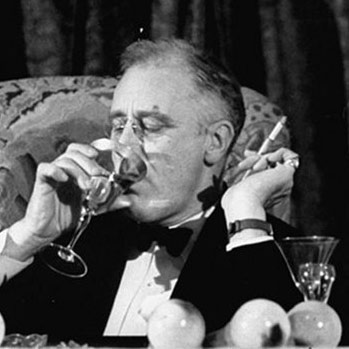
Jack Paar

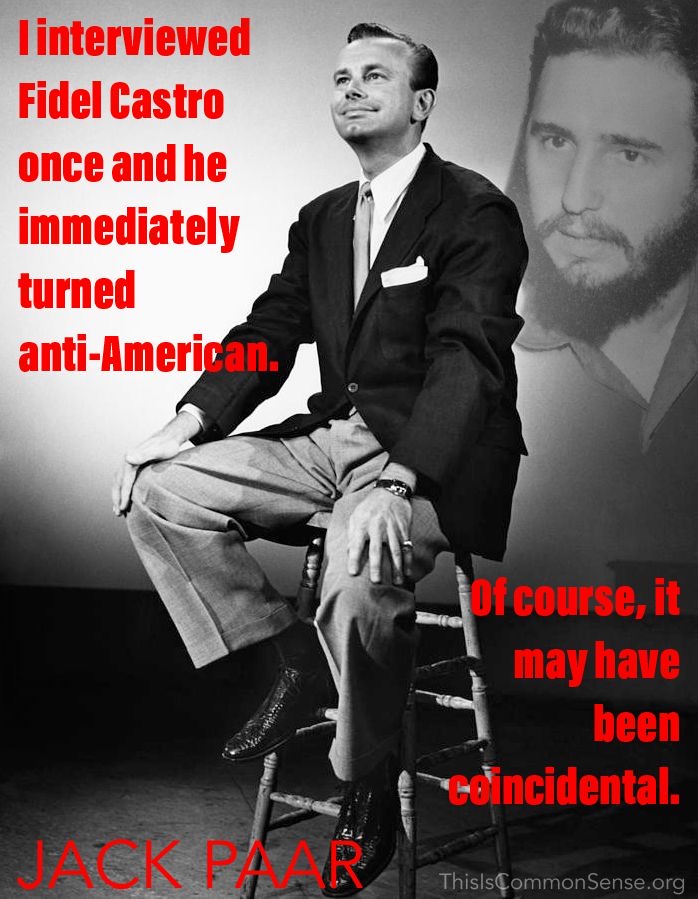
I interviewed Fidel Castro once and he immediately turned anti-American. Of course, it may have been coincidental.

Jack Paar, host of The Tonight Show (1957-1962), as quoted in Jesse Walker, “When Fidel Castro Went on The Tonight Show and The Ed Sullivan Show,” Reason, November 28, 2016.
Categories
Today

Monkeys & the Moon

On July 21, 1925, in Dayton, Tennessee, high school biology teacher John T. Scopes was found guilty of teaching evolution in a public school classroom, and fined $100. The ambiguous legacy of the trial would continue — for decades, even to the present — to reveal the tensions inherent within a school system run by government and funded by taxpayers.

Interesting fact rarely noted: Scopes was teaching a heavily “eugenics” view, which would hardly be considered scientific by most modern standards.


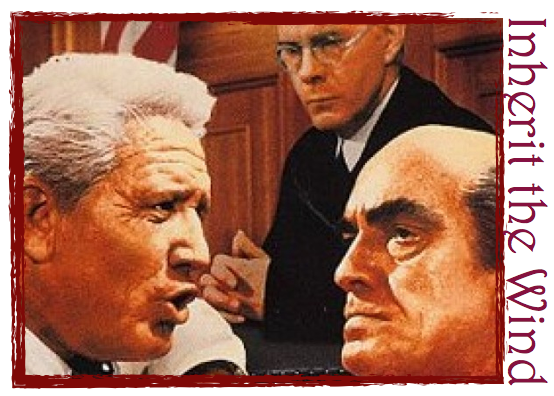
Pictured above, publicity for Inherit the Wind, a 1960 movie about the trial, but with the names changed, fictionalized. The movie starred Spencer Tracy in the Clarence Darrow (lawyer for the defense) role; Frederic March in the prosecutorial part, “Matthew Harrison Brady,” the pseudonymous name for politician William Jennings Bryan; Dick York as the defendant, Mr. Scopes; and Gene Kelly as the Baltimore journalist, a stand-in for H. L. Mencken, whose infamous coverage of the story shocked the nation almost as much as the trial itself. It was Mencken who dubbed the affair “The Scopes ‘Monkey’ Trial.”

At the end of the movie (spoiler alert!) the famous prosecutor dies in the courtroom. In the historical case, Bryan died five days after the verdict. The movie was based on the 1955 play of the same name, written by Jerome Lawrence and Robert Edwin Lee, directed by Stanley Kramer. The script was adapted by Nedrick Young (originally as Nathan E. Douglas) and Harold Jacob Smith.


Today is the 51st anniversary of the Apollo 11 mission’s perambulation upon the Moon, on July 21, 1969. Neil Armstrong and Buzz Aldrin walked upon the surface of Mare Tranquillitatis for about two hours and 15 minutes. They spent over 21 hours on the surface, total, most of it inside the Lunar Module, at the site they called Tranquillity Base, before launching to rejoin astronaut Michael Collins in lunar orbit, and returning to Earth on July 24.

Categories
Thought

Frédéric Bastiat

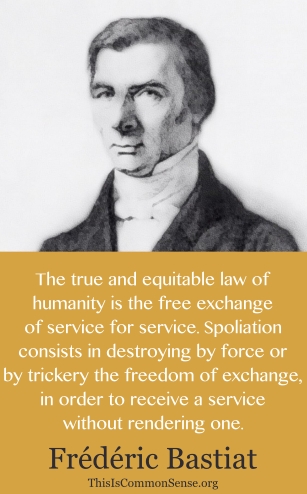
The true and equitable law of humanity is the free exchange of service for service. Spoliation consists in destroying by force or by trickery the freedom of exchange, in order to receive a service without rendering one.

Frédéric Bastiat, “The Natural History of Spoliation,” in Economic Sophisms: Second Series (1848).
Categories
Today

The Count Tracy

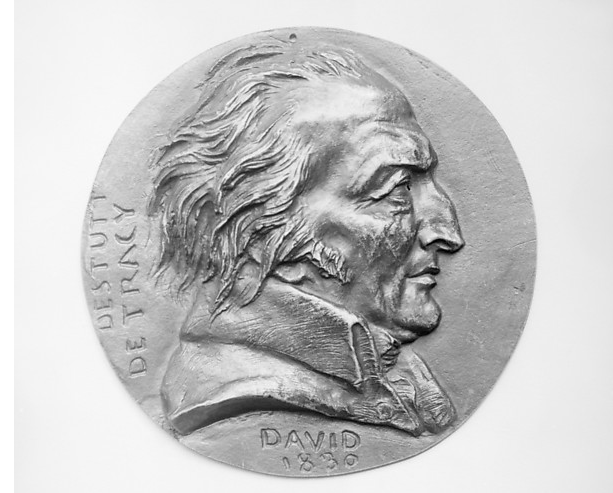
Born on July 20, 1754, Antoine Louis Claude Destutt, comte de Tracy, French philosopher and economist. Perhaps best remembered for coining the term “ideology,” he didn’t mean by that term what scornful Napoleon and communist Karl Marx later turned it into — for Destutt de Tracy ideology meant “the science of ideas,” a unified approach to all knowledge, from epistemology to social theory.

Though his family had been enobled twice, he renounced the title and entered the 1789 Estates General conference as a member of the Third Estate. During the Reign of Terror, he was imprisoned, and would have been executed had not Robespierre got to the scaffold ahead of him.

Two of his books became popular in early 19th century America, his commentaries on Montesquieu’s Spirit of the Laws, and his Traité de la volonté, which Thomas Jefferson, the editor of the American edition, retitled A Treatise on Political Economy. Tracy’s economics was of a deductivist stripe, familiar to readers of later economists such as Nassau Senior and Ludwig von Mises.

Destutt de Tracy’s political philosophy was republican, and his preferred economic policy was laissez-faire.


NASA’s Apollo 11 landed two humans on the Moon — Commander Neil Armstrong and lunar module pilot Buzz Aldrin — on July 20, 1969, at 20:17 UTC. Today is the 50th anniversary of this exploratory achievement.

Categories
property rights

The Maine Alternative to State Robbery

Around the country, one of the worst predations against people who save money or own property is civil asset forfeiture.

This is the grabbing of the cash and other belongings of innocent people on the basis of a mere suspicion (or feigned suspicion) of wrongdoing. By government.

No evidence is required by law: no arrest; no conviction. Just the willingness of some police officer, sheriff, or other member of law enforcement to grab what doesn’t belong to him. 

There’s only one cure: state by state, these asset forfeiture laws must be abolished.

The Institute for Justice reports that Maine has now repealed its civil forfeiture law, making it the third state to do so. IJ’s own efforts deserve much of the credit.

Another hero of the story is Billy Bob Faulkingham, one of my favorite legislators and the main sponsor of the bill. (He is also behind a right-to-farm ballot measure and a good voter-ID bill.)

The bipartisan “Act to Strengthen Protections Against Asset Forfeiture” — which passed without the governor’s signature — states that “for property to be forfeited under the criminal forfeiture laws, the owner of the property[must] be convicted of a crime in which the property was involved. . . .”

Is this the end of the injustice?

In Maine, maybe. 

Being on the books doesn’t necessarily mean that a law will be obeyed. But if and when it is violated, victims in the state will now have stronger legal recourse and a much better chance of promptly getting back their stuff.

This is Common Sense. I’m Paul Jacob.


PDF for printing

See all recent commentary
(simplified and organized)
See recent popular posts

Categories
Thought

Mary Wollstonecraft

Society . . . as it becomes more enlightened, should be very careful not to establish bodies of men who must necessarily be made foolish or vicious by the very constitution of their profession.

Mary Wollstonecraft, A Vindication of the Rights of Woman (1792), chapter one.