Categories
crime and punishment ideological culture

Democrats: Dissonance on Self-Defense

The Kyle Rittenhouse case, which I talked about on my podcast, This Week in Common Sense, reveals a deep divide.

One side thinks young Mr. Rittenhouse is guilty because he clearly sided with property-owners by cleaning up graffiti, putting out fires, caring for the riots’ victims . . . and carrying a big, scary-looking rifle; the other points to the facts of the altercation between Rittenhouse and the three men he shot, judging the shootings self-defense.

On Monday, the lead prosecutor, Assistant District Attorney Thomas Binger, insisted that “You lose the right to self-defense when you’re the one who brought the gun,” despite that not being Wisconsin law. Rittenhouse also wasn’t the only one with a gun.

While the prosecution tried to undermine self-defense by declaring that Rittenhouse had instigated the whole scene, the media relentlessly feeds a general prejudice against the idea that citizens should be armed and for the notion that we must rely upon the police alone. 

Dissonant with this, however, were the months of leftists excusing, when not cheering, “protests” turned violent in which not only property was destroyed, but people were killed. To top off this cultural license to mayhem, progressive mavens pushed the opposite of state protection: let the mob run riot.

Followed by “defund the police.”

The leftist/statist argument seems to be: You mustn’t protect yourself with deadly force, instead relying upon the state — except when we (the left) riot, then no protection for you!

This is a recipe for civil war or tyranny or both. 

Not civil peace.

Meanwhile, as Rittenhouse’s jury deliberates, everyone assumes that leftists itch to take an acquittal as another excuse to riot.

This is Common Sense. I’m Paul Jacob.


PDF for printing

See all recent commentary
(simplified and organized)
See recent popular posts
Categories
Thought

Frank Knight

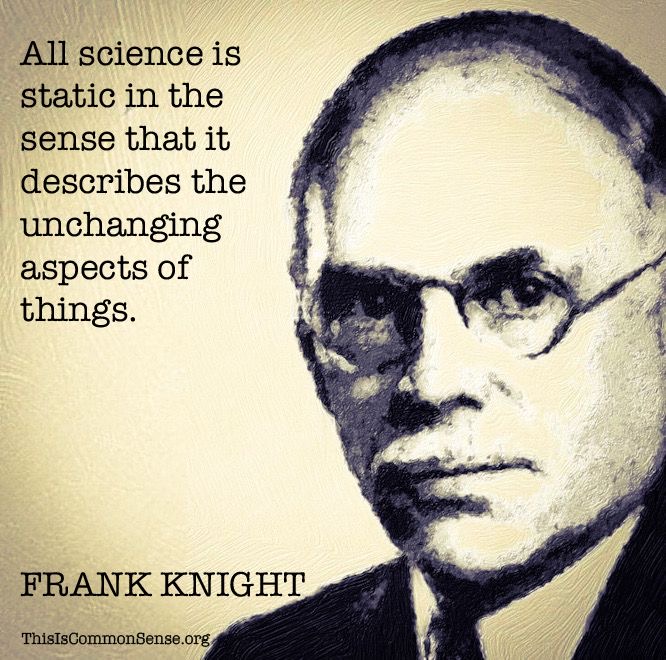
All science is static in the sense that it describes the unchanging aspects of things.

Categories
Today

Confederation & Congress

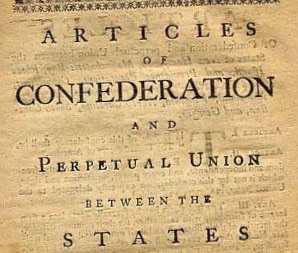
On November 17, 1777, the Articles of Confederation were submitted to the states for ratification.

On that date in 1800, the United States Congress held its first session in Washington, D.C.

Categories
Thought

Herbert Spencer

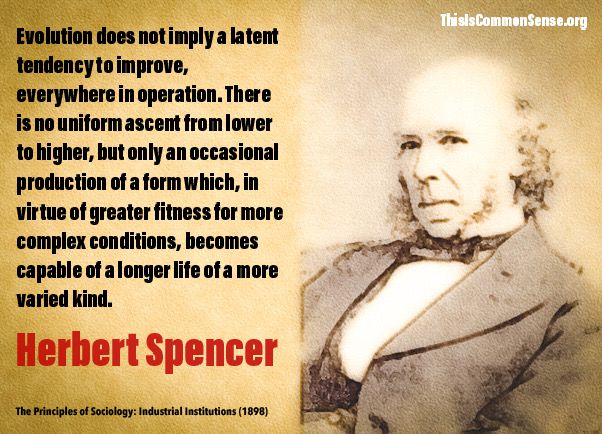
The cosmic process brings about retrogression as well as progression, where the conditions favour it. Only amid an infinity of modifications, adjusted to an infinity of changes of circumstances, do there now and then occur some which constitute an advance: other changes meanwhile caused in other organisms, usually not constituting forward steps in organization, and often constituting steps backwards. Evolution does not imply a latent tendency to improve, everywhere in operation. There is no uniform ascent from lower to higher, but only an occasional production of a form which, in virtue of greater fitness for more complex conditions, becomes capable of a longer life of a more varied kind.

Herbert Spencer, from the concluding pages of The Principles of Sociology, in Three Volumes (New York: D. Appleton and Company, 1898). Vol. 3.
Categories
Common Sense

Atahualpa & Bright

On November 16, 1532, Francisco Pizarro and his men captured Inca Emperor Atahualpa at the Battle of Cajamarca.

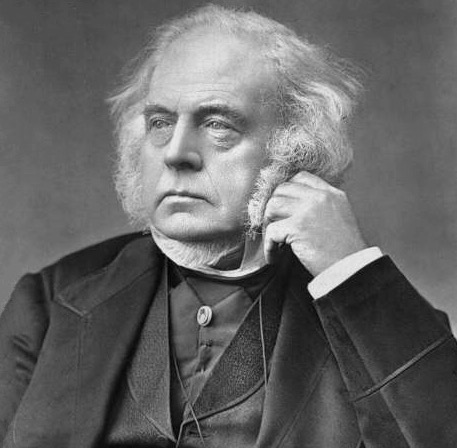
In 1811 on this date, John Bright (pictured above), English academic and politician, Chancellor of the Duchy of Lancaster, was born. Bright (d. 1889), famously worked with Richard Cobden against the Corn Laws (repealed in 1846) as well as for the Cobden–Chevalier Treaty of 1860, which ushered in freer trade and closer interdependence between Britain and France.

Categories
judiciary national politics & policies too much government

Emergency Effrontery

The ruling was hardly shocking. Most constitutional scholars expected it, I think. That being said, the whole business is . . . shocking.

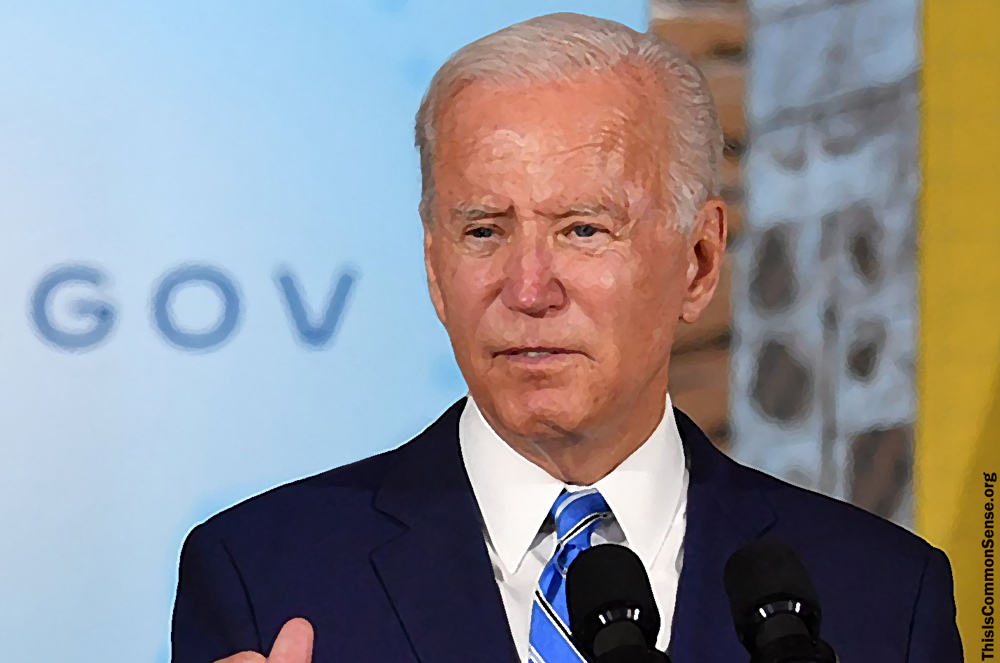
I refer to the 5th Circuit Court of Appeals coming down hard against the Biden Administration’s vaccine mandate.

Say those words, “vaccine mandate,” reflecting on how it was “enacted” — not by act of Congress — and the Occupational Safety and Health Administration’s tortured justification for forcing private companies seems doomed.

At least if the Constitution retains any of its meaning.

“The stay,” explains Reason editor Jacob Sullum, “which the court issued on Friday evening, says OSHA shall ‘take no steps to implement or enforce the Mandate until further court order.’ It is officially a preliminary pause ‘pending adequate judicial review of the petitioners’ underlying motions for a permanent injunction.’ But the court left little doubt that it would grant those motions, saying ‘petitioners’ challenges to the Mandate show a great likelihood of success on the merits.’”

The administration’s desperate shoehorning of OSHA’s statutory ability to concoct an “emergency temporary standard” (ETS) is an act of effrontery. 

Sullum, in his detailed coverage, shows just how extraordinary and inapt the reliance upon the ETS is. The COVID-19 crisis cannot justify the mandate through the legal mechanism chosen. It is fairly obvious that, as the court put it, Biden’s decree “grossly exceeds OSHA’s statutory authority.”

Sullum quotes another judge’s concurring opinion to the effect that even a congressionally legislated mandate would be controversial, constitutionally.

But breathe easy: Nancy Pelosi’s and Chuck Schumer’s Congress has no interest in creating a rational and constitutional response to the crisis.

And our Congress? Well, it doesn’t exist.

This is Common Sense. I’m Paul Jacob.


PDF for printing

See all recent commentary
(simplified and organized)
See recent popular posts
Categories
Thought

Adam Smith

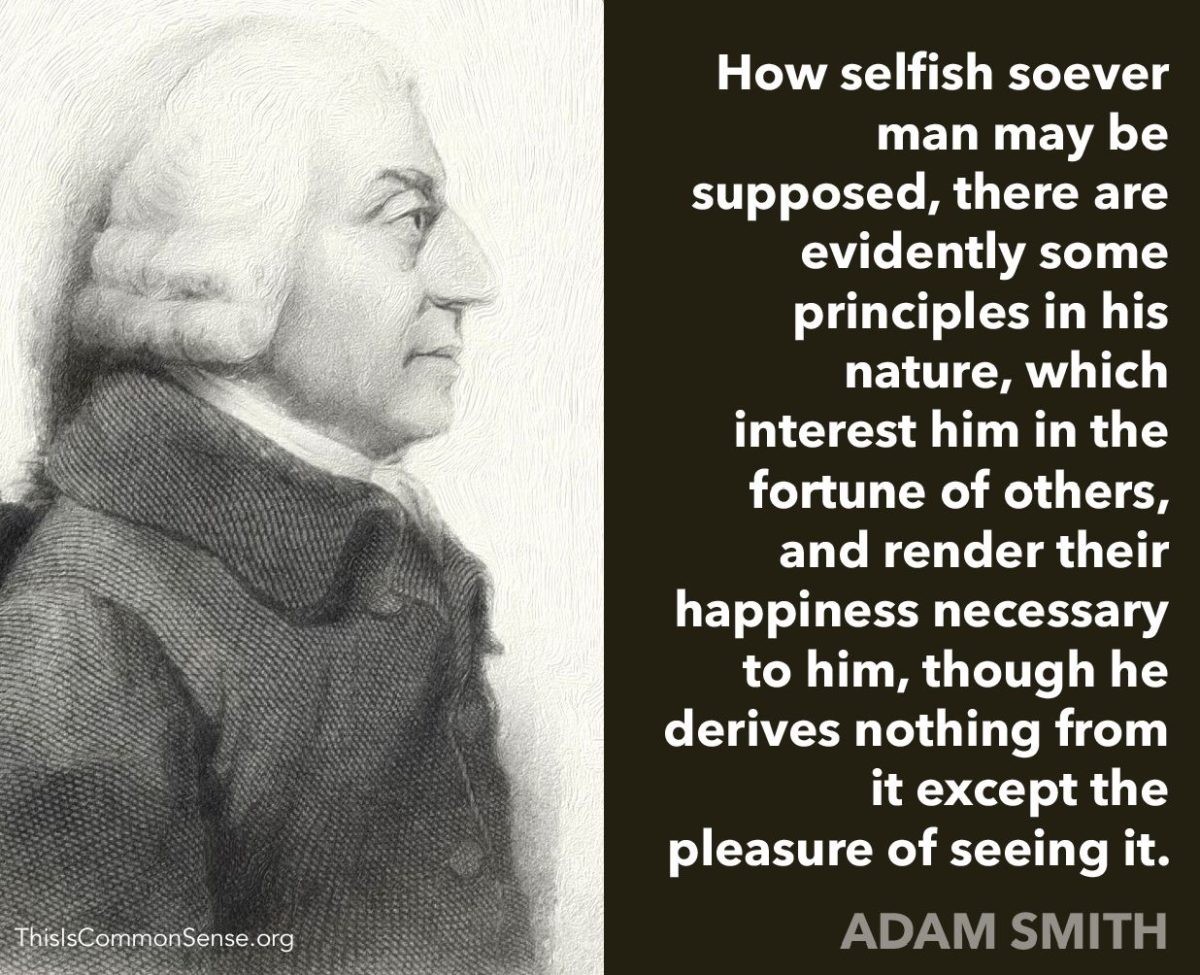
How selfish soever man may be supposed, there are evidently some principles in his nature, which interest him in the fortune of others, and render their happiness necessary to him, though he derives nothing from it except the pleasure of seeing it.

Adam Smith, The Theory of Moral Sentiments (1759), first sentence.
Categories
by Paul Jacob video

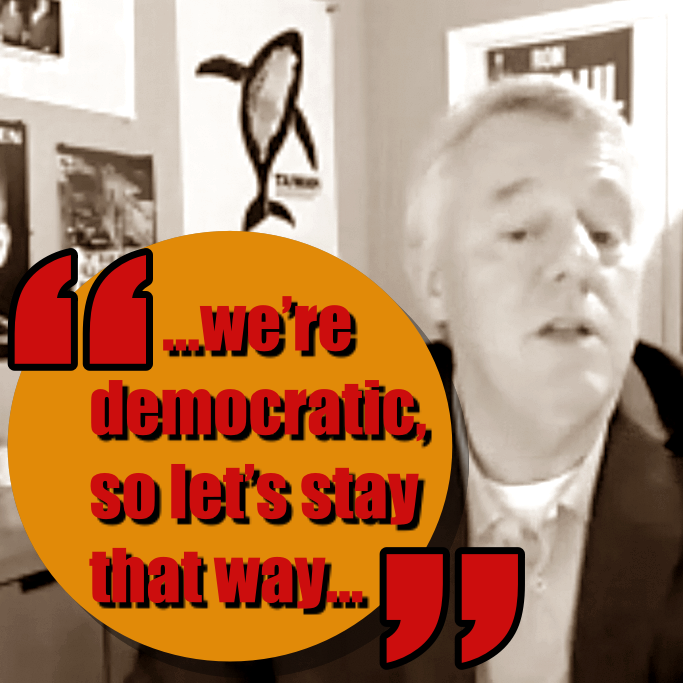
Watch: We’re Free & Democratic, So Let’s Stay That Way

Paul Jacob confronts the good and bad in the actions and speech of

  • Kyle Rittenhouse (innocent if not wholly prudent)
  • Rachel Maddow (bad; unhinged)
  • Edward Durr (good; successful)
  • José Mujica (perceptive)

… and talking about Kenosha, Russia-Russia-Russia, New Jersey, and (surprise!) Uruguay. The video is watchable on Rumble (sign up; subscribe; like; share) and YouTube:

All from the headlines of Common Sense with Paul Jacob (this website). The audio podcast is available on multiple platforms, as hosted on SoundCloud:


See all recent commentary
(simplified and organized)
See recent popular posts
Categories
Thought

Herbert Spencer

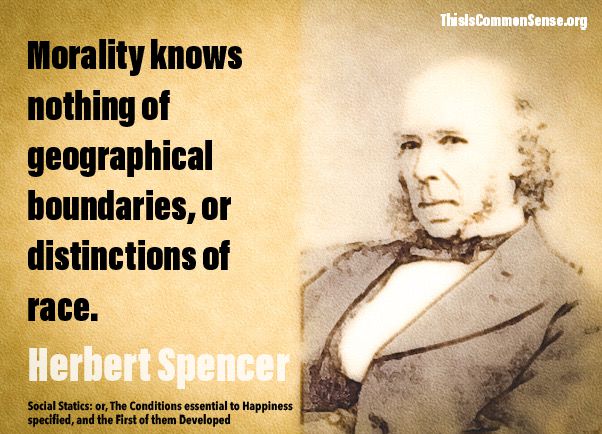
Morality knows nothing of geographical boundaries, or distinctions of race.

Herbert Spencer, Social Statics: or, The Conditions essential to Happiness specified, and the First of them Developed (London: John Chapman, 1851), Pt. IV, Ch. 30: General Considerations.

Categories
Today

A Republic

On November 14, 1918, Czechoslovakia became a republic.

Born on the same date 29 years later — American writer P. J. O’Rourke.