Categories
Accountability folly national politics & policies political economy

Whip Producers Now

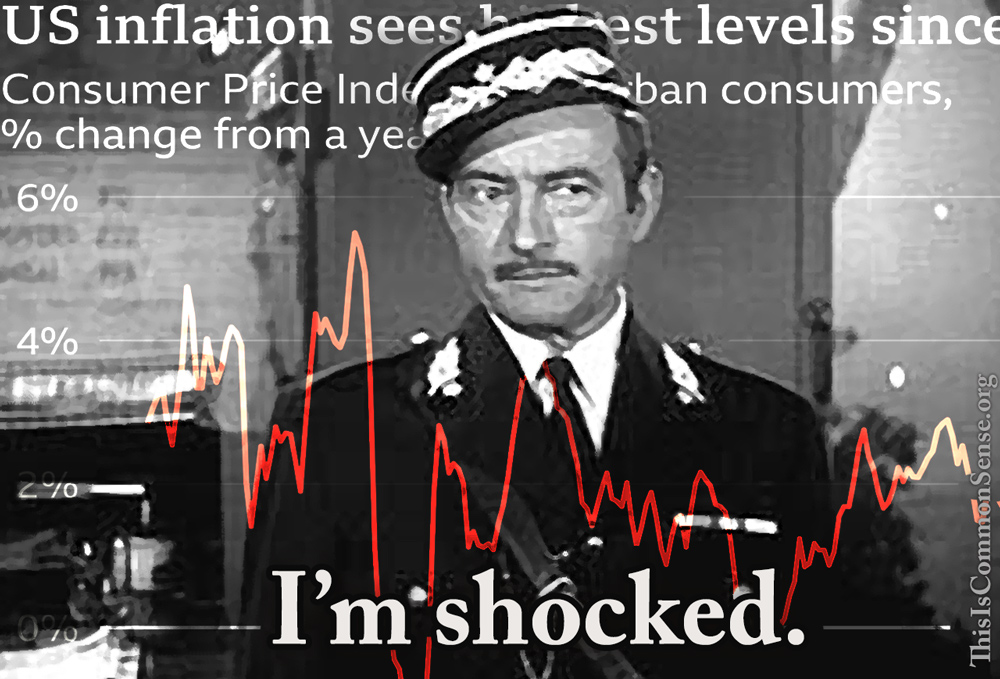
The Biden administration is siccing agencies like the Federal Trade Commission, Department of Agriculture, and the Federal Maritime Commission onto the producers of stuff who have recently dared to raise prices.

Stuff like gas. Higher prices at the pump must be an oil-company conspiracy.

It has nothing to do with (and don’t even think it!) governmental actions that impede production, including shutting down the Keystone oil pipeline on Biden’s first day in office or calling a halt to new oil leases on public lands. Etcetera.

Nothing to do with mammoth expansion of the supply of money and credit to facilitate trillion-dollar government spending sprees.

In case you hadn’t noticed, meat costs more, too. So obviously that must be the fault of malicious meatpackers. Rest assured that beef price inflation is utterly unrelated to pandemic-policy-induced labor shortages and delays.

Or to any recent increase in efficiency-impairing trucking regulations.

Same with sundry supply-chain problems, like the ships and crates piling up at ports. Greater consumer demand, new pandemic-induced screening protocols, union rules that prevent ports from operating 24/7 or improving automation — all irrelevant.

Must be. That’s the script from 1600 Pennsylvania Avenue, anyway.

But if companies can hike prices at will, ignoring whether regulations ease or obstruct production, why doesn’t the meat industry, for example, charge a thousand dollars per pound of flesh?

Well, we know why. 

Demand for a pound of ground beef would slide to zero, or close to it.

If only the government people knew! 

Or would stop pretending they don’t know. 

A consistent recognition of the laws of economics would sure make a great gift — in any season. Instead of bullying and making things worse, government could get out of the way.

This is Common Sense. I’m Paul Jacob.


PDF for printing

See all recent commentary
(simplified and organized)
See recent popular posts
Categories
Thought

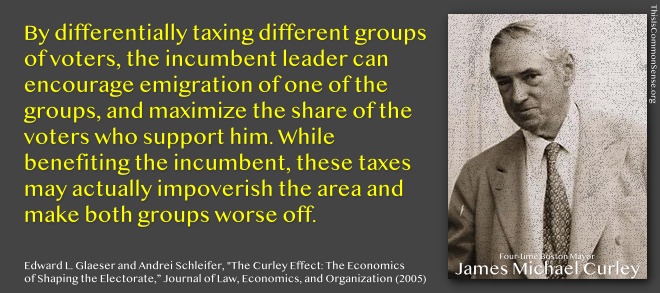
The Curley Effect

By differentially taxing different groups of voters, the incumbent leader can encourage emigration of one of the groups, and maximize the share of the voters who support him. While benefiting the incumbent, these taxes may actually impoverish the area and make both groups worse off.

Edward L. Glaeser and Andrei Schleifer, “The Curley Effect: The Economics of Shaping the Electorate,” Journal of Law, Economics, and Organization 21 (1): 1-19, (2005). The article’s abstract identifies the principle’s namesake: “James Michael Curley, a four-time mayor of Boston, used wasteful redistribution to his poor Irish constituents and incendiary rhetoric to encourage richer citizens to emigrate from Boston, thereby shaping the electorate in his favor. As a consequence, Boston stagnated, but Curley kept winning elections.” See David Henderson, “Curley Effect in California” (May 4, 2012).
Categories
Thought

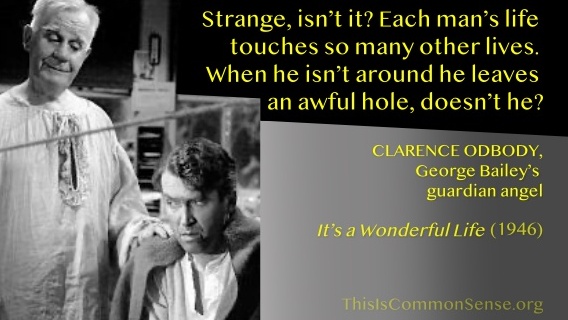
Clarence

Strange, isn’t it? Each man’s life touches so many other lives. When he isn’t around he leaves an awful hole, doesn’t he?

Clarence Odbody, George Bailey’s guardian angel in It’s a Wonderful Life (1946), directed by Frank Capra, written by Capra, Frances Goodrich and Albert Hackett to a story by Philip Van Doren Stern, and as portrayed by Henry Travers.
Categories
Today

Remonstrance

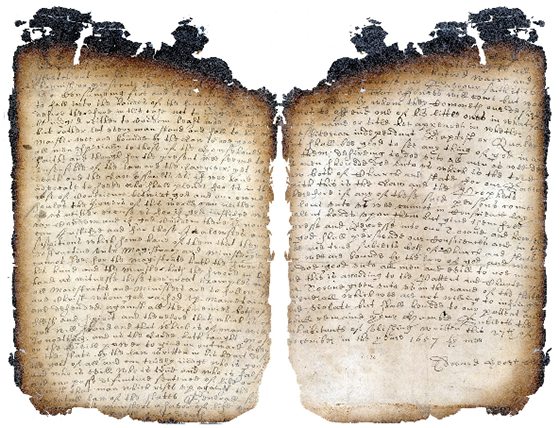
On December 27, 1657, a group of English citizens in Flushing, New York, who were not themselves Quakers, signed a petition protesting the persecution of Quakers. This “Flushing Remonstrance” is an eloquent statement of the principle of religious liberty, and is widely regarded as a forerunner to the U.S. Constitution’s First Amendment.

The petition was delivered to Director-General of New Netherlands, Peter Stuyvesant.

Categories
audio podcast

Listen: Hope After All?

It is the Day After Christmas — Boxing Day, in Britain! — and did you open this weekend’s podcast? If not, here is your chance!

See all recent commentary
(simplified and organized)
See recent popular posts
Categories
Thought

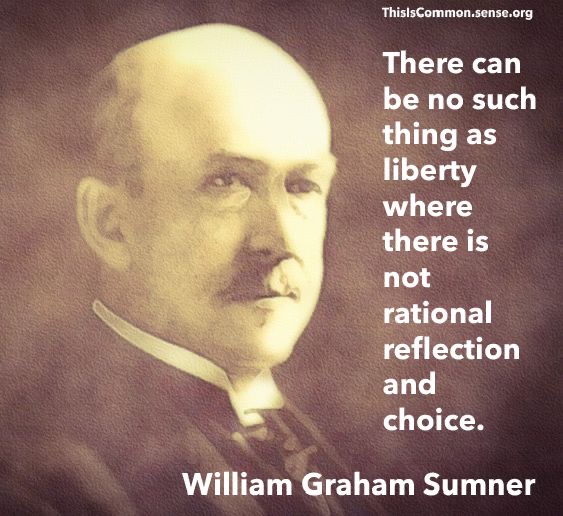
William Graham Sumner

There can be no such thing as liberty where there is not rational reflection and choice.

William Graham Sumner, “Is Liberty a Lost Blessing?” Earth Hunger and Other Essays (1913).

Categories
by Paul Jacob video

Watch: Is There Hope After All?

Oh, and Merry Christmas!

The answer is yes.

This Week in Common Sense, on Rumble, Christmas 2021.

See all recent commentary
(simplified and organized)
See recent popular posts
Categories
Thought

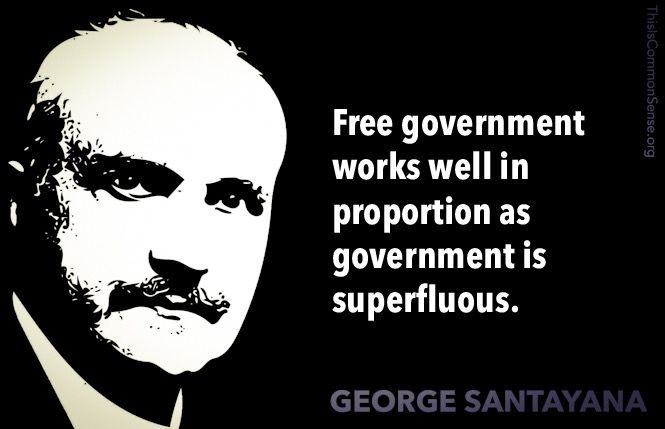
George Santayana

Free government works well in proportion as government is superfluous.

George Santayana, Character and Opinion in the United States (1920).
Categories
Today

Christmas Warfare

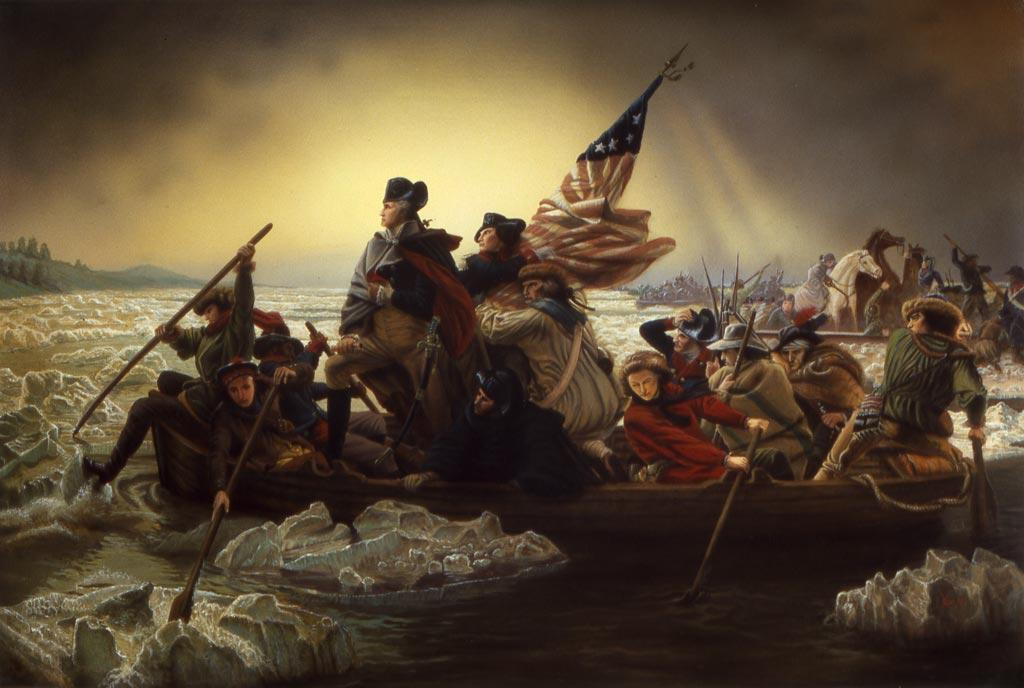
On Christmas Day in 1776, George Washington and the Continental Army crossed the Delaware River at night to attack, the next day, the Hessian forces serving Great Britain at Trenton, New Jersey.

United States President Andrew Johnson granted an unconditional pardon to all Confederate veterans on Christmas Day in 1868.

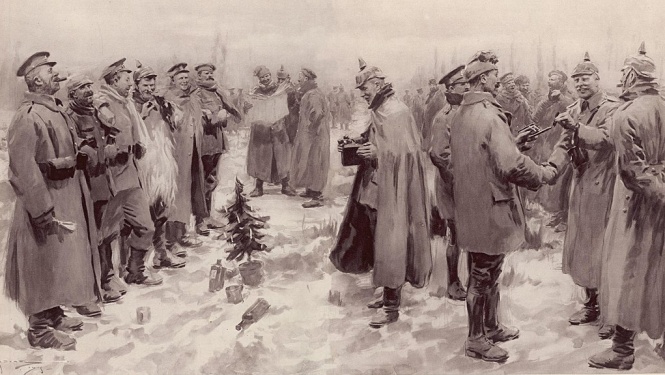
A series of unofficial truces occurred across the Western Front to celebrate Christmas in 1914. The image, at top, illustrates the event: “British and German Soldiers Arm-in-Arm Exchanging Headgear: A Christmas Truce between Opposing Trenches” with a sub caption explaining “Saxons and Anglo-Saxons fraternising on the field of battle at the season of peace and goodwill: Officers and men from the German and British trenches meet and greet one another — A German officer photographing a group of foes and friends.” Originally published in The Illustrated London News, January 9, 1915.

Categories
Today

Home Rule

On December 24, 1973, the District of Columbia Home Rule Act was passed, allowing residents of Washington, D.C., to elect their own local government.