Categories
Today

Locke & Shays

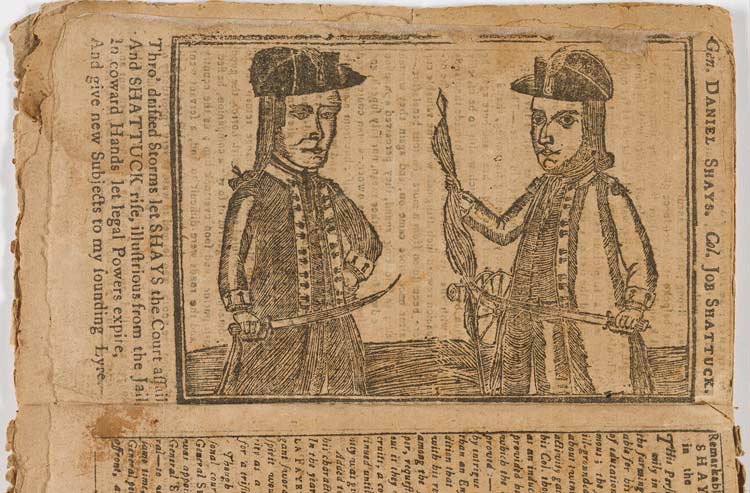
August 29 marks the 1632 birthday of British philosopher John Locke, author of Two Treatises of Government, and one of the strongest intellectual influences on America’s 18th century independence movement and subsequent constitutional thinking. Locke died on October 28, 1704.

On August 29, 1786, Shays’ Rebellion began. The rebellion was an armed uprising of Massachusetts farmers reacting very negatively against the high debt and tax burdens enacted to pay off the Revolutionary War. This rebellion scared American leaders into revising the Articles of Confederation, a process that led not to a mere few changes, but to the writing and adoption of a whole new Constitution.

Categories
Thought

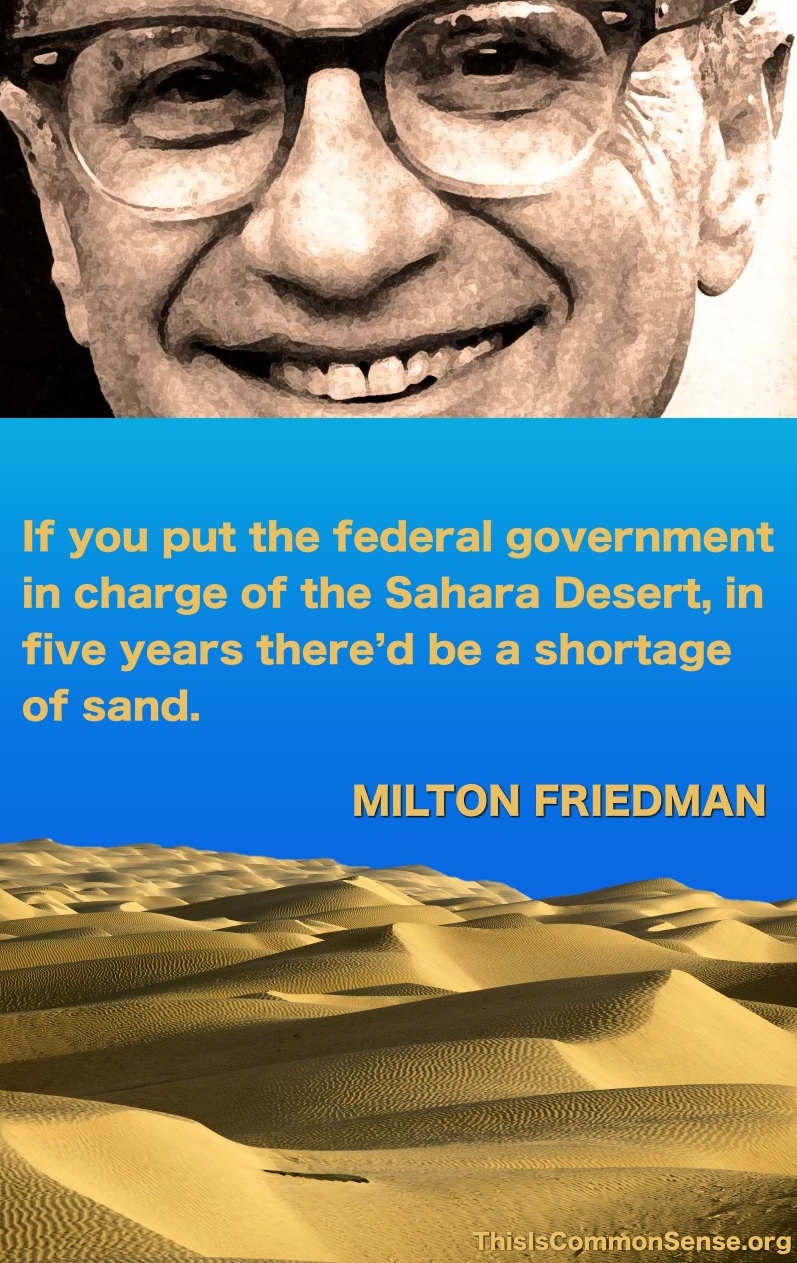
Milton Friedman

If you put the federal government in charge of the Sahara Desert, in five years there’d be a shortage of sand.

Categories
Today

Slavery Abolished

On August 28, 1833, the Slavery Abolition Act received Royal Assent, formally abolishing slavery throughout most the British Empire.

Categories
audio podcast

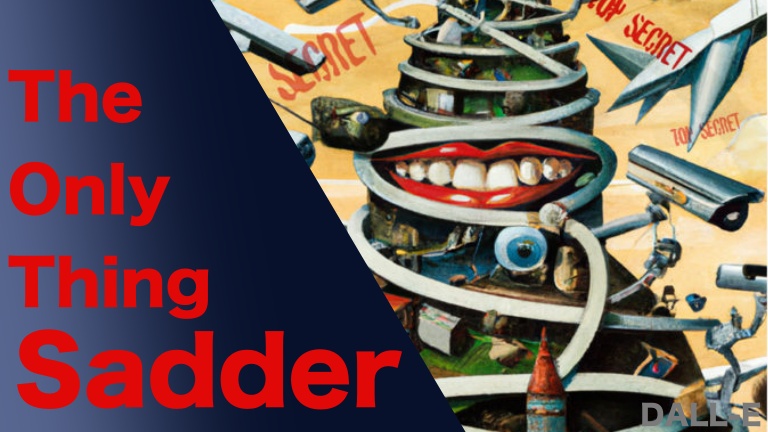
Listen: The Only Thing Sadder

What’s worse than the low opinion Americans have for their major institutions? Paul Jacob tells you in this weekend’s episode of This Week in Common Sense:

Categories
Today

Baltic Independence

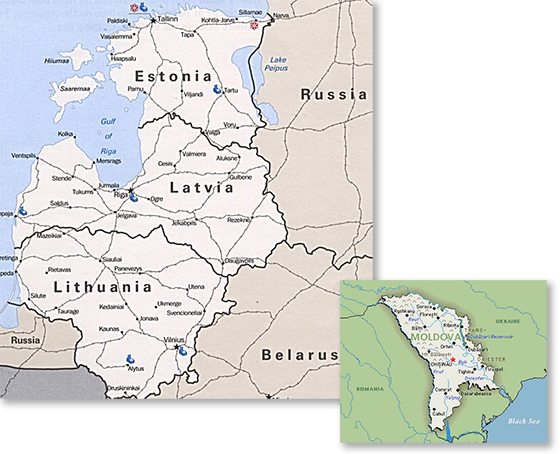
On August 27, 1991, the European Community recognized the independence of the Baltic states of Estonia, Latvia and Lithuania, and Moldova after they had declared their independence from the USSR.

Categories
Thought

Plato

θαρρεῖν, ὦ Θεαίτητε, χρὴ τὸν καὶ σμικρόν τι
δυνάμενον εἰς τὸ πρόσθεν ἀεὶ προϊέναι.

No one should be discouraged, Theaetetus, who can make constant progress, even though it be slow.

Plato, Sophist.
Categories
Fifth Amendment rights First Amendment rights general freedom nannyism national politics & policies

Just a Board Whose Intentions Were Good?

They say it was all a terrible misunderstanding.

The Department of Homeland Security has caved and is now closing its new Disinformation Governance Board. Critics had been disinformatively saying that the board would probably be used for censorious purposes.

Au contraire, says DHS — even though the board was originally headed by an exponent of countering wrongthink about such matters as the “alleged” Hunter Biden laptop. No. Per DHS, this board really, truly, deep down, supposedly had only benign intentions.

When announcing the shutdown, DHS also announced that it has a bridge to sell you.

(Gotcha! DHS didn’t announce anything about a bridge. That’s just a bit of disinformation that I perpetrated with the help of my woefully abused First Amendment–protected freedom of speech!)

In May, DHS Secretary Mayorkas insisted that the board was no threat to free speech. The point was to address threats “without infringing on free speech.” Rather, the board would be doing things like disputing the strangely persuasive misinformation that the U.S. now has an open southern border.

Even early on, though, the board had been planning to coordinate its anti-disinformative efforts with Big Tech social media firms, which have been censoring on behalf of government. And various government officials will still be working to delegate the nuts and bolts of violating the First Amendment to Twitter, Facebook, YouTube, et al. No letup on that front in sight.

DHS may be ending its ill-named board. But beware: its spirit and agenda live on.

This is Common Sense. I’m Paul Jacob.


NOTE: This board was previously discussed in these pages on May 2, in “Homeland Censorship Board.”

PDF for printing

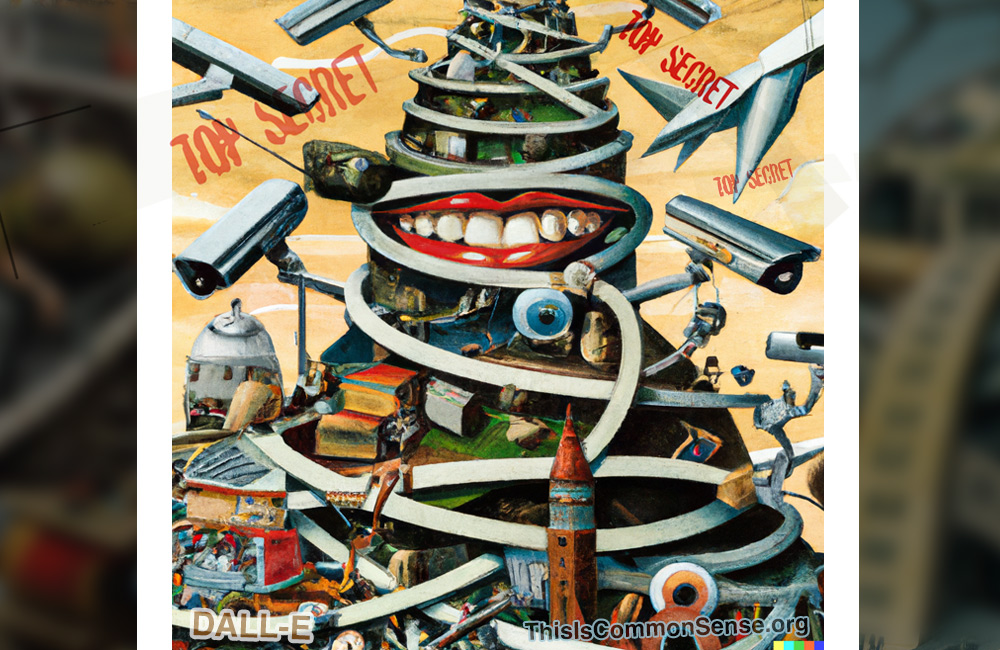
Illustration assist from DALL-E

See all recent commentary
(simplified and organized)
See recent popular posts
Categories
Thought

Volney

Q. What is that fundamental principle?

A. It is justice, which alone comprises all the virtues of society.

Q. Why do you say that justice is the fundamental and almost only virtue of society?

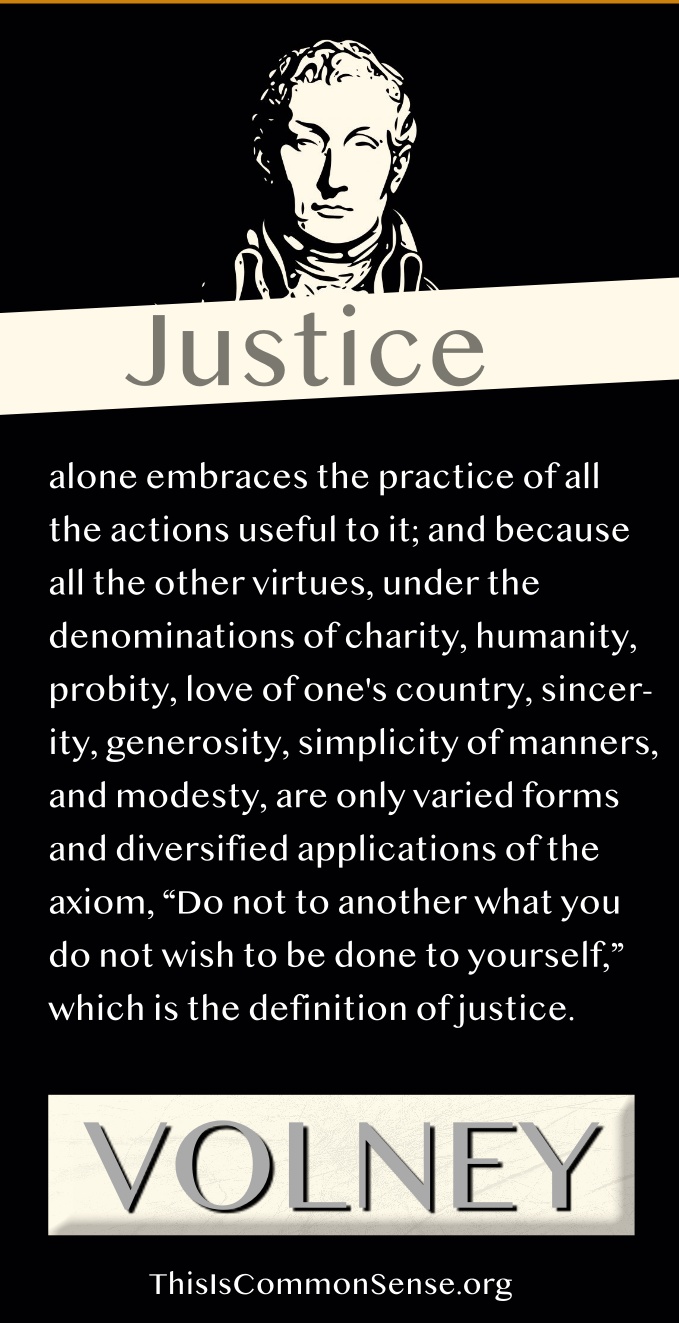
A. Because it alone embraces the practice of all the actions useful to it; and because all the other virtues, under the denominations of charity, humanity, probity, love of one’s country, sincerity, generosity, simplicity of manners, and modesty, are only varied forms and diversified applications of the axiom, “Do not to another what you do not wish to be done to yourself,” which is the definition of justice.

Constantin Francois de Volney, The Law of Nature, Chapter XI: “The Social Virtues; Justice.”
Categories
Today

Suffrage

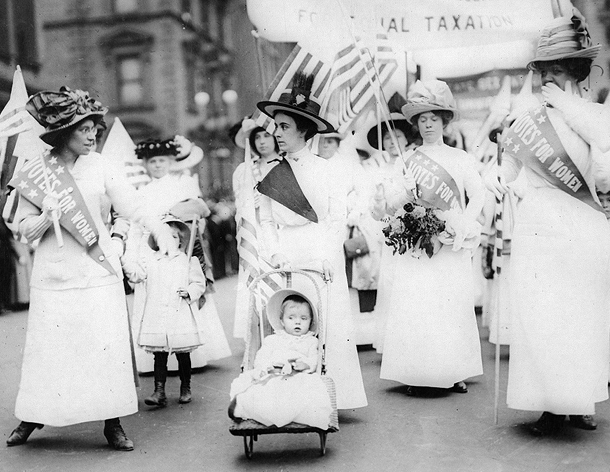
On August 26, 1920, the 19th amendment to United States Constitution took effect, giving women the right to vote in every state of the union.

Prior to the passage of this amendment, 15 states allowed women to vote. Most of them were west of the Mississippi. The territory of Wyoming was the first to extend voting rights to women in 1869.

Categories
Thought

Charles Dunoyer

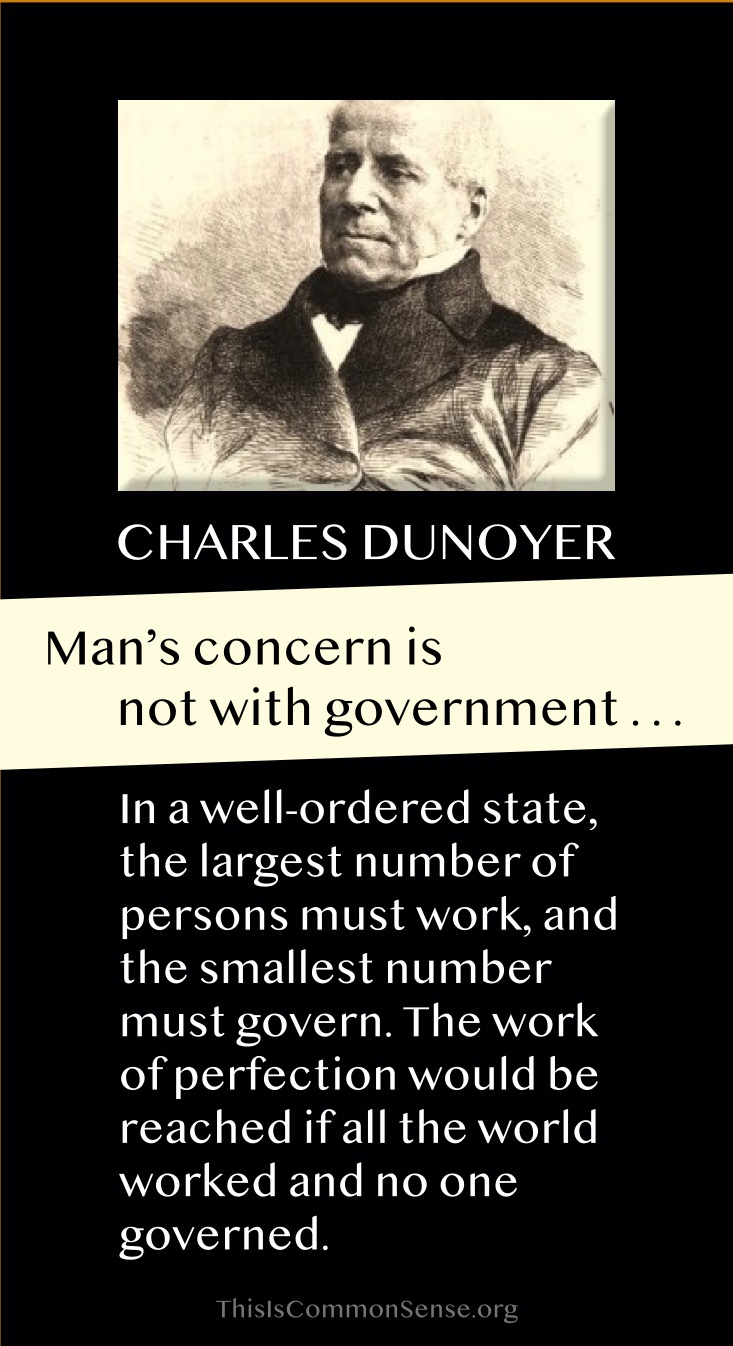
Man’s concern is not with government; he should look on government as no more than a very secondary thing — we might almost say a very minor thing. His goal is industry, labour and the production of everything needed for his happiness. In a well-ordered state, the government must only be an adjunct of production, an agency charged by the producers, who pay for it, with protecting their persons and their goods while they work. In a well-ordered state, the largest number of persons must work, and the smallest number must govern. The work of perfection would be reached if all the world worked and no one governed.