Categories
Thought

Angus Deaton

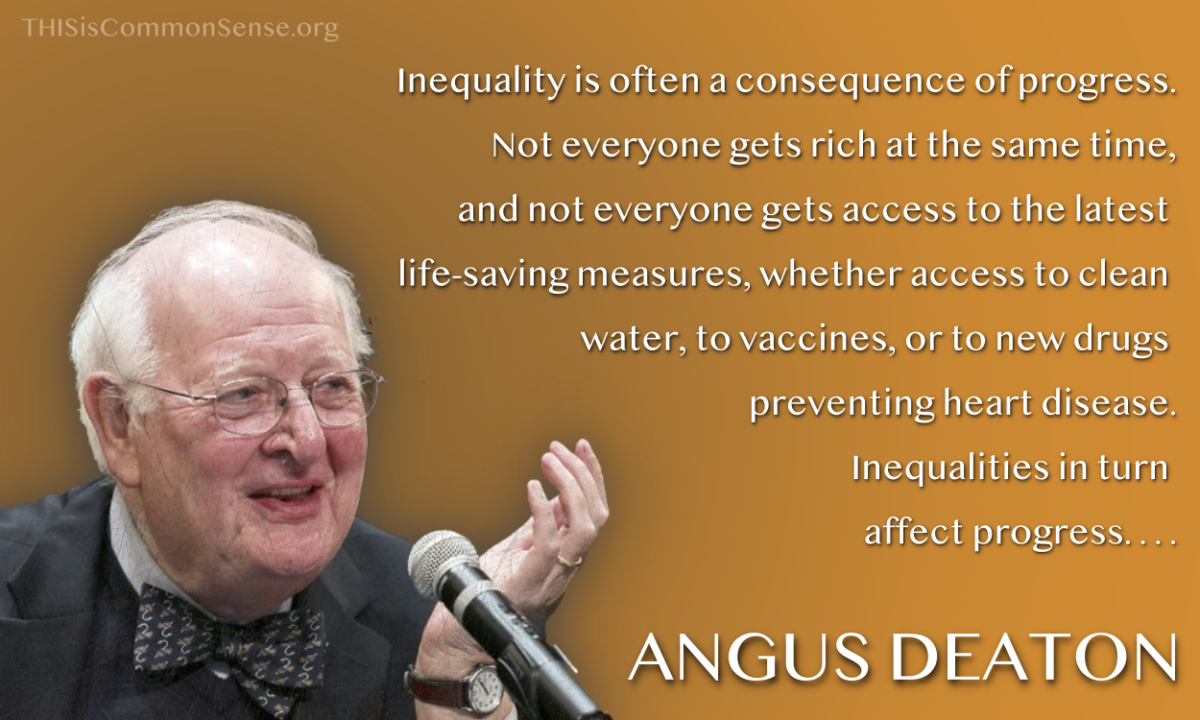
Inequality is often a consequence of progress. Not everyone gets rich at the same time, and not everyone gets access to the latest life-saving measures, whether access to clean water, to vaccines, or to new drugs preventing heart disease. Inequalities in turn affect progress. . . .

Angus Deaton, The Great Escape: Health, Wealth, and the Origins of Inequality (2013), first page of the Introduction.
Categories
Today

Monkeyshine, Moonshine

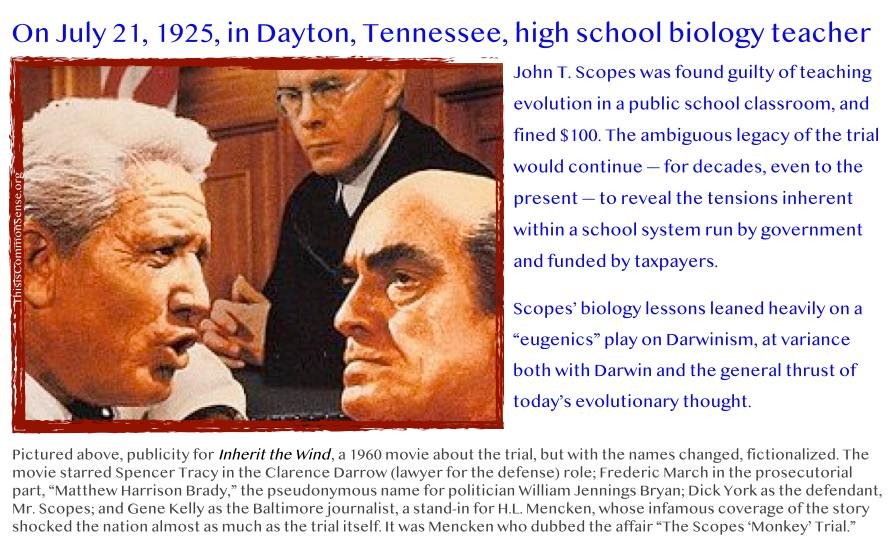
On July 21, 1925, in Dayton, Tennessee, high school biology teacher John T. Scopes was found guilty of teaching evolution in a public school classroom, and fined $100. The ambiguous legacy of the trial would continue — for decades, even to the present — to reveal the tensions inherent within a school system run by government and funded by taxpayers.

Scopes’ biology lessons leaned heavily on a “eugenics” play on Darwinism, at variance both with Darwin and the general thrust of today’s evolutionary thought.


Today is the 57th anniversary of the Apollo 11 mission’s perambulation upon the Moon, on July 21, 1969. Neil Armstrong and Buzz Aldrin walked upon the surface of Mare Tranquillitatis for about two hours and 15 minutes. They spent over 21 hours on the surface, total, most of it inside the Lunar Module, at the site they called Tranquillity Base, before launching to rejoin astronaut Michael Collins in lunar orbit and returning to Earth on the 24th.

Categories
national politics & policies term limits

Terminal Representation

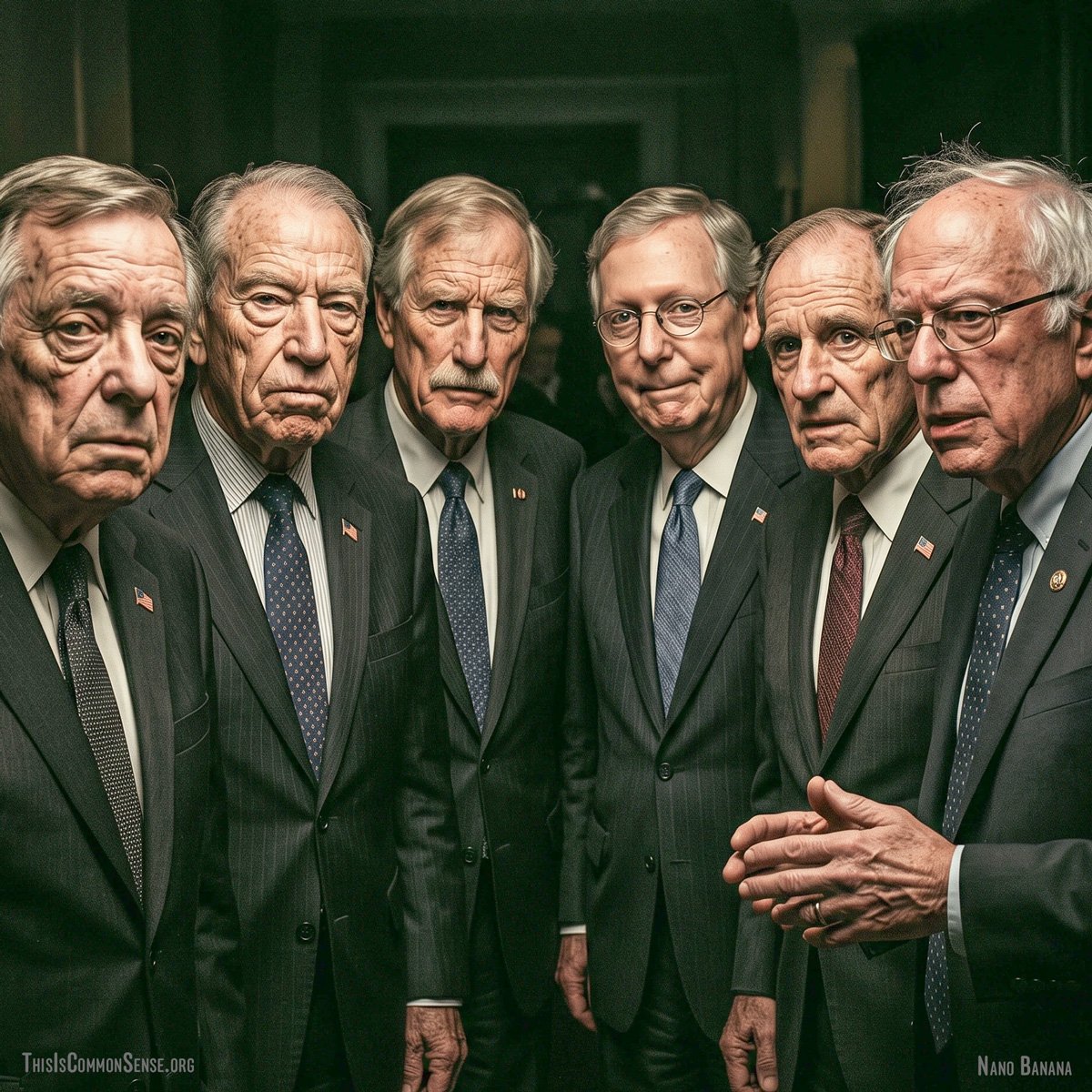
Kentucky Senator Mitch McConnell, 84, has been absent from Congress, hospitalized for weeks — first with no comment on his medical condition, still with very little information divulged. 

There should be an ethic in public service that when one is incapacitated, one hands the trust given back to the public to fill anew.* Sadly, this tradition has fallen victim to . . . take your pick: incumbency, partisanship, lack of electoral competition, Cicero’s times/mores.

History’s third-oldest U.S. Congress “boasts” 23 members of the House and Senate now eighty years old or older. Senate Judiciary Chairman Chuck Grassley, the senior Iowa Senator, is the oldest at 92.

This aging of our decision makers has set up a seniority system of sorts. Hardly healthy. 

No wonder polls show overwhelming public support for age limits. 

Though I, too, would vote for, say, an 80-year age limit, if given the chance . . . age is not really the problem. I know people in their eighties who could well serve in Congress. 

For a time. 

The better answer is good old-fashioned term limits, which garner even greater public support. 

Mitch McConnell entered the U.S. Senate at age 42. He then spent the next 42 years in Washington, the longest serving senator in Kentucky history. 

The six older U.S. Senators — Durbin (IL), Grassley (IA), King (ME), McConnell (KY), Risch (ID), Sanders (VT) — average 33 years in Congress, while the 17 octogenarian House members average 28 years. Only Rep. Jim Baird of Indiana has been there less than a decade, first elected at age 73.

“We don’t think senility is really the problem,” says U.S. Term Limits CEO Nick Tomboulides. “We think incumbency is the problem, and senility is the symptom.”

This is Common Sense. I’m Paul Jacob.


* Part of the politics with Sen. McConnell is partisan: he is a Republican but the governor who would appoint his replacement for the rest of 2026 is a Democrat. 

PDF for printing

Illustration created with Nano Banana

See all recent commentary
(simplified and organized)
See recent popular posts
Categories
Thought

Destutt de Tracy

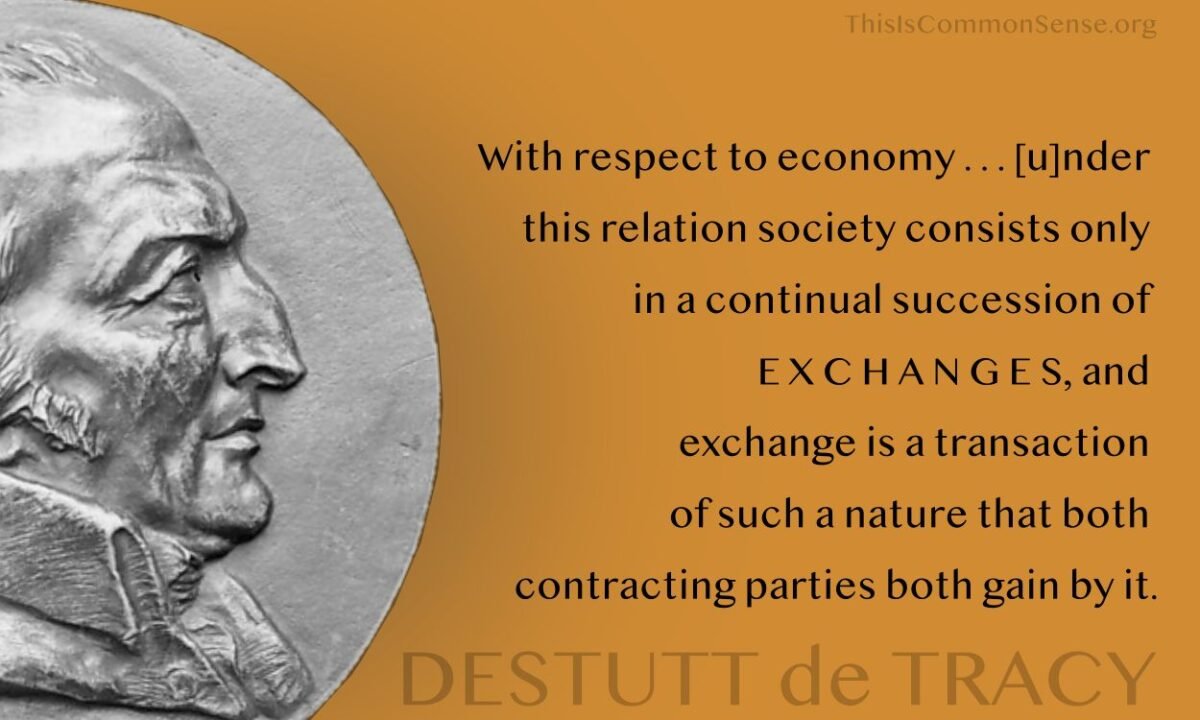
[W]ith respect to economy . . . [u]nder this relation society consists only in a continual succession of E X C H A N G E S, and exchange is a transaction of such a nature that both contracting parties both gain by it. . . .

We cannot cast our eyes on a civilized country without seeing with astonishment how much this continual succession of small advantages, unperceived but incessantly repeated, adds to the primitive power of man.

It is because this succession of changes, which constitutes society, has three remarkable properties. It produces concurrence of force, increase and preservation of intelligence and division of labour.

The utility of these three effects is continually augmenting.

Destutt de Tracy, Traité de la volonté, English translation titled A Treatise on Political Economy (Georgetown, D.C.: Joseph Milligan; W. A. Rind & Co. Printers, 1817), pp. xvi-xvii.
Categories
Today

The Count Tracy

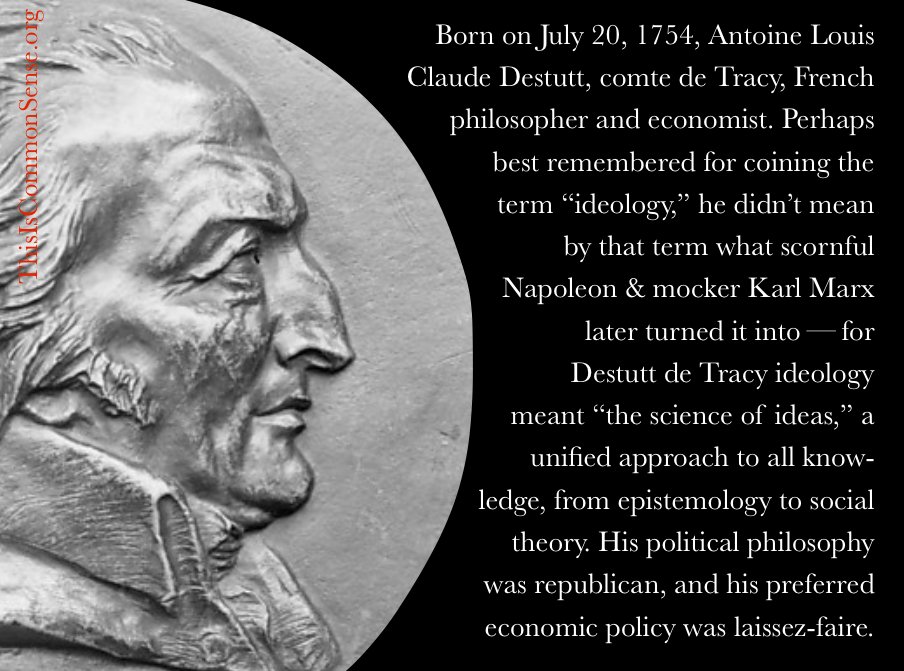
Born on July 20, 1754, Antoine Louis Claude Destutt, comte de Tracy, French philosopher and economist. Perhaps best remembered for coining the term “ideology,” he didn’t mean by that term what scornful Napoleon and communist Karl Marx later turned it into — for Destutt de Tracy ideology meant “the science of ideas,” a unified approach to all knowledge, from epistemology to social theory.

Though his family had been enobled twice, he renounced the title and entered the 1789 Estates General conference as a member of the Third Estate. During the Reign of Terror, he was imprisoned, and would have been executed had not Robespierre been pushed to the scaffold ahead of him.

Two of his books became popular in early 19th century America, his commentaries on Montesquieu’s Spirit of the Laws, and his Traité de la volonté, which Thomas Jefferson, the editor of the American edition, retitled A Treatise on Political Economy. Tracy’s economics was of a deductivist stripe, familiar to readers of later economists such as Nassau Senior and Ludwig von Mises.

Destutt de Tracy’s political philosophy was republican, and his preferred economic policy was laissez-faire.


NASA’s Apollo 11 landed two humans on the Moon — Commander Neil Armstrong and lunar module pilot Buzz Aldrin — on July 20, 1969, at 20:17 UTC.

Categories
Today

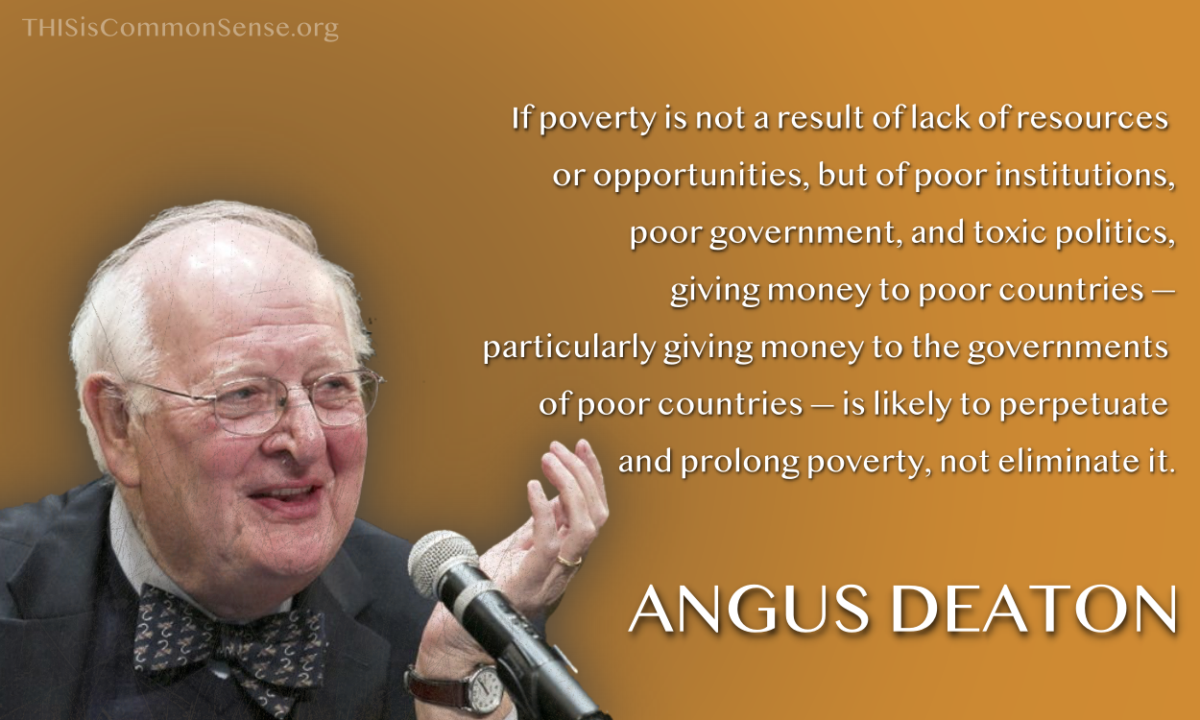
Angus Deaton

If poverty is not a result of lack of resources or opportunities, but of poor institutions, poor government, and toxic politics, giving money to poor countries — particularly giving money to the governments of poor countries — is likely to perpetuate and prolong poverty, not eliminate it. 

Angus Deaton, The Great Escape: Health, Wealth, and the Origins of Inequality (2013).
Categories
Thought

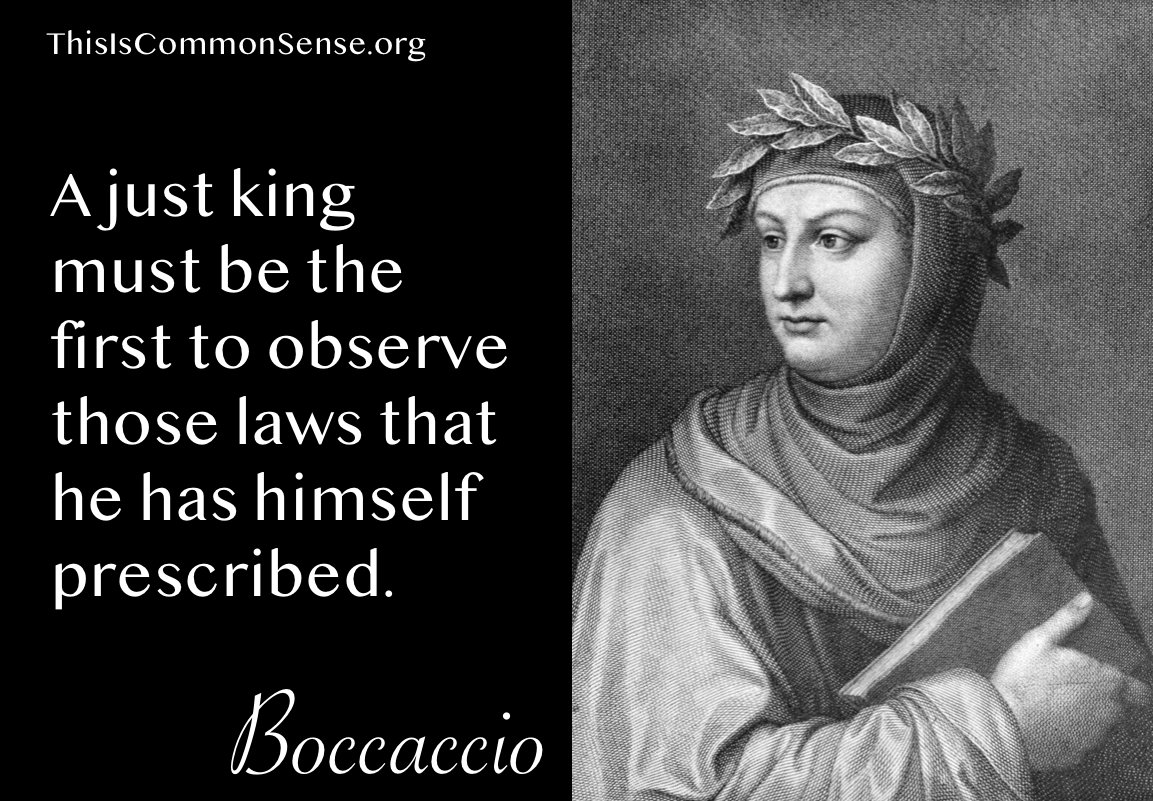
Boccaccio

Ogni giusto re primo servatore dee essere delle leggi fatte da lui.

A just king must be the first to observe those laws that he has himself prescribed.

Giovanni Boccaccio, The Decameron (c. 1350), “Seventh Day,” Tenth Story (tr. G. H. McWilliam).

Categories
Today

Kauaʻi & Fire

On July 19, 1817, Georg Anton Schäffer — unsuccessful in his attempt to conquer the Kingdom of Hawaiʻi for the Russian-American Company — was forced to admit defeat and leave Kauaʻi. The effort had begun in 1815 as a shipwreck recovery mission but escalated after the German physician in the company’s employ had been played by native politicians. Legal action against Schäffer — considered, after the fact, a bungler (his efforts cost his employer over 200,000 roubles) — proved unsuccessful.


In A.D. 64 on the 19th of July, the Great Fire of Rome began. It caused widespread devastation and raged for six days, destroying half the city.

One thousand seven hundred eighty-one years later, the last great fire to affect Manhattan began early in the morning and was subdued that afternoon. This “Great New York City Fire of 1845” killed four firefighters and 26 civilians, destroying 345 buildings.

Categories
Update

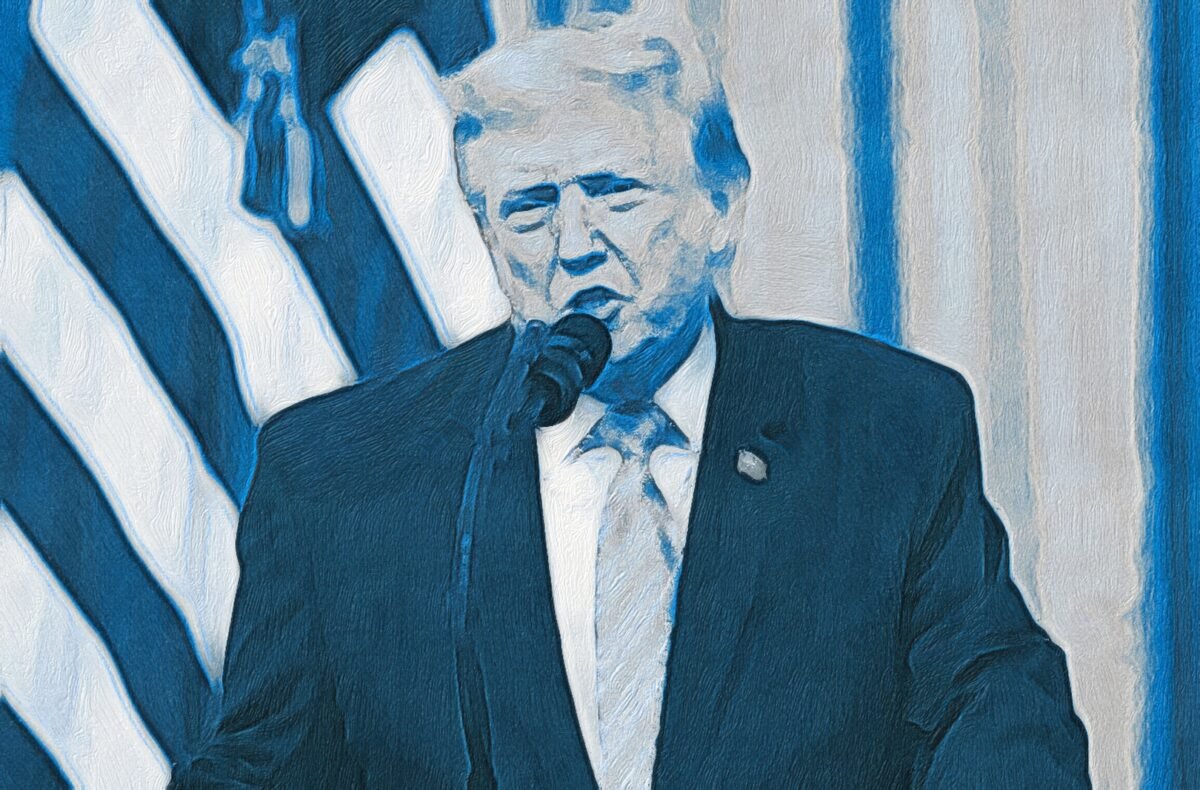
Trump’s Election Integrity Contentions

President Donald Trump’s big speech on Thursday focused on election integrity. The gist? Elections are severely compromised in these United States. Highlights included his

  • contention that China tried to influence the 2020 presidential elections;
  • blaming the “Deep State” for deliberately keeping this information from him during his first administration;
  • declaring that electronic ballot technology and “voting machines” are insecure, and that Maduro’s Venezuela government worked secretly to affect outcomes in 2024;
  • insisting that over 250,000 non-citizens are registered to vote in federal elections.

The president disclosed reports and information that he said backed up his main points.

“Trump closed by once again pushing Congress to pass the Save America Act,” reports the Wall Street Journal, “which would restrict mail-in ballots and require proof of U.S. citizenship to register to vote. 

“‘Every American, whether you’re a Republican, Democrat, independent or otherwise, should be able to agree that we deserve the most secure, honest and fair election system,’ Trump said.”

Press reports on the president’s speech tend to run strongly negative, as in this U.S. News and World Report headline: “Trump Says These Documents Prove His False Claims of Election Fraud. Here’s What They Really Say.”

Categories
Thought

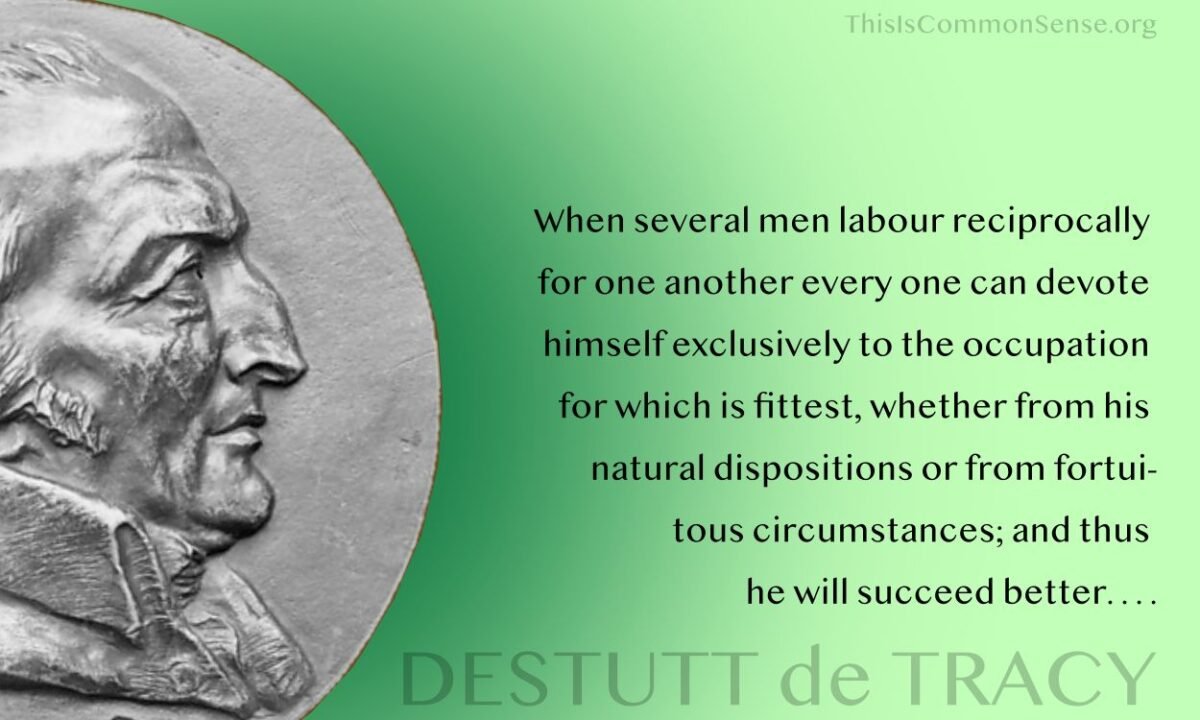
Destutt de Tracy

We can scarcely conceive at first that the great effects . . . have no other cause than the sole reciprocity of services and the multiplicity of exchanges. However this continual succession of exchanges has three very remarkable advantages.

First, the labour of several men united is more productive, than that of the same men acting separately. . . .

Secondly, our knowledge is our most precious acquisition, since it is this that directs the employment of our force, and renders it more fruitful, in proportion to its greater soundness and extent. . . .

Thirdly, and this still merits attention: when several men labour reciprocally for one another every one can devote himself exclusively to the occupation for which is fittest, whether from his natural dispositions or from fortuitous circumstances; and thus he will succeed better. . . .

Concurrence of force, increase and preservation of knowledge, and division of labour, — these are the three great benefits of society. They cause themselves to be felt from the first by men the most rude; but they augment in an incalculable ratio, in proportion as they are perfected, — and every degree of amelioration, in the social order, adds still to the possibility of increasing and better using them.”

Antoine Louis Claude Destutt, comte de Tracy, A Treatise on Political Economy (Georgetown, D.C.: Joseph Mulligan, publisher; W. A. Rind & Co., printer, 1817) Thomas Jefferson, ed. of translation, from the section entitled “The First Part of the Treatise on the Will and Its Effects: Of Our Action,” chapter one, “Of Society.”