Categories
Today

Corn Law

On January 31, 1849, the Corn Laws were abolished in the United Kingdom, one of the most impressive and far-reaching anti-protectionist moves of all time. “Corn” stood for all grains, including wheat, oats, barley, etc.; the free-trade agitation by John Bright and Richard Cobden was one of the main impetuses for the reform.

On Jan. 31, 1865, the United States Congress proposed the Thirteenth Amendment to the U.S. Constitution, submitting it to the states for ratification. The Amendment’s main section reads: “Neither slavery nor involuntary servitude, except as a punishment for crime whereof the party shall have been duly convicted, shall exist within the United States, or any place subject to their jurisdiction.”

On Jan. 31, 1990, the first McDonald’s fast food restaurant opened in the Soviet Union. In 2022 they were all closed in protest of the Ukraine war.

Categories
folly ideological culture media and media people

Mr. Vehement

He’s vehement — vehement with the force of 600,000 Hiroshima-class atomic bombs exploding each and every day. 

Because he cares. 

He really does. 

He really cares about putting the days of Wooden Al Gore behind him and ushering in Apoplectic Foaming-at-the-Mouth-While-Bleeding-From-Every-Pore Al Gore.

It’s just unfortunate though that whilst ratiocinating at Davos, Mr. Gore destroyed the atmosphere and disarranged the solar system, further accelerating global warming and cooling.

If you’re wondering whether I am now just making stuff up, thank you for noticing; yes: I learned it from the best. But I’m sincere. Okay? I’m emoting very hard right now, for which I fully expect to receive social-credit points that I can tape to my COVID-19 passport and wave at the grocery-store clerk as I pay a thousand dollars for a half-dozen eggs.

If only vehemence were facts and cogency, Al Gore would be the most empirical, most logical man alive. As it is, a billion flabbergasted refugees have fled before the force of his rhetoric.

If you don’t believe that Gore not whispered but roared, nay, expectorated, the following, etc., at Davos about how the (man-made) greenhouse effect is trapping “as much extra heat as would be released by 600,000 Hiroshima-class atomic bombs exploding every single day on the earth!! That’s what’s boiling the oceans, creating these atmospheric rivers, and the rain bombs, and sucking the moisture out of the land, and . . . and . . . and —”

. . . then I refer you to the videotape. Roll it, Hal.

This is Common Sense. I’m Paul Jacob.


PDF for printing

Illustration created with Midjourney and DALL-E2

See all recent commentary
(simplified and organized)
See recent popular posts

Categories
Thought

Gottlob Frege

‘Facts, facts, facts,’ cries the scientist if he wants to emphasize the necessity of a firm foundation for science. What is a fact? A fact is a thought that is true. But the scientist will surely not recognize something which depends on men’s varying states of mind to be the firm foundation of science.

Gottlob Frege, “The thought: A logical inquiry,” in Peter Ludlow’s Readings in the Philosophy of Language (1997), p. 27.
Categories
Today

Non-Violence … and Violent Reaction

On Jan. 30, 1948, Indian leader Mohandas K. Gandhi, known for his non-violent, non-cooperation struggle for freedom and national independence, was assassinated by a Hindu extremist.

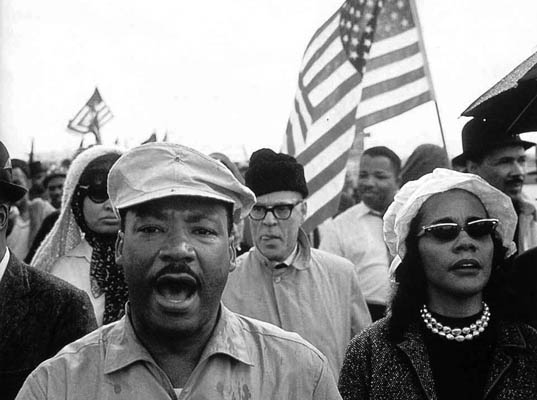
On Jan. 30, 1956, Martin Luther King, Jr.’s home was bombed in retaliation for his work on the Montgomery Bus Boycott.

On Jan. 30, 1972, British soldiers killed fourteen unarmed civil rights marchers in Northern Ireland in what came to be known as “Bloody Sunday.” Soldiers shot 26 unarmed protesters and bystanders – 13 males, seven of whom were teenagers, died immediately, while another man died of his injuries nearly five months later. In the immediate aftermath, an investigation by the British Government largely cleared the soldiers and British authorities of blame. A second investigation begun in 1998, released a report in 2010 declaring that all of those shot were unarmed, and that the killings were both “unjustified and unjustifiable.”


Not quite fitting today’s “non-violence elicits violence” theme, on January 30, 1835, Richard Lawrence attempted to shoot former military leader and then-President Andrew Jackson, but failed. He was subdued by a crowd, including several congressmen. That marked the first attempt on the life of a sitting U.S. president.

Categories
by Paul Jacob video

Watch: Seeds (Bad)

Beginning with Greek philosophers and ending with abandoned cars in the forest:

Categories
Thought

Thomas Szasz

In the animal kingdom, the rule is, eat or be eaten; in the human kingdom, define or be defined.

Thomas Szasz, in The Second Sin‎ (1973), p. 20.
Categories
Today

Gallatin

On January 29, 1761, Albert Gallatin was born. Gallatin served as the fourth United States Secretary of the Treasury — a post in which he served longer than any other in American history — advanced the anthropological and linguistic study of native Americans, and became the subject of a biography by Henry Adams. Called the “father of American ethnology,” he has been honored with a 1967 U.S. stamp as well as many place names, including the Gallatin National Forest in Montana.

Categories
audio podcast

Listen: Bad Seeds?

Jacinda the Wicked Witch of New Zealand, is on the outs. Ousted. Disappeared. But not by magic.

Paul Jacob explains:

Categories
Thought

Aristippus

A wise man’s country is the world.

According to Diogenes Laërtius, The Lives and Opinions of Eminent Philosophers (c. 200 A.D.), Book I: “The Seven Sages.”
Categories
Today

End of an Age

On January 28, 1912, Belgian economist Gustave de Molinari died. Molinari was one of the last major economists of the French Liberal School, heir to Frederic Bastiat, and a prominent advocate of free trade. His last book, The Society of To-morrow (the only one of his many books to be translated into English in his day) envisioned a future of extremely limited government, and argued against the growing tide of socialism and war that was becoming all too apparent as the future of Europe.

Sadly, the old liberal order of Europe ended with the beginning of the Great War, exactly two and one half years after Molinari’s demise.


On Jan. 28, 1981, President Ronald Reagan lifted the federal government’s remaining domestic petroleum price and allocation controls in the United States, helping to end the 1970s energy crisis and begin the 1980s’ oil glut.

The deregulatory move had been begun by Democrats in Congress, particularly Sen. Ted Kennedy, but had been placed on a gradual schedule, and the whole effort clouded with talk of “windfall profits” and a tax on those allegedly unfair returns on investment.