What the people fight against in Nebraska, another Trojan Horse:
Categories
What the people fight against in Nebraska, another Trojan Horse:
A scientist does not kill anybody by failing to predict an imminent earthquake, even if he believes and says that it is unlikely to occur just before it does occur. Non-omniscient seismologists don’t kill people; earthquakes kill people.
Nevertheless, Judge Marco Billo sentenced six Italian scientists and a government official to six years in prison for manslaughter, and also billed them for court costs and damages to the tune of $10.2 million.
Some residents of the Italian town of d’Aquila applaud the penalties.
The seven defendants were members of the National Commission for the Forecast and Prevention of Major Risk, which had convened not long before the earthquake struck d’Aquila in April 2009, killing 309 people. Commission members did not issue a warning because the kind of small tremors that had been putting townsfolk on edge were, in their experience, not often the prelude to a major earthquake.
Their crime, then, was for uttering less-than-omniscient judgments in their field.
Suppose the defendants had instead determined that there should be an evacuation, that the town were then evacuated, and that a person died on the way out of town in a way directly attributable to the evacuation — but no earthquake then ensued. Also manslaughter?
If inability to eliminate uncertainty about future hazards is a crime, then we’re all guilty. But the real crime was committed by anyone having anything to do with this miscarriage of justice.
This is Common Sense. I’m Paul Jacob.
 The use of force alone is but temporary. It may subdue for a moment; but it does not remove the necessity of subduing again: and a nation is not governed, which is perpetually to be conquered.
Sometimes a great misunderestimation.
George W. Bush’s “misunderestimate” still has a jolly ring to it, in my ear, just as does the common barbarism “irregardless.” Yet I realize that, in both cases, the prefix adds no new meaning to the word it would seem to modify.
Regardless, underestimation is today’s theme.
Matthew Feeney, at Reason.com, notes the shock-without-awe of the Greek government’s 2013 budget, just released. “The budget is worse than the 2010 projections,” he notes. And that simple statement almost qualifies as understatement:
The IMF had been hoping that the Greeks would manage to get their debt to GDP down to 120 percent by 2020. Considering that the newest budget projects a debt to GDP rate of 184.9 percent in 2016 it is unlikely that this goal will be reached.
That 184.9 percent figure was revised up from previous estimates of 179.3 percent.
The amount of debt is now way beyond the country’s annual income, as measured by GDP. I’m not one to rely heavily on GDP figures, but we need some comparison, and a market/private sector income figure would not make the 2013 ratio look any better.
And this is not a new thing. The Greeks have been underestimating their debt-to-GDP ratio for years now, as a nifty graphic from Zerohedge shows.
When a country is as overladen with government workers and other tax consumers as Greece is, this is to be expected. Zerohedge was right in 2010, to note that “Greece just got bailed out so it can get into even more debt!” At some point, hope morphs into fantasy and misunderestimation of future insolvency becomes a way of life.
This is Common Sense. I’m Paul Jacob.
People will not look forward to posterity, who never look backward to their ancestors.
When time and labor had developed riches, cupidity restrained by the laws, became more artful, but not less active. Under the mask of union and civil peace, it fomented in the bosom of every state an intestine war, in which the citizens, divided into contending corps of orders, classes, families, unremittingly struggled to appropriate to themselves, under the name of supreme power, the ability to plunder every thing, and render every thing subservient to the dictates of their passions; and this spirit of encroachment, disguised under all possible forms, but always the same in its object and motives, has never ceased to torment the nations.
Some Cubans will soon be free to escape the Cuban dictatorship.
The Cuban government recently announced it would end exit visa requirements by mid-January. After which, Cubans wanting to go abroad will simply need a passport and a visa from the country they’re headed to.
Some of them, at least.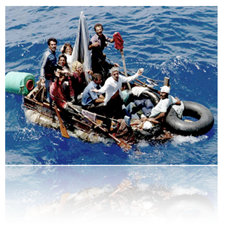
Cuba won’t simply let its people go. Emigration will remain a privilege — one more often accorded now, but still a privilege — not a right. A privilege the government may revoke at will by invoking, for example, “national security” to stop dissidents who might cause trouble abroad. Skilled professionals may be kept to “preserve the human capital created by the Revolution” — you know, on the “You Didn’t Build That” principle.
For a government (whether a dictatorship or a prelude to one) to treat rights as mere provisional gifts is nothing new. The Weimar constitution of 1919 held the rights of the individual to be “inviolable” — unless a law were passed to violate them. (Article 114.) The German’s home was “an asylum and inviolable” — unless a law were passed to violate it. (115.) Freedom of speech, freedom of movement, etc., were all guaranteed — except when the state deemed otherwise.
Yes, Cuba’s loosening of emigration rules will be a boon for those Cubans free to leave under the new rules. But the situation resembles that of a prison in which everybody is wrongly incarcerated, from which half the inmates are one day graciously released. Well, great, except . . . shouldn’t they all be released?
This is Common Sense. I’m Paul Jacob.
The practice of medicine historically straddled between being a business profession and a charitable endeavor. When government took it over — nearly in one big gulp, in Great Britain— that uneasy mix mutated, leaving us with the occasional bout of stark horror.
A British woman suffering from cystic fibrosis has been denied a new wonder drug that the manufacturer has agreed to provide for free, while the National Health Service gets around to approving it. But NHS says no.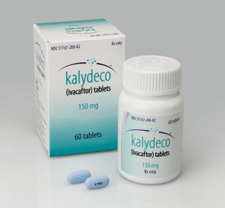
Her family say she will die soon without it, yet managers at Heartlands Hospital in Birmingham say it would be unethical to provide the drug under the deal, only for it to be withdrawn later.
The drug, Kalydeco also known as ivacaftor, costs £182,000 per patient per year, and works for five per cent of people with CF who have a certain defective gene, around 270 people in England.
It corrects a malfunctioning protein which causes the characteristic build-up of fluid and mucus in the lungs that causes devastating damage.
A long shot, apparently. But is that any reason to deny a charitable offer?
These kinds of deals get offered and accepted in America all the time.
But then, when a private insurance company here decides not to cover some drug or treatment, that’s an excuse to excoriate American capitalism — while forgetting about all the characteristically American workarounds. But in “single-payer” Britain we see the state acting as a proverbial “death panel.” The outcry against socialism should be just as loud, if not louder.
This is Common Sense. I’m Paul Jacob.
 Yes, creative man, receive my homage! Thou hast measured the span of the heavens, calculated the volume of the stars, arrested the lightning in its clouds, subdued seas and storms, subjected all the elements. Ah! how are so many sublime energies allied to so many errors?
Self-righteousness is not new. But it hasn’t gone out of style, either — at least regarding moralistic dieters.
There’s even a study on it. In an article by Diane Mapes in Today’s Health, we learn “that organic food may just make people act a bit like jerks.”
Mapes focuses on the work of psychologist Kendall Eskine, who “noticed a lot of organic foods are marketed with moral terminology, like Honest Tea, and wondered if you exposed people to organic food, if it would make them pat themselves on the back for their moral and environmental choices. I wondered if they would be more altruistic or not.”
To find out, Eskine and his team divided 60 people into three groups. One group was shown pictures of clearly labeled organic food, like apples and spinach. Another group was shown comfort foods such as brownies and cookies. And a third group — the controls — were shown non-organic, non-comfort foods like rice, mustard and oatmeal. After viewing the pictures, each person was then asked to read a series of vignettes describing moral transgressions.
The results? Those merely exposed to organic foods judged moral transgressors more harshly, and, when it came to helping strangers, “the organic people also proved to be more selfish, volunteering” much less time than the control and comfort food groups offered.
According to the oft-cited “happiness paradox,” the more you fixate on happiness the less happy you become. With moral smugness, the more you fixate on the rightness of your choices, the less moral you become.
A general principle? A one-shot study that will gain no reproducible results?
In either case, it may be worth keeping an eye on . . . ourselves.
This is Common Sense. I’m Paul Jacob.
