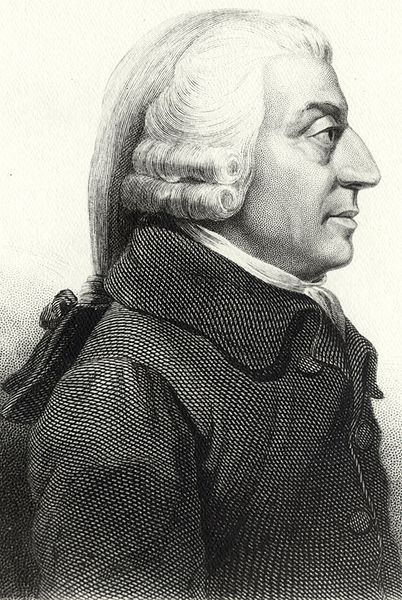
 The propensity to truck, barter and exchange one thing for another is common to all men, and to be found in no other race of animals.
Categories
The propensity to truck, barter and exchange one thing for another is common to all men, and to be found in no other race of animals.
With recent scandals, public trust in leaders of both major parties continues to droop ever lower. So much so that people are taking more about libertarians. Consider Chris Cillizza’s June 9 effort for Washington Post’s The Fix, “Libertarianism is in vogue. Again.”
Is he right? I hope so.
Amidst the current scandals, the reason to say this L word, and not the C word of “conservatism,” is that, deep down, we know that conservatives in power tend to support the kind of spy program that now dominates the headlines. Just like the Obama administration. Those moved mainly by the news of current scandals will perhaps cast their eyes and ears to more consistent critics.
Cillizza points to two other factors, though: legal marijuana and gay marriage, support for both being extraordinarily high amongst young folks, and both quite compatible with libertarian ideas, to say the least.
He also points out the successful political “failures” of Ron Paul and Gary Johnson, and the cautious Sen. Rand Paul, who, Cillizza says,
has been careful to avoid being labeled as a flat-out libertarian. . . . Instead, Rand Paul has sought to create a sort of Republicanism with libertarian principles that fits more comfortably within the bounds of the GOP.
Cillizza concludes with a suggestion: “for a party badly in need of finding new voters open to its message, embracing libertarianism — at least in part — might not be a bad avenue to explore.”
It would actually be an old idea, familiar to Goldwater and Reagan supporters.
Is that in vogue, yet? Again?
This is Common Sense. I’m Paul Jacob.
Labour was the first price, the original purchase – money that was paid for all things. It was not by gold or by silver, but by labour, that all wealth of the world was originally purchased.
A seeming lone gun nut sends threatening, ricin-laced letters to New York City Mayor Mike Bloomberg and U.S. President Barack Obama.
“What’s in this letter is nothing compared to what I’ve got planned for you” is a typical line. “. . . Anyone wants to come to my house will get shot in the face. The right to bear arms is my constitutional God given right.”
Hmm. Perhaps one difference between the letter-sender and most Americans who support the right to bear arms is that the latter would never prepare threatening poison-laced letters?
That’s merely common sense, though; and some editorialists and other opinion-lock-and-loaders lurched to another “obvious” conclusion. Clearly, they intimated, we have a gun nut allied in his nuttiness with Americans who also cite the Second Amendment provided by the gun-nut Founding Fathers.
Guilt by association is a fallacy in any case. But there were at least two motives for writing such a letter. One, to assert a right to bear arms in so wacky and threatening a way that, presumably unbeknownst to one’s wacky self, one proves that one should be allowed nowhere near guns. Two, to frame an estranged, pro-gun-rights husband.
Shannon Richardson, an actress best known for playing a zombie on TV, told the FBI that her pro-gun-rights husband was probably the culprit. But mounting evidence soon pointed to her, not her husband. Uh oh . . .
My conclusion? Many opinion-bearers should be a little more thoughtful and a little less zombie-like when taking ideological aim.
This is Common Sense. I’m Paul Jacob.
How selfish soever man may be supposed, there are evidently some principles in his nature, which interest him in the fortunes of others, and render their happiness necessary to him, though he derives nothing from it, except the pleasure of seeing it. Of this kind is pity or compassion, the emotion we feel for the misery of others, when we either see it, or are made to conceive it in a very lively manner. That we often derive sorrow from the sorrows of others, is a matter of fact too obvious to require any instances to prove it; for this sentiment, like all the other original passions of human nature, is by no means confined to the virtuous or the humane, though they perhaps may feel it with the most exquisite sensibility. The greatest ruffian, the most hardened violator of the laws of society, is not altogether without it.
This weekend’s Common Sense column at Townhall.com treads on touchy ground, the sometimes all-too-similar nature of organized crime and organized government. Hop on over, and then leap back here, for more reading:
Testify:
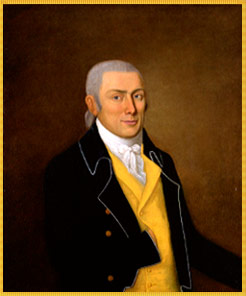 Mr. Chairman — A worthy member has asked, who are the militia, if they be not the people, of this country, and if we are not to be protected from the fate of the Germans, Prussians, &c. by our representation? I ask who are the militia? They consist now of the whole people, except a few public officers.
Did it take courage to do what Bob Fletcher did?
Fletcher was a California resident who died this June at the age of 101. The New York Times reports how he helped Japanese neighbors after the U.S. began interning Japanese-Americans living on the West Coast, a shameful policy adopted after the bombing of Pearl Harbor. (Some Germans and Italians were also interned during World War Two, but not on the same scale.)
In 1942, Al Tsukamoto asked Fletcher to run the grape farms of two family friends during their internment, in exchange for the profits. He agreed to manage those farms and Tsukamoto’s as well, working the total 90 acres for three years. He kept only half the profits.
“He saved us,” says Doris Taketa, who was 12 when Fletcher agreed to take care of her family’s farm.
Many other interned Japanese Americans lost their property.
Some Florin, California residents were upset with Fletcher for helping the Japanese. Even before the war, they had resented Japanese success.
In 2010, Fletcher recalled that he “did know a few [of my Japanese neighbors] pretty well and never did agree with the evacuation. They were the same as anybody else. It was obvious they had nothing to do with Pearl Harbor.”
Fletcher downplayed his virtue in saving the livelihoods of his Japanese neighbors despite the hostility of other neighbors. “I don’t know about courage. It took a devil of a lot of work.”
Yes, he worked the farms, kept paying the taxes, and made money, too. I call that the happiest of possible outcomes: doing well by doing good; saving his neighbors at a profit.
This is Common Sense. I’m Paul Jacob.
No man has a greater regard for the military gentlemen than I have. I admire their intrepidity, perseverance, and valour. But when once a standing army is established, in any country, the people lose their liberty.