On April 29, 1945, U.S. troops liberated the Dachau concentration camp.
Categories
On April 29, 1945, U.S. troops liberated the Dachau concentration camp.

Tyrants traditionally lash out at any number of people and groups they find dangerous or inconvenient: churches, entrepreneurs, voluntary associations, you name it. In America, our government has been having difficulty not showing some amazingly tyrannical leanings. Mass spying and data accumulation, partisan tax programs, and now …
Operation Choke Point.
In the Wall Street Journal, Frank Keating, CEO of the American Banking Association, wrote that government officials in this wing of the U.S. Department of Justice are “asking banks to identify customers who may be breaking the law or simply doing something government officials don’t like. Banks must then ‘choke off’ those customers’ access to financial services, shutting down their accounts.”
One target? Porn stars, according to a variety of reports.
Teagan Presley, “adult film” actress and stripper, had her Chase account abruptly closed — along with her husband’s. She was told that she was “high risk.” Other adult industry professionals have revealed similar treatment.
Don’t blame the banks; they’re being coerced by the DOJ. According to Keating, a bank that won’t “shut down a questionable account when directed to do so, Justice slaps the institution with a penalty for wrongdoing that may or may not have happened.”
As distasteful as the porn industry may be, this DOJ program is worse. It’s full-blown rogue government.
It may have been designed to prosecute those breaking the law via fraud and identity theft, but its modus operandi is outside the law, bullying regulated banks into punishing other businesses and people, without any court proceedings taking place.
This is Common Sense. I’m Paul Jacob.
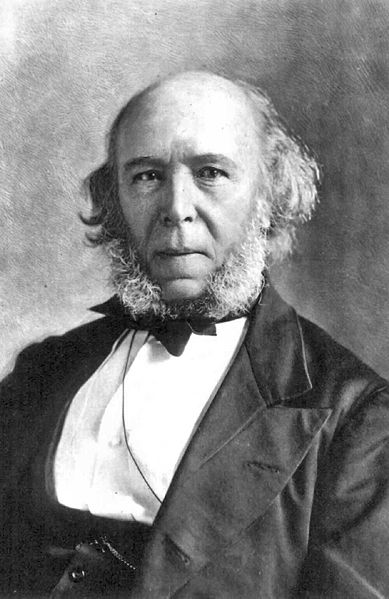 It is not … chiefly in the interests of the employing classes that socialism is to be resisted, but much more in the interests of the employed classes.… Under that compulsory cooperation which socialism would necessitate, the regulators, pursuing their personal interests with no less selfishness, could not be met by the combined resistance of free workers; and their power, unchecked as now by refusals to work save on prescribed terms, would grow and ramify and consolidate till it became irresistible. The ultimate result … must be a society like that of ancient Peru, dreadful to contemplate, in which the mass of the people, elaborately regimented in groups of 10, 50, 100, 500, and 1000, ruled by officers of corresponding grades, and tied to their districts, were superintended in their private lives as well as in their industries, and toiled hopelessly for the support of the governmental organization.
In 2012, President Obama caused an uproar among those of us who praise individuals for their individual achievements. Sneering at persons proud of their success, Obama stressed the truism that in a society, achievers get help from other people. On his short list of invaluable assistance: government’s helpful building of roads and other infrastructure.
Like many of us, Donald Boudreaux criticizes the president’s philosophical assumptions. But he adds that Obama is also wrong to imply that it’s government which makes most or all of the infrastructure on which we rely.
“[A] great deal of infrastructure is built privately. FedEx, for example, is infrastructure: It’s a combination of vehicles, warehouses, organizational knowledge and other specific capital that businesses and households rely upon to transport freight and packages. . . .
“Of course, FedEx isn’t a road or a bridge. But so what? FedEx, no less than a road or bridge, enhances our abilities to pursue our private goals. [I]nfrastructure isn’t only those things supplied by government.”
Moreover, we don’t benefit from government’s monopolization of the segments of infrastructure provision that governments do monopolize. If government hadn’t permitted competition in packages from UPS, Fed-Ex and others, Obama could have added “you didn’t ship that package” to “you didn’t build that road.” But how could this justify disparaging individual achievement, or be anything to boast about? Government’s commandeering of enterprises reduces quality and alternatives.
The answer to “You didn’t build that,” if and when it’s true, is: “Well, let us.”
This is Common Sense. I’m Paul Jacob.
On April 28, 1789, Lieutenant William Bligh and 18 sailors were set adrift by the rebel crew of the HMS Bounty, which returned briefly to Tahiti and then set sail for Pitcairn Island. On the same date in 2001, millionaire Dennis Tito became the world’s first space tourist.
The present social state is transitional, as past social states have been transitional. There will, I hope and believe, come a future social state differing as much from the present as the present differs from the past with its mailed barons and defenceless serfs.
To the question — What is representative government good for? our reply is — It is good, especially good, good above all others, for doing the thing which a government should do. It is bad, especially bad, bad above all others, for doing the things which a government should not do.
Over at Townhall.com, an expansion of Friday’s “pension tsunami” Common Sense.
And, if there is anything less commonsensical, it’s out-of-control government employee pensions. Consider:
 Every man feels that perception gives him an invincible belief of the existence of that which he perceives; and that this belief i s not the effect of reasoning, but the immediate consequence of perception. When philosophers have wearied themselves and their readers with their speculations upon this subject, they can neither strengthen this belief, nor weaken it; nor can they shew how it is produced. It puts the philosopher and the peasant upon a level; and neither of them can give any other reason for believing his senses, than that he finds it impossible for him to do otherwise.
On April 26, 1710, English philosopher of “common sense” Thomas Reid was born. A highly influential figure in the Scottish Enlightenment, and well-known critic of Hume before Kant, his major works were “An Inquiry into the Human Mind on the Principles of Common Sense,” “Essays on the Intellectual Powers of Man,” and “Essays on the Active Powers of the Human Mind.” The Scottish “common sense” approach (shared by Adam Ferguson and Dugald Stewart) continued into the 19th and 20th centuries in the works of William Hamilton, Herbert Spencer, C.S. Peirce, and George Santayana.
On the same day in 1889, philosopher Ludwig Wittgenstein was born, and in 1938, philosopher Edmund Husserl died.