George Takei talks about his childhood experience in a World War II internment camp, and immediately after, and how he squared his experience with the ideals of American democracy:
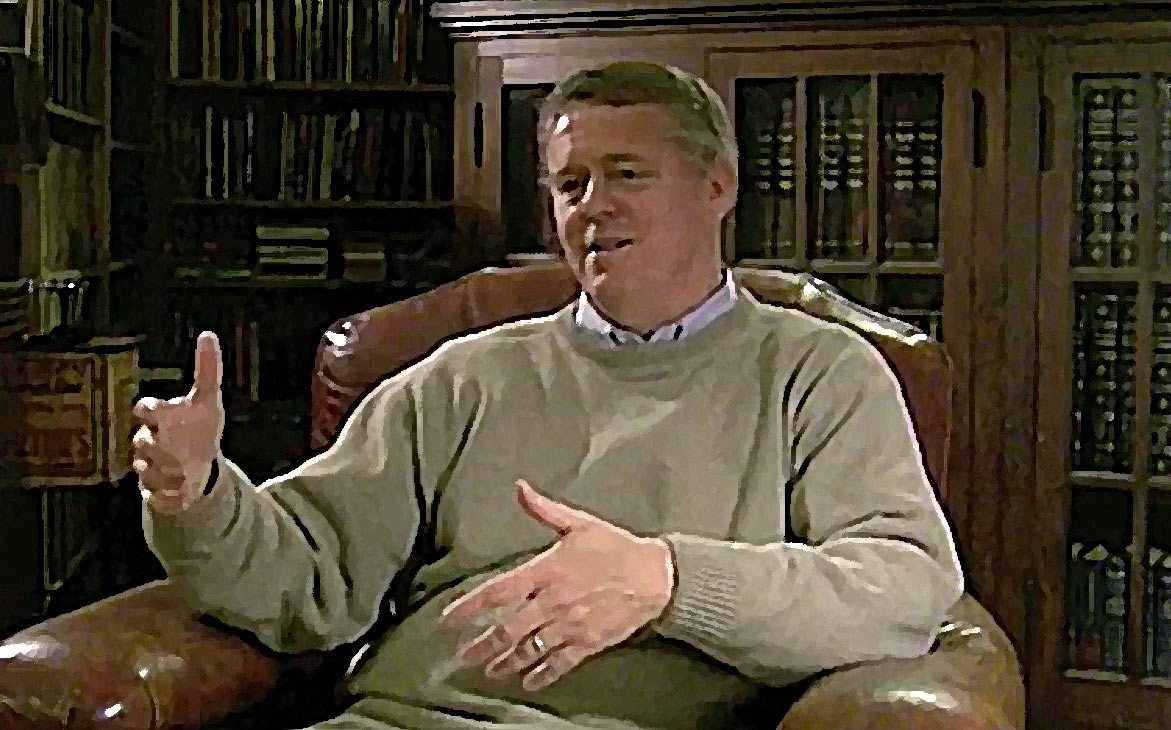
George Takei talks about his childhood experience in a World War II internment camp, and immediately after, and how he squared his experience with the ideals of American democracy:
 Government cannot create anything; its orders cannot even evict anything from the world of reality, but they can evict from the world of the permissible. Government cannot make man richer, but it can make him poorer.
Old hat. Long in the tooth. Creaky as an outhouse door.
These are just some of the expressions that apply to how our cities, states and metro areas are run — by ancient principles that do not serve the common good.
Last weekend I wrote about the ongoing revolution in transit, the peer-to-peer online app services offered by Uber, Lyft and the like. These ride-sharing services allow normal folks to give and receive car rides at great convenience.
They blow mass transit “out of the water” and throw taxi service sideways. Super-convenient, they make it cheap and safe for people to co-operate in new and productive ways.
Art Carden, at EconLog, notes the “social waste” that governments add to the system. While the new app-based services provide true solutions to the high transaction costs of negotiating among many people, governments give us squabbles: “the battle over the rules governing the conditions under which people will be allowed to do certain things is pure social waste,” Carden argues. “The social waste is reflected in the resources consumed in the fight over the rules.”
We’ve gotta have rules, of course. But they needn’t require micromanagement, massive restrictions, or high taxes.
The new era will be run (if allowed) on the basis of convenient co-operation, transaction costs reduced by communications technology.
The old era that still rules the roost runs on clunky old ideas that Carden rightly calls “mercantilism,” the political ideology that Adam Smith argued against . . . in 1776.
Government should undergird free markets, not intrude and dominate by licensing near-monopolies.
This is Common Sense. I’m Paul Jacob.
On August 1, 1834, Great Britain’s Slavery Abolition Act 1833 took force, freeing slaves throughout the British empire.
Technically, it freed slaves under the age of six. On the August 1 date in 1838 and 1840, the rest of the empire’s slaves were freed, practically speaking.
August 1 births include Francis Scott Key (1779), composer of the poem “The Star-Spangled Banner”; American authors Richard Henry Dana, Jr. (1815) and Herman Melville (1819); and Thomas E. Woods, Jr. (1972), historian and popularizer of Austrian economics.
 On July 31, 1703, Daniel Defoe — who would later become famous as the author of “Robinson Crusoe” and other literary works — was placed in a pillory for the crime of seditious libel. The sedition pertained to a satirical pamphlet he had published, “The Shortest-Way with the Dissenters; Or, Proposals for the Establishment of the Church.” The mob pelted him with flowers.
On the same date in 1912, Milton Friedman was born. Friedman would go on to become one of the most influential economists of the 20th century, and one of the most effective advocates of free markets, as well. His books include “Capitalism and Freedom” and two famous collaborations, “A Monetary History of the United States” (with Anna Schwartz) and “Free to Choose” (with his wife, Rose Friedman).
 The advantages which freedom brings are only shown by the lapse of time; and it is always easy to mistake the cause in which they originate.
Think “corporate personhood” is bad? Well, there’s a far stranger notion in American law: civil forfeiture. That’s where corporeal property is said to have personhood, and thus can be sued — rather than its owner. This goofy doctrine allows governments — state and local, as well as, of course, federal — to take property from people without establishing that the owner had done anything wrong by strict standards of evidence and rules of culpability.
The property is just nabbed, really.
It’s a horrible atavism, an old idea from the bad old days before a rule of law was established. And it encourages governments to be kleptocratic. Whole law enforcement agencies fund their luxuries and perks by this method.
A typical example? “In 2003 a Nebraska state trooper stopped Emiliano Gonzolez for speeding on Interstate 80,” writes Jacob Sullum at Reason, “and found $124,700 inside a cooler on the back seat of the rented Ford Taurus he was driving. Gonzolez said the money was intended to buy a refrigerated truck for a produce business, but the cops figured all that cash must have something to do with illegal drugs.” So the government took the money.
This sort of takings — confiscation — helps drive the drug war, of course.
But it often takes from the innocent as well as the criminal.
Since “suing the property” conforms to neither normal civil nor criminal law, it’s all rigged in the government’s favor. It’s scandalous that courts have ruled it constitutional. Something has to be done to curb its use in America.
Rand Paul wants to reform civil forfeiture. Seems like an awfully small step. How much better to abolish it!
This is Common Sense. I’m Paul Jacob.
 On July 30, 1980, the Pacific Islands nation of Vanuatu gained independence — it had previously been a French-English colony, New Hebrides — with foreign government aid from a variety of First World nations, placing as prime minister the very statist Walter Lini. Lini’s first act was to send troops to crush the Nagriamel secessionist movement on the island of Espiritu Santo, imprisoning its leader, Jimmy Stevens (pictured), in August.
Men cannot be cured of the love of riches; but they may be persuaded to enrich themselves by none but honest means.
Last week, the United States closed and shuttered the embassy in Tripoli, Libya, evacuating from the country its personnel — 158 diplomats and 60 Marines. Fighting between two rival militias reportedly got so close that the embassy was actually being hit by stray small arms fire.
I certainly don’t object to the decision to pull people out. Seems prudent, especially in light of the 2012 attack on the U.S. consulate in Benghazi, Libya, which left four Americans, including our ambassador, dead.
But the protective move sends an unmistakable signal about Libya and US foreign policy. Obama’s 2011 military intervention into Libya via NATO — famously promoted as “leading from behind” — has clearly and obviously failed.
Libya is in chaos, unsafe for Americans . . . or Libyans.
President Obama is hardly the sole leader deserving blame. Military campaigns launched by President Bush, who led from in front, haven’t worked, either.
After years of “pacifying” Iraq, at the cost of thousands of American lives, and building up Iraq’s military forces, the Iraqi army disintegrated at the first sign of conflict. The Iraqi government remains thoroughly corrupt.
Sadly, the same fate awaits the end of our nation-building stint in Afghanistan. A recent Washington Post story quoted Sgt. Kenneth Ventrice, a veteran of three tours in Iraq and now serving his second in Afghanistan, saying, “It’s going to fall a lot faster than Iraq did.”
These foreign interventions are failures.
But the biggest failure? Not to learn from our mistakes.
This is Common Sense. I’m Paul Jacob.