Around the country, politicians and government employees have committed future taxpayers to pay for pensions that should have been funded at time of employee service. Things must change. The problem is huge.
Author: Redactor
James Mill
Every man should be considered as having a right to the character which he deserves; that is, to be spoken of according to his actions.
Pizza is popular. It hardly needs advertising, much less government subsidy.
And yet the federal government does, indeed, subsidize the promotion of pizza.
Apparently, our government wants us to eat more of the scrumptious (but fattening) stuff.
Has this has been cleared with Michelle Obama?
The program is the business of a much more power group, the USDA. In recent years, according to the U.S. Food Policy Blog,
USDA’s dairy checkoff program has spent many millions of dollars to increase pizza consumption among U.S. children and adults. Using the federal government’s taxation powers, the checkoff program collects a mandatory assessment of 15 cents on every hundredweight of milk that is sold for use as fluid milk or dairy products.
The goal is to promote cheese. (It promotes milk, too, but milk consumption is going down, steadily over the long term.) And, since the pizza industry is the biggest single user of cheese, those checkoff funds wind up in the advertising coffers of Domino’s Pizza, which soaks up about three-quarters of the dough. Ahem.
The federal government seems especially concerned to promote the eating of cheap delivery pizza.
But, good or bad, just talking about pizza makes me hungry for pizza. And yet, to prevent my corporeal presence from ballooning into a behemoth approximating the dimensions of the U.S. national debt, I don’t eat pizza very often.
In view of both of these truths, the USDA could afford to stop promoting the nominally Italian (but actually very American) foodstuff.
Get the government out of food advertising. Particularly (but not limited to) pizza.
This is Common Sense. I’m Paul Jacob.
*Pie chart not made from a pizza from Domino’s.
On Feb. 14, 278 A.D., Valentine, a priest in Rome during the reign of Emperor Claudius II, was executed. In order to facilitate the raising of an army for his unpopular military campaigns, the emperor outlawed all marriages and engagements. Valentine defied Claudius’s order and continued to perform marriages for young lovers in secret. Once discovered, Valentine was arrested and condemned by the Prefect of Rome to be beaten to death with clubs and to have his head cut off. The sentence was carried out on February 14. Valentine was named a saint by the Roman Catholic Church after his death.
Feb 14, 1989, at a meeting of the presidents of Nicaragua, Honduras, Guatemala, Costa Rica, and El Salvador, the Sandinista government of Nicaragua agreed to free a number of political prisoners and hold free elections within a year. In return, Honduras promised to close bases used by anti-Sandinista rebels. Within a year, the Sandinistas were defeated the elections in Nicaragua.
Frédéric Bastiat

To force men to dig wells by prohibiting them from taking water from the brook is to increase their useless labor, but not their wealth.
Galileo to Inquisition, Dresden bombed
On Feb. 13, 1633, Italian philosopher, astronomer and mathematician Galileo Galilei arrived in Rome to face charges of heresy for advocating Polish astronomer Nicolaus Copernicus’s theory that the Earth revolves around the Sun. In April, Galileo pled guilty before the Roman Inquisition in exchange for a lighter sentence. Put under house arrest indefinitely by Pope Urban VIII, Galileo spent the rest of his life at his villa in Arcetri, near Florence, before dying in 1642.
On Feb. 13, 1945, the bombing of Dresden by the Royal Air Force and the United States Army Air Force began, lasting for three days. The inner city of Dresden was largely destroyed and early reports estimated 150,000 to 250,000 deaths. The German Dresden Historians’ Commission, in an official 2010 report published after five years of research, but years after the war, concluded there were up to 25,000 civilian casualties.
A reader named Gert, commenting at National Review Online, repeats a notion heard often enough to become cliché.
Gert suggests that to debate Obamacare is “terribly premature. We just don’t have the data to know how it’s working yet.” Give it a chance to play out a bit more. Meantime, forget mere “anecdotes,” like those told by the millions who have lost their insurance despite the president’s repeated assurance that if they liked their coverage, they could keep it, “Period.”
Such advisors speak as if Obamacaresque interference in medicine were a species of interventionism utterly unlike anything before.
But Obamacare is a type of thing; if we know that this type of thing is destructive by its nature, we can expect Obamacare to also be so. We know enough already — from history, economics, philosophy, psychology — to know that persons free to make their own judgments and act on them peacefully are better off than persons whose every move is mandated or banned.
What enables human beings to produce wealth, solutions, and alternatives in any realm is freedom. With responsibility. Freedom to act and to profit from our actions by choosing, as producers, what goods to provide others; by choosing, as consumers, the products that best suit our needs and circumstances. And to reap the rewards of success, and learn from our failures.
To continue to destroy this freedom in the name of collecting more data is wrong-headed. If the history of mankind so far doesn’t provide enough info to convince someone of the value of liberty, what will?
This is Common Sense. I’m Paul Jacob.
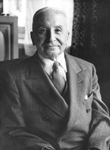
Frédéric Bastiat

[T]he kind of dependence that results from exchange, from commercial transactions, is a reciprocal dependence. We cannot be dependent on the foreigner without the foreigner being dependent on us. Now, this is the very essence of society. To break up natural relations is not to place ourselves in a state of independence, but in a state of isolation.
Scharansky freed
On Feb. 12, 1986, Soviet human rights activist Anatoly Scharansky was released after spending eight years in Soviet prisons and labor camps. The amnesty deal was arranged at a summit meeting between Soviet leader Mikhail Gorbachev and President Ronald Reagan. Scharansky had been imprisoned for his campaign to win the right for Russian Jews, forbidden to practice Judaism in the USSR, to emigrate.
On Feb. 12, 1909, the National Association for the Advancement of Colored People (NAACP) was founded.
On Feb. 12, 1593, approximately 3,000 Korean defenders led by General Kwon Yul successfully repelled more than 30,000 invading Japanese forces in the Siege of Haengju.
A Right to Sport?
One of the reasons many of us find pleasure in sports is that it provides respite from life-and-death issues like politics.
But there is no respite: the current Winter Olympics now going on in Sochi, Krasnodar Krai, Russia, has been ultra-political from the get-go. Russia’s chest-baring potentate, Vlad “The Impulsive” Putin, has spent billions to showcase Russian greatness, and will spend billions of taxpayer rubles more.
But amidst talk of terrorism and toilets, undrinkable water and unthinkable discrimination, you will probably be the very opposite of “shocked, shocked” to learn that the Olympic Charter promotes something as odd as this:
The practice of sport is a human right. Every individual must have the possibility of practicing sport, without discrimination of any kind and in the Olympic spirit, which requires mutual understanding with a spirit of friendship, solidarity and fair play.
David Howden, at the Mises Institute’s Circle Bastiat, directs our attention to the peculiar framing of the issue of access to games and entertainment competition in terms of rights, which are not
founded on any rigorous analysis, but rather represent preferences. (The preferences of the United Nations, incidentally.) Perhaps the more dangerous problem is that the past century has seen such an inflation of human rights that each one’s value has diminished significantly.
My take’s slightly different: Human rights get cheapened when equated with mere entertainment — or other benefits provided by governments.
But there’s something like a right to sport within the right to pursue our happiness.
Despite Sochi’s broken toilets and the modern Olympics’ long history of politicians pursuing power, the words of our Declaration of Independence come to mind when I see a skier turning flips through the air on a big jump.
This is Common Sense. I’m Paul Jacob.