On December 13, 1920, American economist, statesman, and 60th United States Secretary of State George Shultz was born.
Categories
On December 13, 1920, American economist, statesman, and 60th United States Secretary of State George Shultz was born.
A movie has been made from the science fiction novel Alongside Night, by the author of the book, and starring Kevin “Hercules” Sorbo. These two interviews provide an interesting look at not merely the film in question (which we here at Common Sense haven’t seen), but also the transit of the American ideal through the old domain of Hollywood and the revolutionary realm of independent film:
To learn more about the film, visit the official website.
On December 12, 1939, Finnish forces defeated those of the Soviet Union in the first major victory of what became known as the Winter War, the Battle of Tolvajärvi.
December 12th birthdays include:
* Erasmus Darwin (1731) – English physician, slave trade abolitionist, inventor and poet
* John Jay (1745) — First Chief Justice of the United States
* William Lloyd Garrison (1805) — American abolitionist, editor of The Liberator
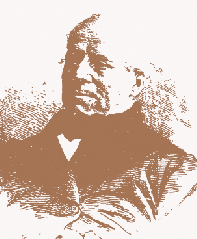 Reform will only be established in the long term to the degree that it passes into the ideas and habits of the majority.
Back in August, the city council in Topeka, Kansas, voted to expand a redevelopment district and purchase Heartland Park Topeka, a “multi-purpose motorsports facility” featuring drag racing, dirt racing and more.
Chris Imming wasn’t keen on the notion. He put together an initiative petition calling for a public vote. Topeka townspeople eagerly signed it.
Taking this as a cue, did the city officialdom welcome this vibrant exercise of basic American democracy? Did they ready themselves for that election?
Instead, the city sued to block a vote on the issue.
A local judge sided with the insiders, ruling in the city’s favor. The development decision was administrative in nature, the Robed One determined, not legislative. That made it beyond reach of the citizen initiative process.
Both the judge’s designation of “administrative” and his rationale for exemption from a citizens’ veto seem more than dubious. Clearly, “the people” should be able to overrule any decision made by the city council, which is established for the express purpose of representing the views of “the people.”
Kudos to Mr. Imming for appealing that lower court decision. Thank goodness for folks like him, folks who stand up against the powerful public and private forces always looking for a bailout or a subsidy.
“We’re bailing out the city,” argues Doug Gerber, Topeka’s administrative and financial director. He cites the city’s previous redevelopment district, which annually costs a cool million dollars in bond service, while bringing in only a fifth of that in sales tax revenue.
So politicians want to double down, to cover their past rotten wheeling and dealing by . . . expanding it.
This is Common Sense. I’m Paul Jacob.
Man’s concern is not with government; he should look on government as no more than a very secondary thing — we might almost say a very minor thing. His goal is industry, labour and the production of everything needed for his happiness. In a well-ordered state, the government must only be an adjunct of production, an agency charged by the producers, who pay for it, with protecting their persons and their goods while they work. In a well-ordered state, the largest number of persons must work, and the smallest number must govern. The work of perfection would be reached if all the world worked and no one governed.
The primary populist concern with “money in politics” is conspiratorial: “they” will grab total control because “they” buy the politicians.
The cries on the political left that The Evil Koch Brothers™ spend money, thereby “corrupting OUR democracy,” have become ubiquitous.
The fact that the left has its own billionaires, and that they give far more money to their causes than the Kochs do to theirs? Conveniently left out of the hysteria.
But the real case against money in politics has almost nothing to do with buying politicians.
Which leads us to the biggest problem with money in politics: most of it is a waste.
Binyamin Appelbaum, writing Tuesday in The New York Times, reports on the conclusion of a number of economists that “buying elections is economically inefficient.” Appelbaum quotes a major donor who posits why that’s the case: “politicians don’t stay bought.”
Yes indeed, politicians are a tricky investment.
Still, giving patterns suggest contributions are more often intended to advance one’s beliefs and values, than to purchase or rent the allegiance of (or protection from) an elected official.
When we switch from spending money on politicians to spending money on causes, especially initiative and referendum campaigns, the situation looks a bit different. You don’t buy anyone. You persuade voters. Or not.
I’ve seen many a well-funded initiative fall because citizens just wouldn’t have it. Businesses and lobbyists and unions all hate term limits, and have often outspent supporters. But, barring deception, term limits usually win with voters.
Who can’t be bought even for a while.
This is Common Sense. I’m Paul Jacob.
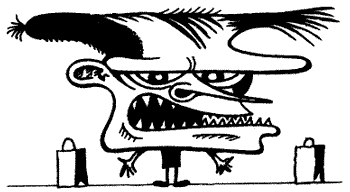 On December 11, 1957, American cartoonist and Reason magazine contributor Peter Bagge was born.
MIT economist Jonathan Gruber has had a big influence on American life, much of it “behind the scenes.” He helped put together RomneyCare in Massachusetts, then Obamacare at the federal level. And he made a curious case for abortion that was picked up by Steven Levitt and made famous in Freakonomics.
But he wasn’t summoned before the U.S. House of Representatives’ Oversight Committee, yesterday, to talk about abortion. His boastings, in public, that the Affordable Care Act had been designed to deceive caught congressional attention.
And referring to voters as “stupid” doesn’t sit well with politicians — maybe because they’re living evidence.
Gruber started with some newfound humility. He had been bragging. In truth, he wasn’t that important to the process.
None of this was very convincing.
His explanations for his too-honest statements? Less than satisfactory: he chalked it all up to a spoken “typo.”
More entertainingly, when repeatedly asked whether he would give the committee his work product relating to his Health and Human Services contracts, he reiterated one simple answer: the committee should “take it up with my council.”
“You’ve been paid by the American taxpayer,” stated Rep. Jason Chaffetz, with escalating frustration. “Will you or will you not provide that information to this committee?”
But what was the Utah representative expecting?
Full disclosure?
Transparency?
Responsibility?
A straight answer?
Yeah, yeah, I know . . . talk to Gruber’s lawyer.
Even with the stonewalling, I think we’ve already seen enough of Mr. Gruber’s “work product.”
This is Common Sense. I’m Paul Jacob.
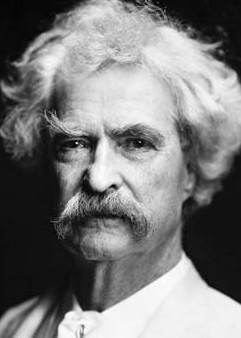 On December 10, 1884, Mark Twain’s “Adventures of Huckleberry Finn” was first published. This novel, narrated in the first person by the title character, is a dark comedy of the antebellum South and slavery, and has been considered by many American critics and writers to qualify as the “Great American Novel.”
 On this date in 1901, the first Nobel Peace Prizes are awarded, to French Liberal School economist Frédéric Passy, co-founder of the Inter-Parliamentary Union, and Henry Dunant the founder of the International Committee of the Red Cross. Passy was an admirer of Cobden, and an active member in the French Liberal School of Political Economy that developed in the tradition of J.B. Say, Destutt de Tracy, Charles Comte and Charles Dunoyer, and Frederic Bastiat. His published works include “De la Propriété Intellectuelle” (1859); “Leçons d’économie politique” (1860-61); “La Démocratie et l’Instruction” (1864); “L’Histoire du Travail” (1873); “Malthus et sa Doctrine” (1868); and “La Solidarité du Travail et du Capital” (1875).