Categories
Today

JFK

Montana was admitted into the United States federal union as the 41st state on November 8, 1889. On the same date in 1960, John F. Kennedy defeated Richard Nixon in one of the closest presidential elections of the 20th century, becoming the 35th president of the United States.

Categories
audio podcast

Listen: It’s Been a Big Week

Indubitably:

Categories
Today

War Powers

The U.S. Congress overrode President Richard M. Nixon’s veto of the War Powers Resolution on November 7, 1973. This resolution ostensibly limits presidential power to wage war without congressional approval, hence Nixon’s veto. Nowadays, however, it is often referred to as the expansive terms for the “Imperial President’s” license to engage in military conduct, and a dereliction of congressional duty to direct the United States’ foreign policy and warfare.

Categories
general freedom Tenth Amendment federalism too much government

Feds Not Wanted

For those arguing for drug reform for decades, Oregon’s successful ballot measures 109 and 110 are hugely hopeful signs in sensible drug policy.

They may, however, prove better signs of a general trend beyond just drug policy.*

The best reason to oppose drug prohibitions is not to maximize our freedom but to inculcate a culture of responsibility while getting government out of the business of interfering in our lives.

And while Measure 109 is about psilocybin mushrooms, what it actually does is establish a government board to set up a regulatory system to distribute and license possession of consumable psilocybins.

May work out great. It may also turn out very badly.

As one would expect from this sort of government program.

Measure 110, which also passed on Tuesday, made “personal non-commercial possession of a controlled substance no more than a Class E violation (max fine of $100 fine) and establishing a drug addiction treatment and recovery program funded in part by the state’s marijuana tax revenue and state prison savings.” 

Both are very “liberal” programs, based on notions of state aid and government program-building rather than traditional, more “conservative” prohibit-and-punish models. Both the old and the new approaches skirt around personal responsibility.

What the measures show, though, is that Oregonians are effectively defying federal laws on “controlled substances.” The new approach is very old: federalist, more about local rather than national control.

As such, it shows the current tide turning away from making a federal case out of everything.

The next President of These United States, and both houses of Congress, should take notice.

On drugs, they are not only not needed. They are not wanted.

Apply that to health care in general, I say.

This is Common Sense. I’m Paul Jacob.


 * These Oregon measures were the only two “hard drug” ballot measures this year. There were quite a few marijuana ballot measures around the country. All passed.

PDF for printing

See all recent commentary
(simplified and organized)
See recent popular posts

Categories
ideological culture initiative, referendum, and recall

Best Indicator

The pollsters were way off. Again.

Sure, there were a couple outfits that, prior to Election Day, said the race between Trump and Biden was going to be close, but most portrayed Biden as way ahead.

Instead, it’s a squeaker.

Still, Biden’s pulling ahead — Michigan was declared for the Democrat as I type this.

Before we blame the pollsters for drawing the wrong conclusions from their data, let’s not draw the wrong conclusions from the most important data of all: Tuesday’s actual votes.

We must remember: people vote for and against candidates for a variety of reasons — personal, tribal, single-issue, broad-spectrum, you-name-it. But how do we determine their actual political values?

Here’s one good indicator, voting . . . on ballot measures.

From Tuesday’s elections we learn, at the very least, that the American people are not foursquare behind the socialistic pandering of Kamala Harris.

Just before Election Day, the Democratic Vice Presidential candidate explained why equality of treatment wasn’t enough: people must be compensated for their past disadvantages, to make outcomes equal. She was pushing a recent meme common on the left, framed as “equality” versus “equity.”

Mrs. Harris may be on her way to Number One Observatory Circle (the vice president’s residence) and then the White House, but Americans aren’t onboard her socialistic egalitarianism. On Tuesday, her home-state Californians repealed Proposition 16, which would have stricken down an equal rights measure of the 1990s in favor of a compensatory hiring and firing scheme based on racial qualifications. 

Woke socialists really like this sort of thing. Yet supposedly ultra-blue (pink?) Californians defeated it 56/44.

Once the politics of personality and party are put aside, Americans are not as divided as the political class wishes we were.  

This is Common Sense. I’m Paul Jacob.


PDF for printing

See all recent commentary
(simplified and organized)
See recent popular posts

Categories
Thought

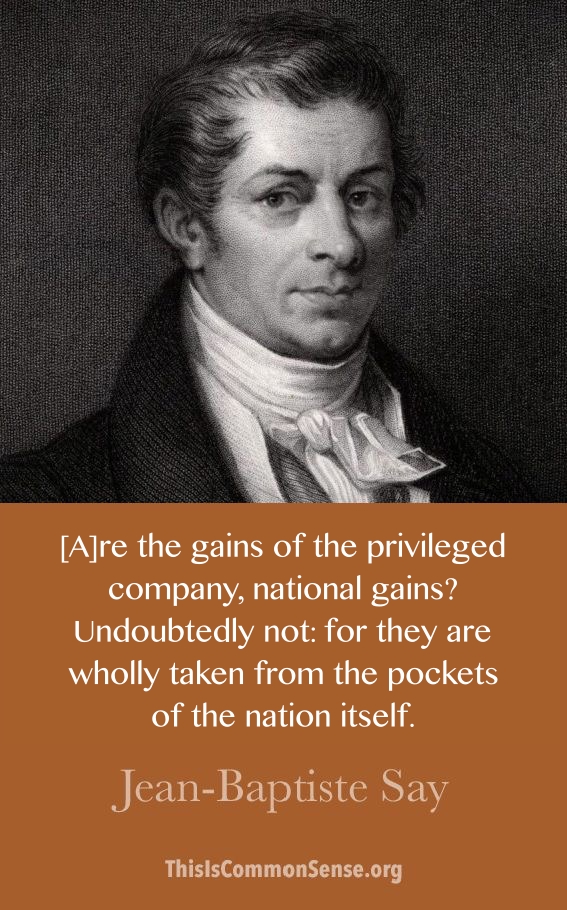
Jean-Baptiste Say

[A]re the gains of the privileged company, national gains? Undoubtedly not: for they are wholly taken from the pockets of the nation itself.

Jean-Baptiste Say, A Treatise on Political Economy (1903, first pub. 1855), Book I, Chapter 17.
Categories
Today

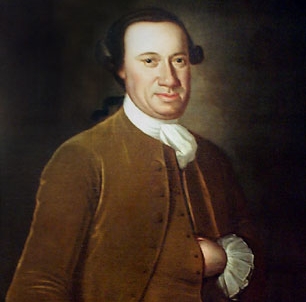
President John Hanson

On November 5, 1781, the second session of the United States in Congress Assembled began, in Philadelphia, Pennsylvania. This “Second Confederation Congress,” as it is popularly known, ended on November 2, 1782.

And on that Fifth of November, 1781, John Hanson of Maryland was elected to serve as president of the United States in Congress Assembled. He would become the first president of Congress to serve a full one-year term as specified under the Articles of Confederation, for the second session of the Confederation Congress. Of course, this presidency was nothing like the presidencies under the Constitution. Hanson merely presided over Congress.


On November 5, 1872, Susan B. Anthony defied the law to vote, and was later fined $100.

Categories
Thought

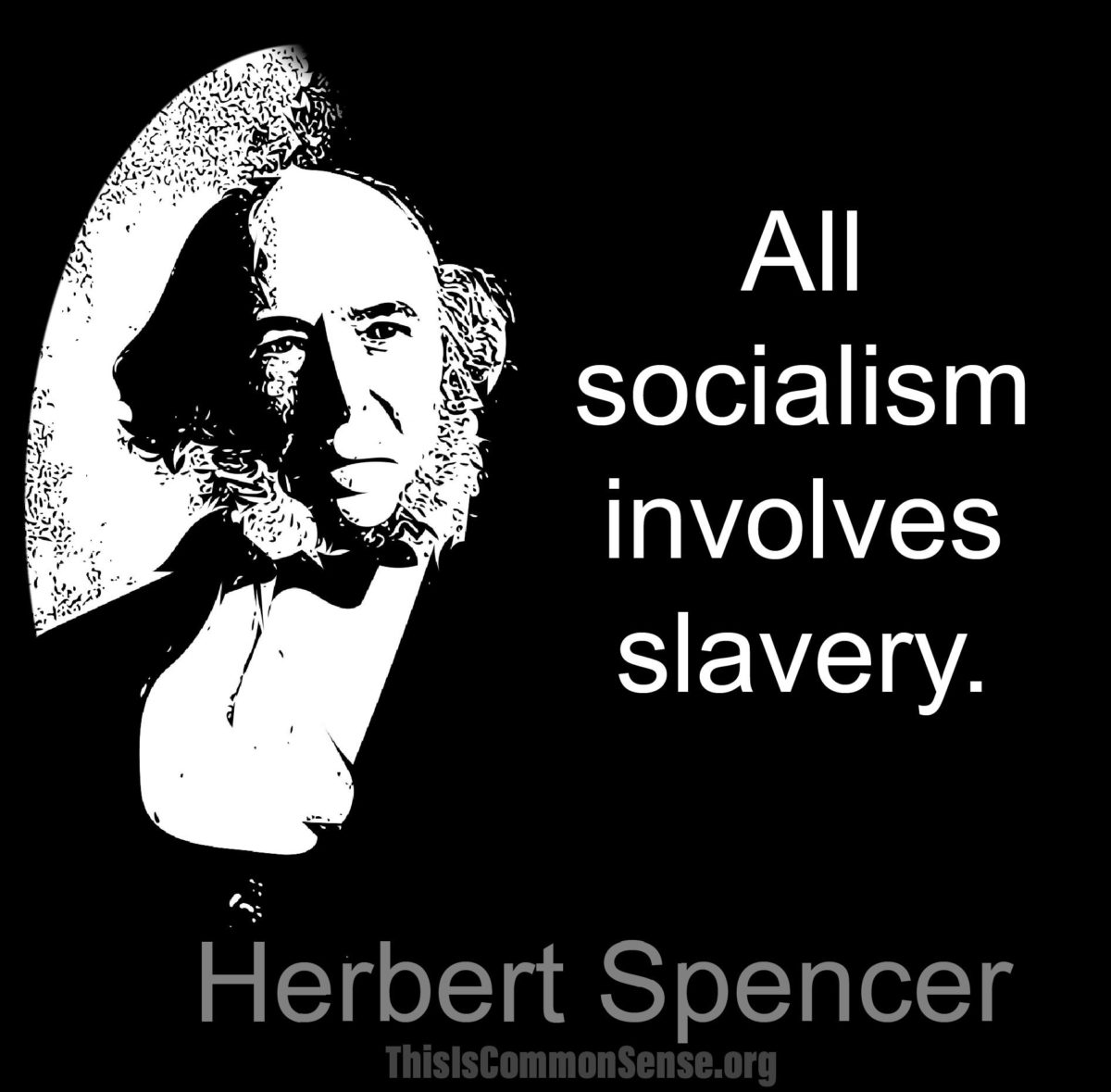
Herbert Spencer

Influences of various kinds conspire to increase corporate action and decrease individual action. And the change is being on all sides aided by schemers, each of whom thinks only of his pet plan and not at all of the general reorganization which his plan, joined with others such, are working out. It is said that the French Revolution devoured its own children. Here, an analogous catastrophe seems not unlikely. The numerous socialistic changes made by Act of Parliament, joined with the numerous others presently to be made, will by-and-by be all merged in State-socialism—swallowed in the vast wave which they have little by little raised.

“But why is this change described as ‘the coming slavery’?,” is a question which many will still ask. The reply is simple. All socialism involves slavery.

Herbert Spencer, “The Coming Slavery,” The Man versus the State (1884); originally in The Contemporary Review (April 1884).
Categories
media and media people

Love in Their Hearts

“A lot of white liberals in New York City and Washington DC who run media have found, suddenly, the compassion and love in their heart for immigrants they didn’t know was there,” Ruben Navarrette, Jr., a journalist-turned-syndicated columnist, told Full Measure’s Sharyl Attkisson yesterday, “because for eight years, they didn’t give a crap about the fact that a Democrat and a black president was deporting all these people.”

“But now that Trump is there,” he added, “man, they do care, and do they love immigrants.”

Navarrette is “the most widely read Latino columnist in the country,” and Attkisson billed the interview as an “eye-opening personal insight on how the news is shaped today.”

When asked if editors had ever pressured him to take a specific angle on a story as a Latino, Navarrette answered Yes.

“But you don’t always,” Attkisson noted. “What problem has that posed?”

“I’ve been fired eight times in the course of 30 years,” deadpanned Navarrette. One of those firings was from CNN.

“I was at CNN for a number of years. . . . covering Barack Obama and the Obama administration’s really terrible record of deportations,” he explained. “Over eight years, the Barack Obama administration deported three million people, separated families, put kids in cages. 

“I was told by my boss,” Navarrette disclosed, “I needed to stop writing about that.”

One critical element in achieving immigration reform is to revive, first, the art of actual journalism. We citizens need facts and unbiased information to gain knowledge and, accordingly, instruct our representatives in government.

Spinning stories — or dumping them down the memory hole — in an attempt to push corporate media’s partisan political narratives, on the other hand, casts the press and democratic ideals in darkness.

Regardless of who is president.

This is Common Sense. I’m Paul Jacob.


PDF for printing

See all recent commentary
(simplified and organized)
See recent popular posts

Categories
Today

Army Disbands

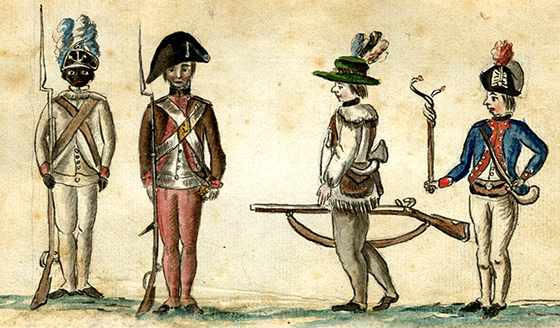
On November 3, 1783, the American Continental Army — its mission fulfilled — was disbanded.

On November 3, 1969, U.S. President Richard M. Nixon made a television and radio appearance, asking the “silent majority” to join him in solidarity on the Vietnam War effort.