Categories
Thought

Kamala Harris

This is just an extraordinary day. It’s a testament to the importance of having a president who understands the power of diplomacy, and understands the strength that rests in understanding the significance of diplomacy and strengthening alliances.

Vice President Kamala Harris yammers on about President Biden’s diplomatic triumph, on the tarmac welcoming freed prisoners from Russia, while the president looks dumbly (or dumbfoundedly) away.

Categories
election law national politics & policies

Kamala’s Cast on Noncitizens

How did Kamala Harris vote?

The Vice President’s hometown of San Francisco is one of 17 cities that allow noncitizens to vote in local elections. Like 75 percent of those cities (according to verify.com), the City by the Bay also offers that vote to noncitizens in the country illegally. 

Not included in this list of cities is New York City, as the Big Apple’s measure providing the vote to nearly a million noncitizens is still being battled in court. Or Boston, which only awaits approval by the Massachusetts Legislature.  

Neither are Telluride, Colorado, nor Yellow Springs, Ohio, on the list. Voters in both states, in 2020 and 2022, respectively, passed statewide constitutional amendments to say only U.S. citizens can vote in all state and local elections, canceling those local ordinances. Beginning in 2018, six states have enacted Citizen Only Voting Amendments, and eight more states will vote on them this November. 

Back in 2016, San Franciscans narrowly passed Proposition N giving noncitizen parents and caregivers, legally documented or not, voting rights in school board elections. Harris had been prosecuting attorney in San Fran before becoming California’s attorney general. As AG, Ms. Harris ran for the U.S. Senate and would have gone to vote for herself on Election Day 2016 . . . and on Prop N. 

Surely, she didn’t forget to vote on the proposition. Right?

So, how did she cast her ballot: in favor of providing noncitizens here illegally the franchise? Or not?

If she ever does a non-scripted interview, perhaps an enterprising journalist might pop that question. Or perhaps a voter in swing states such as North Carolina and Wisconsin — where Citizen Only Voting Amendments are on the ballot — will ask Vice President Harris. 

Answer, please. 

This is Common Sense. I’m Paul Jacob. 


PDF for printing

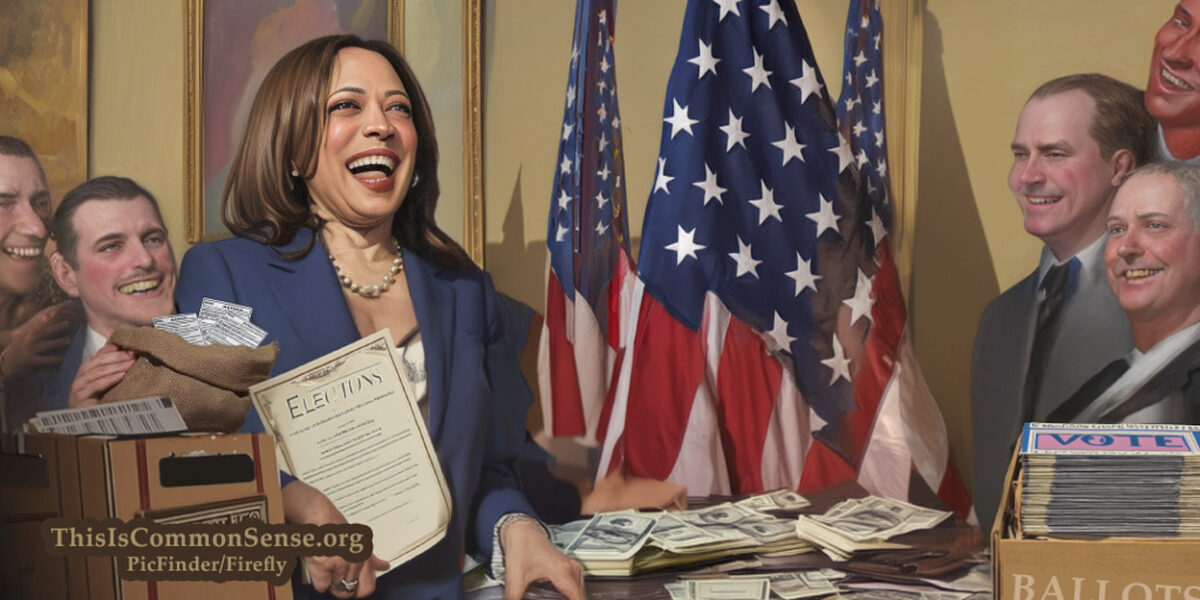
Illustration created with PicFinder and Firefly

See all recent commentary
(simplified and organized)
See recent popular posts

Categories
Thought

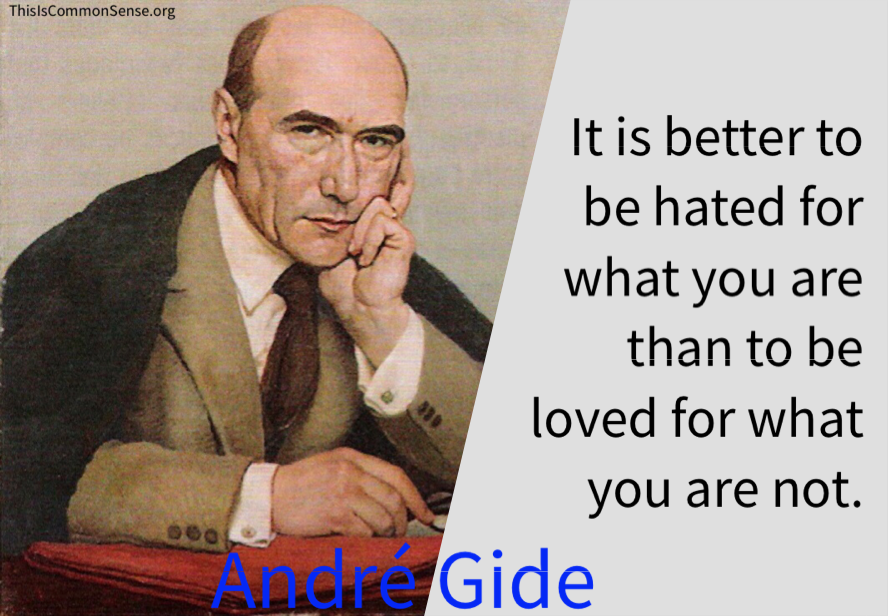
André Gide

It is better to be hated for what you are than to be loved for what you are not.

André Gide, Autumn Leaves (Feuillets d’automne, 1941, trans. Jeanine Parisier Plottel).

Categories
Thought

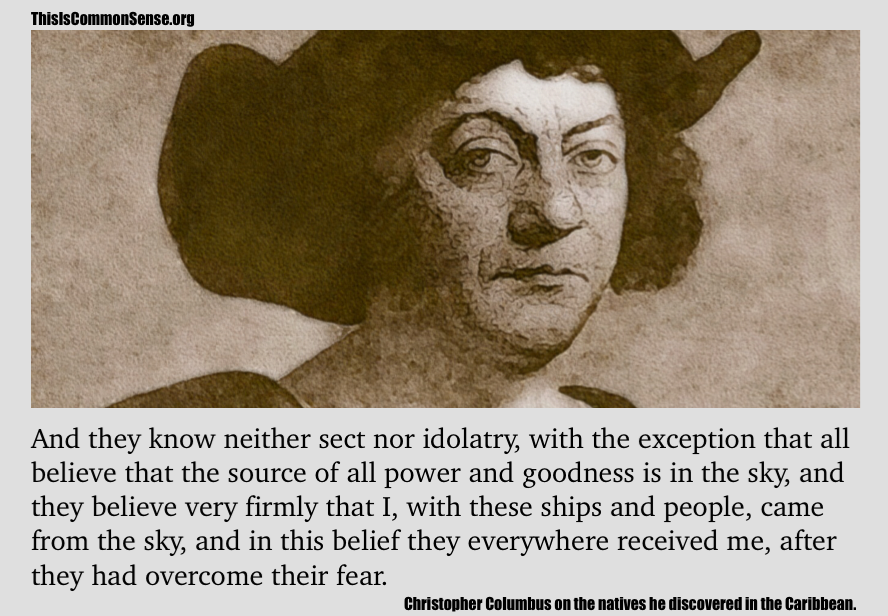
Christopher Columbus

And they know neither sect nor idolatry, with the exception that all believe that the source of all power and goodness is in the sky, and they believe very firmly that I, with these ships and people, came from the sky, and in this belief they everywhere received me, after they had overcome their fear.

Christopher Columbus, “Letter to the Sovereigns” (1493).
Categories
Today

A Fine Point of the War

On July 25, 1861, the U.S. Congress passed the Crittenden-Johnson Resolution, stating that the war with the seceded states of the Confederacy was being fought to preserve the Union, not to end slavery.

Categories
Today

Year of Our Ford

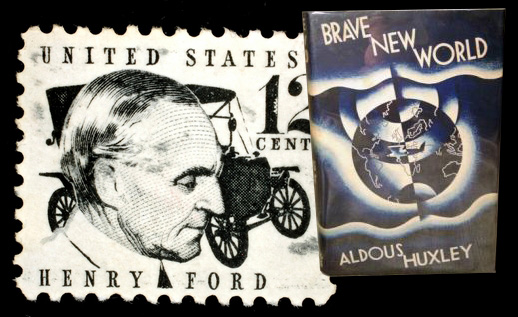
On this day in 1903, the Ford Motor Company sold its first car. Less than 30 years later, Aldous Huxley satirized Ford’s assembly line procedures in his novel Brave New World. Arguably, both the assembly line and the satire advanced freedom.

Categories
Today

Holding at Nine

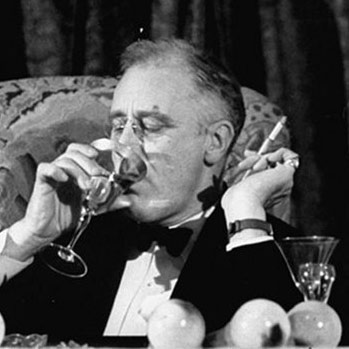
On July 22, 1937, the U.S. Senate voted down Franklin Delano Roosevelt’s court packing scheme.

Categories
Thought

Ray Bradbury

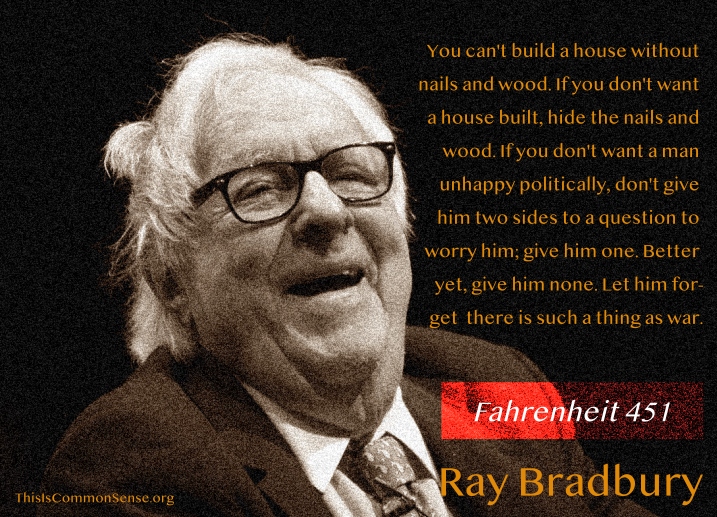
You can’t build a house without nails and wood. If you don’t want a house built, hide the nails and wood. If you don’t want a man unhappy politically, don’t give him two sides to a question to worry him; give him one. Better yet, give him none. Let him forget there is such a thing as war.

Ray Bradbury, Fahrenheit 451 (1953).
Categories
Today

Monkeys & the Moon

On July 21, 1925, in Dayton, Tennessee, high school biology teacher John T. Scopes was found guilty of teaching evolution in a public school classroom, and fined $100. The ambiguous legacy of the trial would continue — for decades, even to the present — to reveal the tensions inherent within a school system run by government and funded by taxpayers.

Interesting fact rarely noted: Scopes was teaching a heavily “eugenics” view, which would hardly be considered scientific by most modern standards.


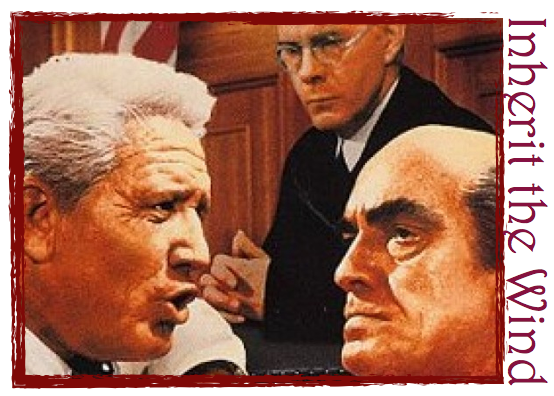
Pictured above, publicity for Inherit the Wind, a 1960 movie about the trial, but with the names changed, fictionalized. The movie starred Spencer Tracy in the Clarence Darrow (lawyer for the defense) role; Frederic March in the prosecutorial part, “Matthew Harrison Brady,” the pseudonymous name for politician William Jennings Bryan; Dick York as the defendant, Mr. Scopes; and Gene Kelly as the Baltimore journalist, a stand-in for H. L. Mencken, whose infamous coverage of the story shocked the nation almost as much as the trial itself. It was Mencken who dubbed the affair “The Scopes ‘Monkey’ Trial.”

At the end of the movie (spoiler alert!) the famous prosecutor dies in the courtroom. In the historical case, Bryan died five days after the verdict. The movie was based on the 1955 play of the same name, written by Jerome Lawrence and Robert Edwin Lee, directed by Stanley Kramer. The script was adapted by Nedrick Young (originally as Nathan E. Douglas) and Harold Jacob Smith.


Today is the 53rd anniversary of the Apollo 11 mission’s perambulation upon the Moon, on July 21, 1969. Neil Armstrong and Buzz Aldrin walked upon the surface of Mare Tranquillitatis for about two hours and 15 minutes. They spent over 21 hours on the surface, total, most of it inside the Lunar Module, at the site they called Tranquillity Base, before launching to rejoin astronaut Michael Collins in lunar orbit, and returning to Earth on July 24.

Categories
Today

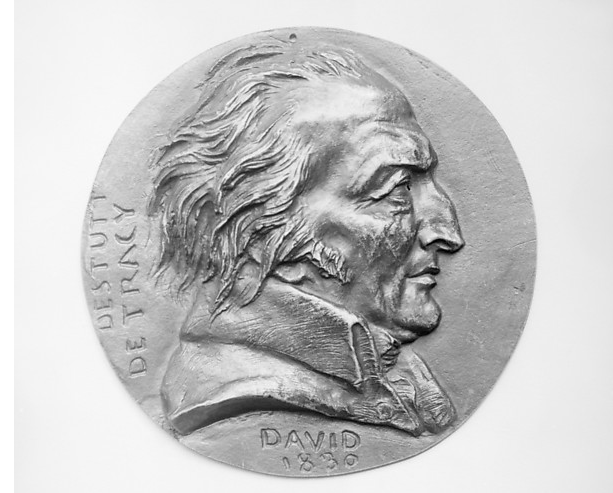
The Count Tracy

Born on July 20, 1754, Antoine Louis Claude Destutt, comte de Tracy, French philosopher and economist. Perhaps best remembered for coining the term “ideology,” he didn’t mean by that term what scornful Napoleon and communist Karl Marx later turned it into — for Destutt de Tracy ideology meant “the science of ideas,” a unified approach to all knowledge, from epistemology to social theory.

Though his family had been enobled twice, he renounced the title and entered the 1789 Estates General conference as a member of the Third Estate. During the Reign of Terror, he was imprisoned, and would have been executed had not Robespierre been pushed to the scaffold ahead of him.

Two of his books became popular in early 19th century America, his commentaries on Montesquieu’s Spirit of the Laws, and his Traité de la volonté, which Thomas Jefferson, the editor of the American edition, retitled A Treatise on Political Economy. Tracy’s economics was of a deductivist stripe, familiar to readers of later economists such as Nassau Senior and Ludwig von Mises.

Destutt de Tracy’s political philosophy was republican, and his preferred economic policy was laissez-faire.


NASA’s Apollo 11 landed two humans on the Moon — Commander Neil Armstrong and lunar module pilot Buzz Aldrin — on July 20, 1969, at 20:17 UTC.