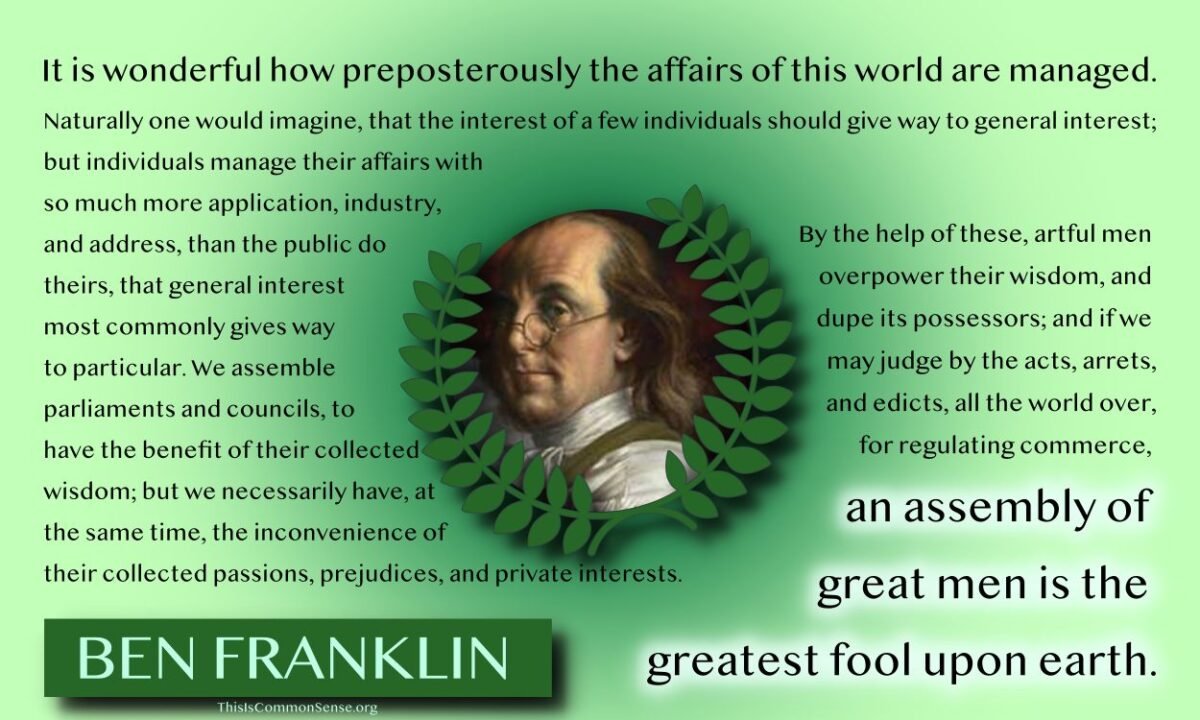
It is wonderful how preposterously the affairs of this world are managed. Naturally one would imagine, that the interest of a few individuals should give way to general interest; but individuals manage their affairs with so much more application, industry, and address, than the public do theirs, that general interest most commonly gives way to particular. We assemble parliaments and councils, to have the benefit of their collected wisdom; but we necessarily have, at the same time, the inconvenience of their collected passions, prejudices, and private interests. By the help of these, artful men overpower their wisdom, and dupe its possessors; and if we may judge by the acts, arrets, and edicts, all the world over, for regulating commerce, an assembly of great men is the greatest fool upon earth.
Benjamin Franklin, letter to Benjamin Vaughan, July 26, 1784. The word “arrets,” in the final sentence, is Franklin’s anglicization of “arrêts,” the French legal term for judicial decrees or formal rulings (typically issued by sovereign courts in pre-revolutionary France).