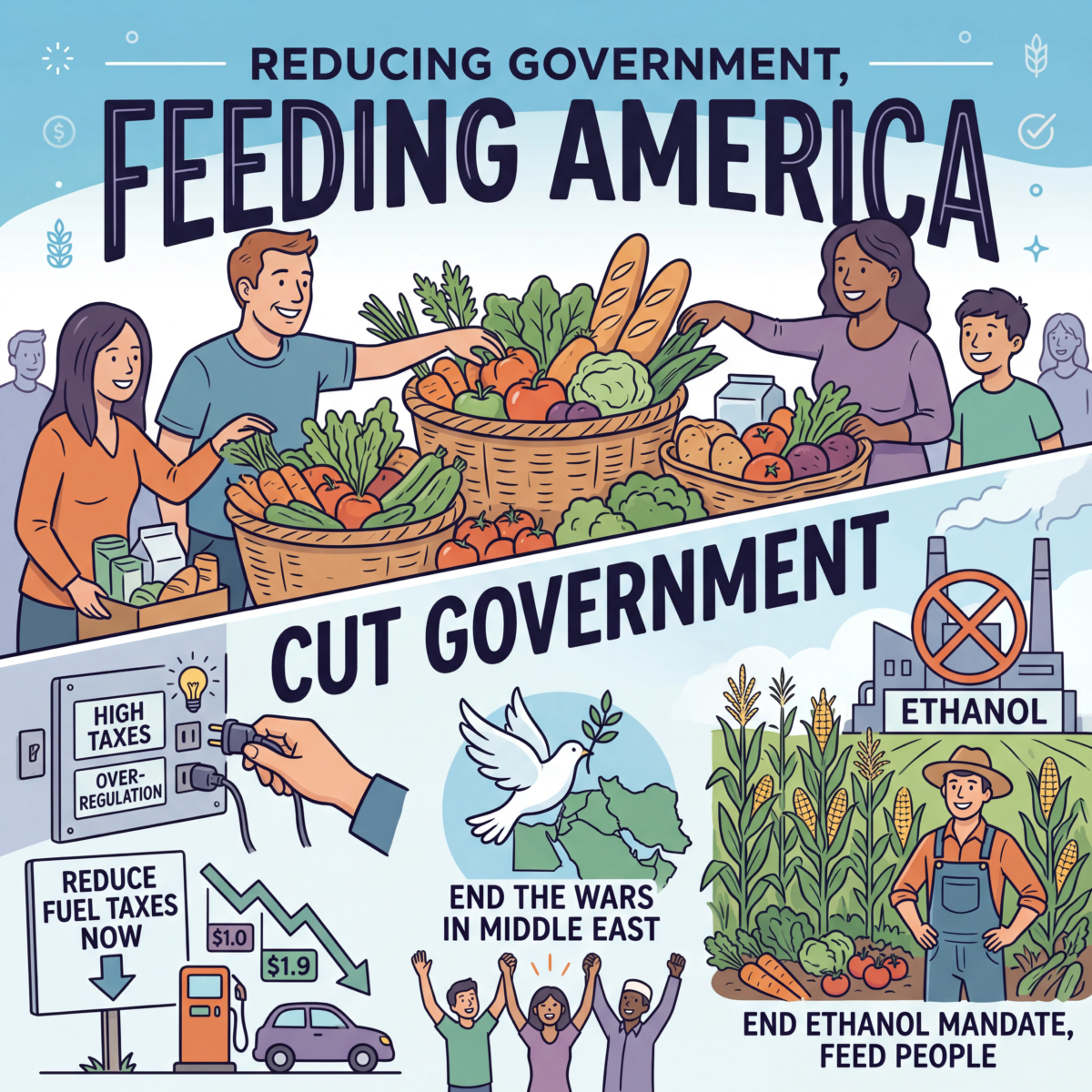
On Thursday, Paul Jacob discussed a report claiming that there has bern an increase in “food insecurity” in the United States. He identified a few ways in which government could help by “helping”less.
He also mentioned that a sizable minority of states are putting a number of restrictions in place on those who can receive benefits and on what foods can be paid for on the SNAP system.
Here are a few sources of information on these new restrictions:
“Louisiana SNAP recipients face new geographic restrictions as of Tuesday, May 26th,” by Nathan Rizutti — “Starting May 26, 2026, EBT cardholders will be limited to in-state purchases. This change helps prevent and protect against EBT theft while keeping SNAP, FITAP, and KCSP benefits in-state.”
“Missouri plans food benefit restrictions, but grocers say details remain unclear,” by Steph Quinn — “The changes, planned for Oct. 1, would prohibit purchases of candy, prepared desserts and sugary drinks through the Supplemental Nutrition Assistance Program, or SNAP. Next summer, the same restrictions will also apply to SuN Bucks, the summer food program serving hundreds of thousands of Missouri children.”
“SNAP Benefits 2026: When EBT Cards Reload in Every State,” by Caitlyn Moorehead — “If you collect these benefits in 2026, you may have started to feel the changes to the SNAP program and varying new restrictions. However, payment scheduling should remain relatively the same regarding the process for the cash benefits to be deposited on the same day each month, based on factors such as your Social Security number, last name, case number or EBT account number.”
“SNAP benefits 2026: New maximum payments and monthly increase details,” by Stefan Brand — “The USDA adjusts SNAP maximum allotments, deductions, and income eligibility standards at the beginning of each federal fiscal year, which begins on October 1st, with changes based on shifts in the cost of living. The Thrifty Food Plan, commonly known as the TFP, calculates the cost of a market basket for a family of four and serves as the USDA’s estimate of how much it costs to provide nutritious, low-cost meals for a household.”
“SNAP FOOD RESTRICTION WAIVERS WILL REACH 7.5M HOUSEHOLDS BY END OF 2026, NUMERATOR REPORTS” — “Food Restriction Waivers (FRWs) will structurally change the program. By the end of 2026, 19 states will have waivers in place, affecting roughly one-third of SNAP participants. These policies directly restrict the use of SNAP benefits for categories such as soda, candy, and energy drinks —categories that were already more likely to be embedded in SNAP baskets.”
It should be remembered that restricting the food covered by “food stamps”
- Helps recipients avoid unhealthy and non-nutritious food and drink, thereby allowing those who have hope of becoming productive actually become productive rather than dooming them to lives of useless indolence;
- By disincentivizing unhealthy eating, this saves on subsidized health care, too, allowing for thriftier use of state aid overall, thereby stressing the taxpayer burden less;
- Reminds recipients that what they receive is not the result of any right they have — which would imply allowing even whimsical and self-harmful behavior — but, instead, the result of taking from others and giving to recipients, at no small cost to those others.
This last point is worth considering at length. It has been charged that restrictions on the scope of no-priced food distribution is “paternalistic.” Sure, but prodigal spending on the poor is already paternalistic — one might say “maternalistic,” but that implies that mothers are indiscriminate distributors of benefits to their charges, and only men see the point of restricted, responsibility-free subsidies. But that is not true.