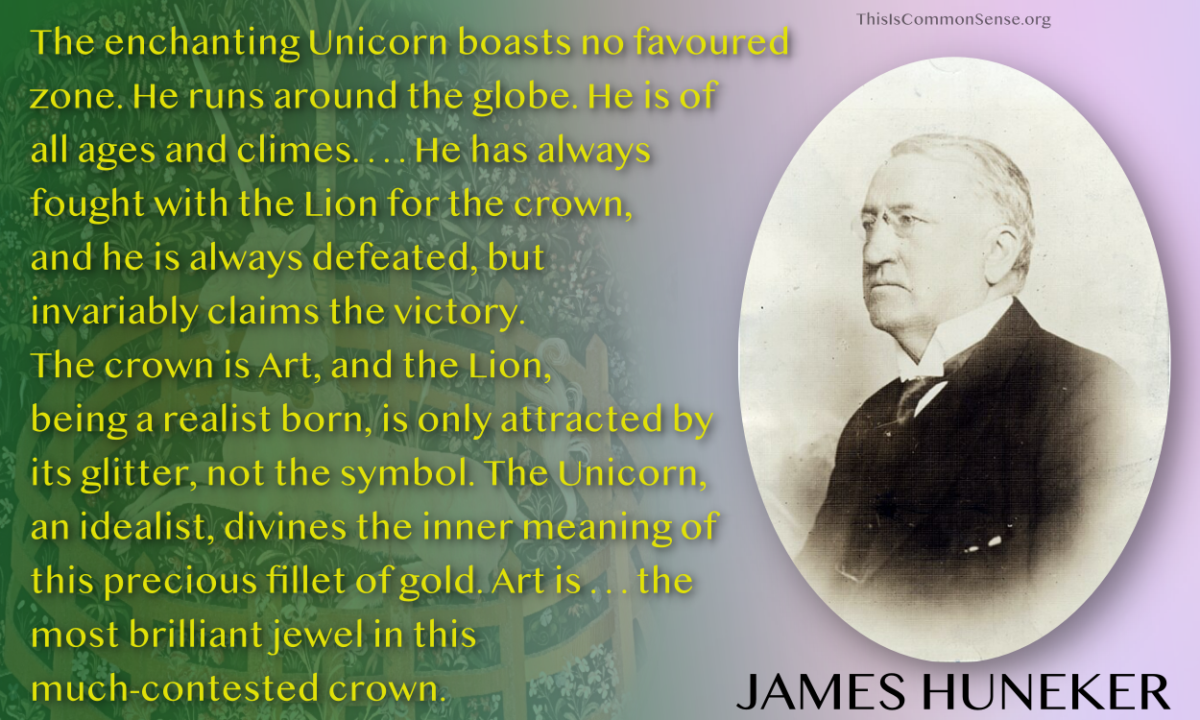
The enchanting Unicorn boasts no favoured zone. He runs around the globe. He is of all ages and climes. He knows that fantastic land of Gautier, which contains all the divine lost landscapes ever painted, and whose inhabitants are the lovely figures created by art in granite, marble, or wood, on walls, canvas, or crystal. Betimes he flashes by the nymph in the brake, and dazzled, she sighs with desire. Mallarmé set him to cryptic harmonies, and placed him in a dim rich forest (though he called him a faun; a faun in retorsion). Like the apocryphal Sadhuzag in Flaubert’s cosmical drama of dreams, which bore seventy-four hollow antlers from which issued music of ineffable sweetness, our Unicorn sings ravishing melodies for those who possess the inner ear of mystics and poets. When angered he echoes the Seven Thunders of the Apocalypse, and we hear of desperate rumours of fire, flood, and disaster. And he haunts those ivory gates of sleep whence come ineffable dreams to mortals.
He has always fought with the Lion for the crown, and he is always defeated, but invariably claims the victory. The crown is Art, and the Lion, being a realist born, is only attracted by its glitter, not the symbol. The Unicorn, an idealist, divines the inner meaning of this precious fillet of gold. Art is the modern philosopher’s stone, and the most brilliant jewel in this much-contested crown.
James Huneker, from “In Praise of Unicorns,” the first chapter of Unicorns (1917).
Categories
Huneker