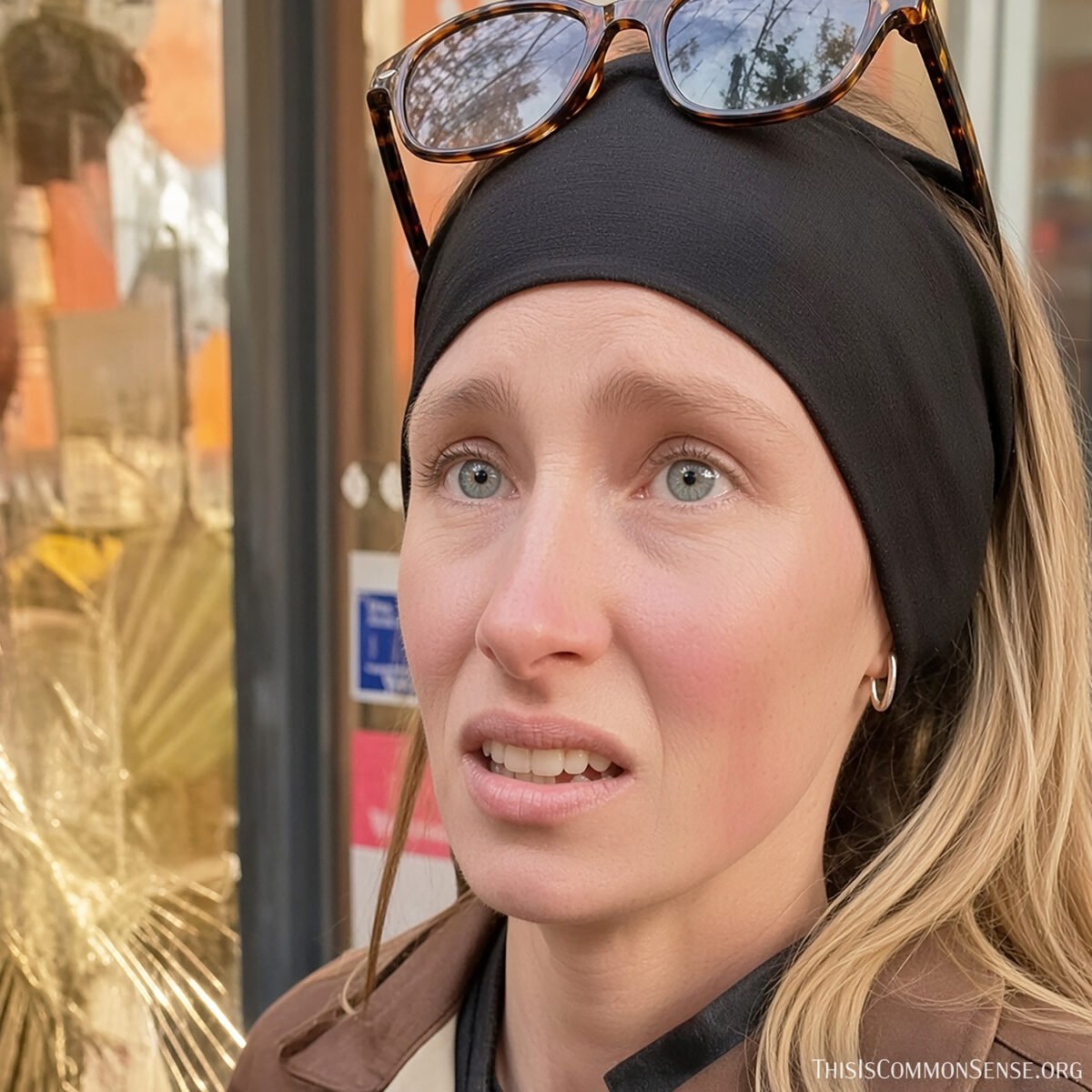
One Parisian woman has become the poster child for French politics. Antifa and Middle Eastern and African Muslims are rioting in the streets — burning, stealing, breaking, bullying, and worse — presenting us with the full panoply of protest gone completely wrong.
A distraught woman pled with masked men not to destroy a store, identified by reporters (not memesters) as a Franprix supermarket on Rue du Faubourg du Temple. “Why are you doing this?” she demanded, then screamed “this is not the cause!”
All for naught. The rioters brushed past her, breaking windows, looting, committing mayhem.
The mob cheered.
Her look — of bewilderment and betrayal — has become the new face of France. FAFO, in French fashion.
The “FA” part of the principle is what most of the “meme”-based commentary has been about. The French elites and their rah-rah brigades on the far left — or merely in the “liberal” class — have pushed a thousand bad policies, none worse than allowing refugees to swamp the country, placing them on the dole, while demanding of them nothing in return: no loyalty; no appreciation; not even civility.
A breeding ground for a revolt of the imported masses.
In sum: the elitist French political and liberal classes “effed around” and “found out”: FAFO in its purest political form. President Macron himself asked “how can French people do this to France?” as if the rioters think of themselves as “French.”
“Inclusion” in its most absurd form.
This woman, and so many like her, have supported extraordinarily foolish policies for decades, presumably because it makes them “feel good” and “look good.” You know,
But the current look? Bafflement.
Yes, a million French women can be wrong.
This is Common Sense. I’m Paul Jacob.
See all recent commentary
(simplified and organized)
See recent popular posts
One reply on “France’s New Look”
If some group hijacked the name “Christian” and applied it to something very much at odds with Christianity, not joining them in misappropriation would be a duty of the rest of us. It would be a duty of the non-Christians, as well as of the Christians. It would be a duty even of those anti-Christians who found arguing against the faux-Christians easier than arguing against the real thing.
So too in the all-too-real case of the hijacking of “liberal” by opportunists, by socialist, and by ‘progressives’. At one time, they saturated public discourse with misuse of the term. And many conservatives found in implicit support of the hijacking a way to avoid arguing with actual liberals. But we need to be able to speak and to write about liberals without this confusion. Hobhouse, Dewey, Roosevelt, and Obama are not the ideologic heirs of Locke and of Spencer.
Nor does retreat to an adjective such as “classical” help, as the left has had fair success in confusing people on the meaning of “classical liberal”.
In France, “libéralisme” carries much of its original meaning, but libéralisme has long been eclipsed as a social force. The social order of France is technocratique et illibéral, and more recently that social order moved to the left. Liberals have not brought ruin to France, even if liberalism would have proven ruinous.