Categories
Thought

Epicurus

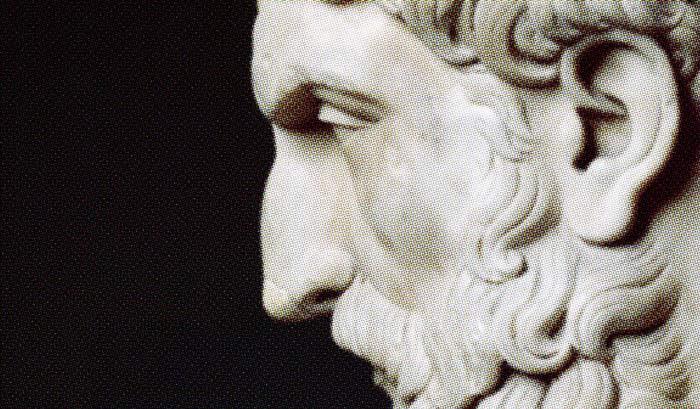
I would prefer to speak openly and like an oracle to give answers serviceable to all mankind, even though no one should understand me, rather than to conform to popular opinions and so win the praise freely scattered by the mob.


Epicurus, “Vatican Sayings,” XXIX

Categories
Today

Remembering the Revolution

October 11, 1890, marks the founding of the Daughters of the American Revolution.

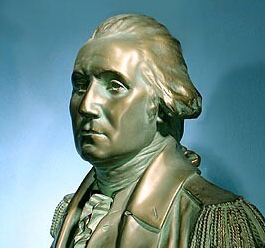
On the same date in 1976, President Gerald R. Ford approved a congressional joint resolution Public Law 94-479 to appoint, posthumously, George Washington to the grade of General of the Armies of the United States, as part of the bicentennial celebrations.

John J. Pershing is the only other American to attain this high title, and the only one to achieve it while alive.

Categories
folly free trade & free markets general freedom ideological culture property rights too much government

Big Government Apologetics

Journalists play different roles.

Too few report. Too many engage in elaborate apologetics for favored causes.

Like big government.

Take this headline: “Venezuela’s Crisis Is Rooted In Oil Prices — and Authoritarianism.”

Guess: reporting, or bending over backwards to save socialism?

The article’s summary of the decline and fall of Venezuela is accurate insofar as it indicates assaults on liberty, including nationalizations and monetary inflation. But neither “oil prices” nor dependence on oil spawned Venezuela’s crisis.

Every industry, city and nation will experience unfavorable markets, now and then. But what’s fundamental is their “antifragility.” And, news to journalists: socialist societies are fragile in ways that freer societies are not.

Suppose Venezuela had had a free market when oil prices dropped so precipitously. People would then have shifted, however grumpily, into enterprises now more profitable than drilling for and distributing oil.

It is no blunder to specialize, to exploit comparative advantages in knowledge, skills or resources, and to engage in local, regional or international trade. It’s fine even if an economy’s production and exports ends up being dominated by just one good. What matters is whether people are free or burdened by government controls. If the latter, how hard does government make it to cope with changing circumstances?

Unhampered market prices supply the information and incentives needed to adapt to all kinds of changes. But if an economy is chronically distorted and calcified by government controls, it becomes much harder to adapt . . . and much harder to survive.

Today’s journalists routinely adapt facts to story, rather than adjust stories to reality. Guys, give up the ideological apologetics. Go back to reporting.

This is Common Sense. I’m Paul Jacob.


PDF for printing


Categories
Thought

Frédéric Bastiat

Government is not maimed, and cannot be so. It has two hands — one to receive and the other to give; in other words, it has a rough hand and a smooth one. The activity of the second is necessarily subordinate to the activity of the first. Strictly, Government may take and not restore. This is evident, and may be explained by the porous and absorbing nature of its hands, which always retain a part, and sometimes the whole, of what they touch. But the thing that never was seen, and never will be seen or conceived, is, that Government can restore more to the public than it has taken from it. It is therefore ridiculous for us to appear before it in the humble attitude of beggars. It is radically impossible for it to confer a particular benefit upon any one of the individualities which constitute the community, without inflicting a greater injury upon the community as a whole.

Frédéric Bastiat, “Government” in Essays on Political Economy (New York:
G. P. Putnams & Sons, 1874).
Categories
Today

Dead Economists

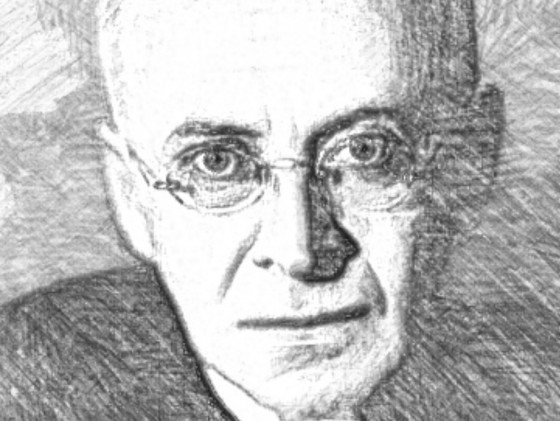
On October 10, 1973, Austrian-born American economist, Ludwig von Mises (pictured above) died.

Two-hundred fifty-nine years earlier, the French law-maker and Jansenist Pierre le Pesant, sieur de Boisguilbert died.

Both economists were known for their defenses of freer markets: le Pesant for pioneering the critique of mercantilism, arguing that a nation’s wealth consisted in what its people produce and trade; Mises for systematizing economic theory and advancing the critique of both socialism and latter-day mercantilism (what he called “interventionism”).


Sixty-o e years ago, on October 10, 1957, Ayn Rand’s dystopian/utopian novel Atlas Shrugged was published. Written to expound and defend a specifically individualist, freedom/free-market point of view, it is surely one of the most influential and literarily successful didactic novels ever written.

Categories
ideological culture media and media people moral hazard

Sexism and Isn’tism

Is physics sexist against women?

Professor Alessandro Strumia, of Pisa University, argues to the contrary. At a presentation in Geneva, in front of mainly female physicists, Strumia offered evidence that showed, if anything, that it is men who are being discriminated against. 

Specifically, he compared male and female hirings to male and female scientific citations. Being cited for one’s work is the academic gold standard, the main test scientists have for quality of work. Strumia found a pattern of women being hired over men who had higher citations rates.

Now, Alessandro Strumia is not a social scientist, and this explanation — like any scientific work — is open to criticism.

But was scientific debate the notable reaction to his presentation?

No. He was “suspended with immediate effect” from his job at CERN, Europe’s premiere nuclear science research facility.

Some folks were obviously offended — perhaps most with his characterization of physics as having been “invented and built by men.” That is true but not directly relevant to the issue. His higher-ups at CERN called his statements “unacceptable,” and insisted, perhaps with a slight tone of panic, that the nuclear science research center “always strives to carry out its scientific mission in a peaceful and inclusive environment.” 

The outfit’s official statement did not mention Strumia’s name, but instead referred to “the scientist” and cited his talk for its “attacks on individuals.”

Really? Or merely an attack on an explanation that some individuals found . . . heretical?

Strumia himself offers the perfect characterization of the mini-scandal: “the truth does not matter, because it is part of a political battle coming from outside.”

Merely by suspending him and undertaking an “investigation,” has not CERN proved his point?  

This is Common Sense. I’m Paul Jacob.


PDF for printing

 

Illustration: The Large Hadron Collider/ATLAS at CERN
 

Categories
Thought

Karl Kraus

War: first, one hopes to win; then one expects the enemy to lose; then, one is satisfied that the enemy too is suffering; in the end, one is surprised that everyone has lost.


Karl Kraus, Die Fackel, no. 46 (October 9, 1917).

Categories
Today

Roger Williams

On October 9, 1635, Protestant theologian Roger Williams was banished from the Massachusetts Bay Colony as a religious dissident after he spoke out against punishments for religious offenses and giving away Native American land. He moved south, founding Providence Plantations, where he worked for separation of church and state, the rights of aboriginal Americans, and against slavery.

Categories
crime and punishment media and media people moral hazard national politics & policies

Not an Accusation

Brett Kavanaugh’s weekend confirmation as an Associate Justice of the U.S. Supreme Court, by a 50-48 Senate vote, didn’t settle the allegations of his past sexual conduct in a judicial manner.

Wild disagreement remains.

Many on the Left continue to believe our newest justice repeatedly lied under oath, having abused at least three women when in high school and college. Many on the Right will view all “three” of these female accusers as political players or pawns, who probably should be punished in some way for lying about such a fine man.

While I doubt we can know for certain about a number of the accusations, there should be less doubt on the exact number of accusations. Which were not three but only two.

“I cannot specifically say that he [Brett Kavanaugh] was one of the ones who assaulted me,” Julie Swetnick told NBC News. But she went on to offer a maybe, a could have, some might haves, an I don’t know . . . and more, none of which amounted to an accusation. What she offered was a chain of suppositions: “Because if Brett Kavanaugh was one of those people that did this to me, there is no way in the world that he should go scot-free on this and that he should be on the Supreme Court. . . . If he does, I, uh — there’s no justice in the world.”

As long as this sort of nonsense is treated seriously in the media and among partisans, there can, indeed, be no justice in the world.

This is Common Sense. I’m Paul Jacob.


PDF for printing


Categories
Thought

Morton Feldman

The people who you think are radicals might really be conservatives. The people who you think are conservative might really be radical.

Composer Morton Feldman, as quoted by Alex Ross, The Rest Is Noise:Listening to the Twentieth Century (2008), p. 177.