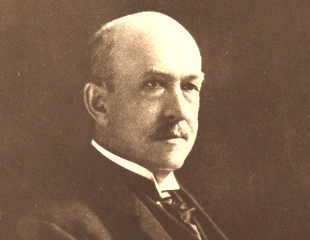
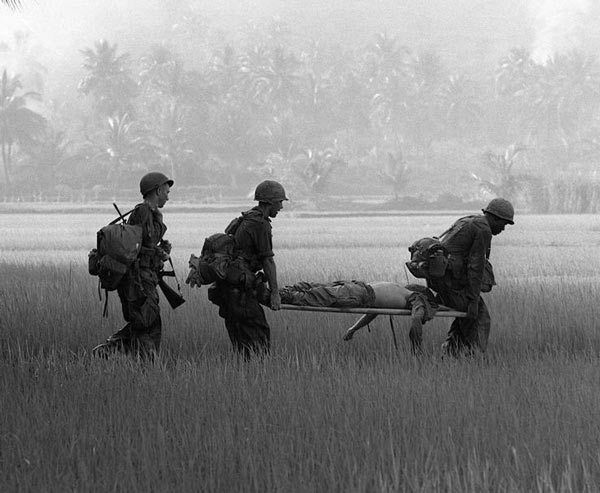
On this day in 1898, an Armistice ended the Spanish-American War, a war best commemorated by sociologist and economist William Graham Sumner in his classic essay “The Conquest of the United States by Spain.”
Commerce presumes two things: surplus production on the one hand, and on the other consumption to be made.
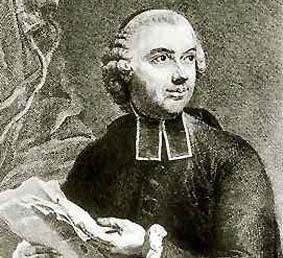
Commerce and Government considered in their mutual relationship, by the Abbé de Condillac of the Académie Française & Member of the Royal Society of Agriculture of Orléans (1776).
Speaking broadly, every man works that he may avoid suffering. Here, remembrance of the pangs of hunger prompts him; and there, he is prompted by the sight of the slave-driver’s lash. His immediate dread may be the punishment which physical circumstances will inflict, or may be punishment inflicted by human agency. He must have a master; but the master may be Nature or may be a fellow man. When he is under the impersonal coercion of Nature, we say that he is free; and when he is under the personal coercion of some one above him, we call him, according to the degree of his dependence, a slave, a serf, or a vassal. . . .
Men may work together in a society under either of these two forms of control: forms which, though in many cases mingled, are essentially contrasted. Using the word co-operation in its wide sense, and not in that restricted sense now commonly given to it, we may say that social life must be carried on by either voluntary co-operation or compulsory co-operation; or, to use Sir Henry Maine’s words, the system must be that of contract or that of status—that in which the individual is left to do the best he can by his spontaneous efforts and get success or failure according to his efficiency, and that in which he has his appointed place, works under coercive rule, and has his apportioned share of food, clothing, and shelter.
The system of voluntary co-operation is that by which, in civilized societies, industry is now everywhere carried on. . . . This voluntary co-operation, from its simplest to its most complex forms, has the common trait that those concerned work together by consent. There is no one to force terms or to force acceptance. It is perfectly true that in many cases an employer may give, or an employee may accept, with reluctance: circumstances he says compel him. But what are the circumstances? In the one case there are goods ordered, or a contract entered into, which he cannot supply or execute without yielding; and in the other case he submits to a wage less than he likes because otherwise he will have no money wherewith to procure food and warmth. The general formula is not—“Do this, or I will make you”; but it is—“Do this, or leave your place and take the consequences.”
Herbert Spencer, ”From Freedom to Bondage,” in Thomas Mackay, ed., A Plea for Liberty (1891).
On August 10, 1809, Ecuadorans attempted independence from Spain with the Declaration of Independence of Quito, but failed with the execution of all the conspirators a few days less than a year later.
We live in a strange time when a possible official UFO disclosure by the government doesn’t seem strange at all.
What’s odd is one of the two major American political parties proudly talking up socialism.
What’s weird is the increasing financial instability of the country’s top two social programs, Medicare and Social Security, while Americans seem unworried and politicians push not to shore the programs up, but expand them.
What’s bizarre is over $22 trillion in federal debt, and the current president and Congress piling on ever more with new trillion-dollar deficits.
What’s strange is . . . well, OK: UFO disclosure is a bit strange.
It is worth noting that Freedom of Information Act (FOIA) requests have unearthed quite a lot of information on UFOs already. When FOIA mechanisms were first set up, no one expected the avalanche of requests that would be related to UFOs. But that is what happened — and they haven’t dredgedupnothing.
When President Trump was asked about the issue by George Stephanopoulos, his response was dismissive, however. “People are saying they’re seeing UFOs. Do I believe it? Not particularly.”
Like me, he probably has seen nothing first-hand, experienced nothing. But by now he has surely been briefed.
Or has the de facto Deep State coup attempt against his presidency entailed keeping him in the dark?
Meanwhile, Senator Bernie Sanders, running for Trump’s job, told YouTuber Joe Rogan that he would pass on whatever he might learn about UFOs if president. “Alright, we’ll announce it on the show. How’s that?”
Yet even that is not the strangest thing Sanders has said.