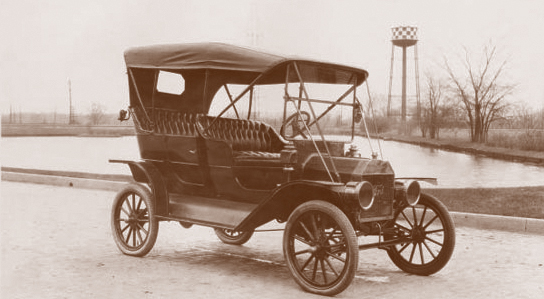
On October 1, 1908, Ford produced the first Model T at a plant in Detroit. The auto could travel 40 miles per hour and ran on gasoline or hemp-based fuel. (As oil prices fell, Ford phased out the hemp option.) The Model T was the first car designed for a mass market, rather than as a luxury item. By 1927, Ford had built 15 million Model T cars – the longest production run of any car model until the Volkswagen Beetle surpassed it in 1972.
On October 1, 1918, Lawrence of Arabia (T.E. Lawrence) helped lead a combined Arab and British force that captured Damascus from the Turks during World War I.
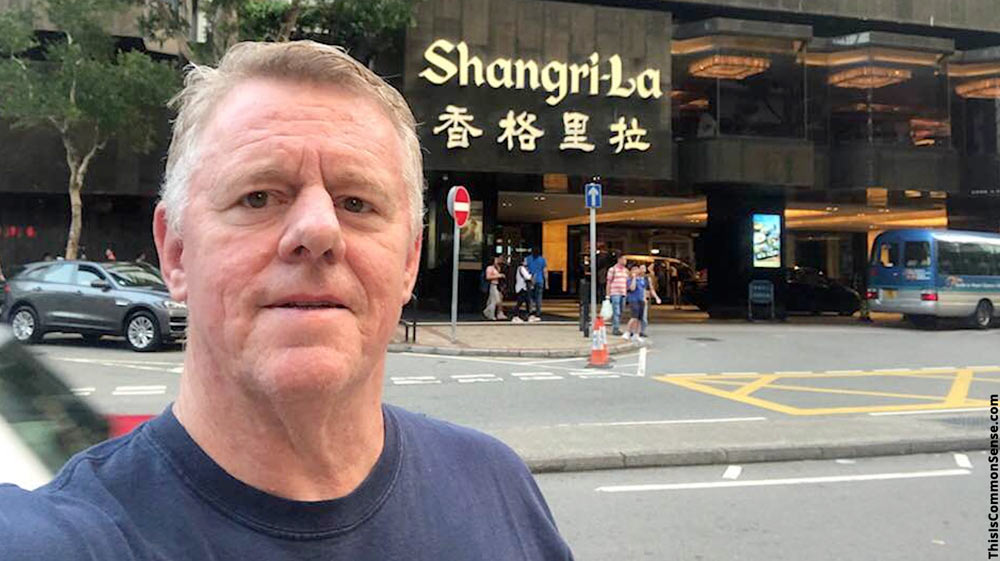
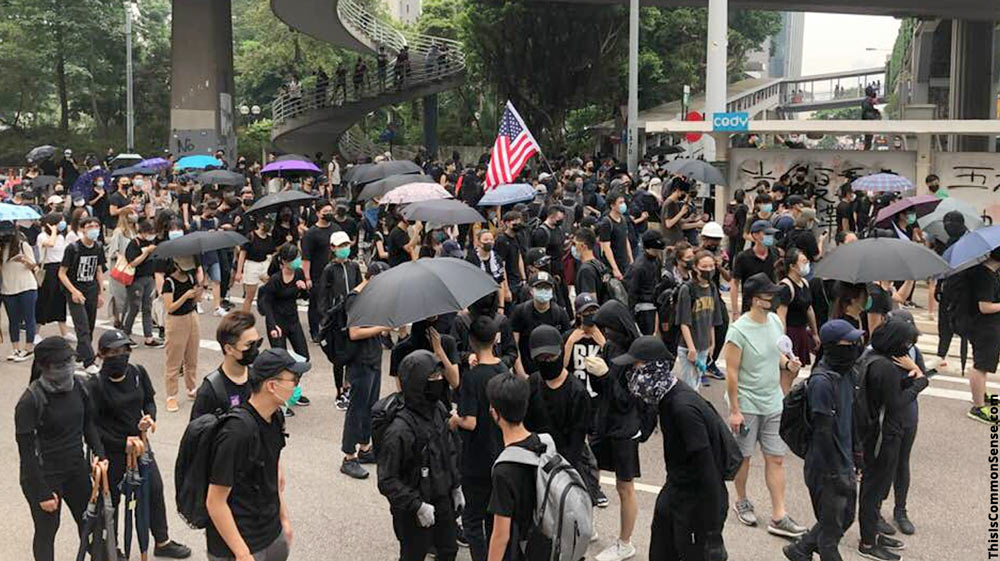
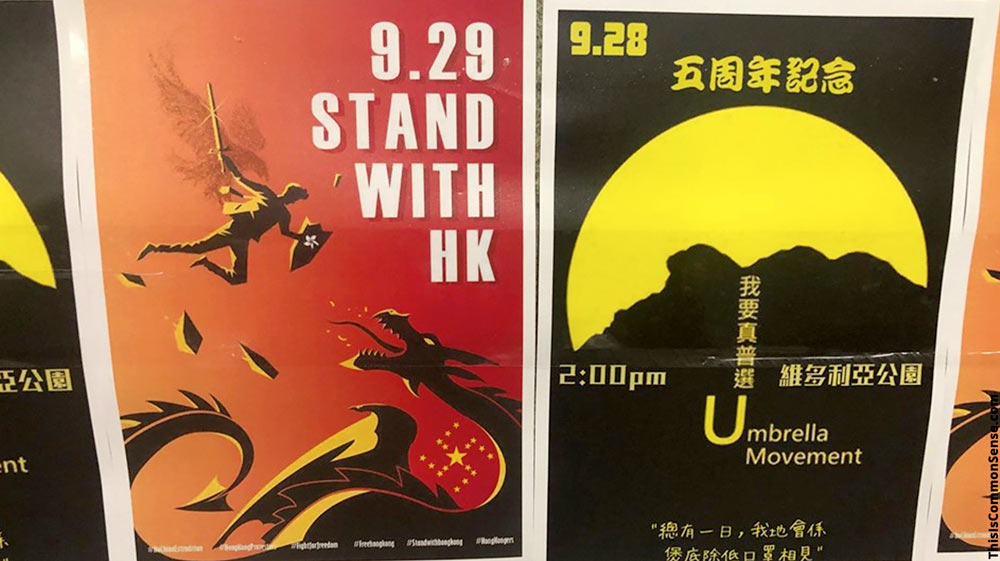
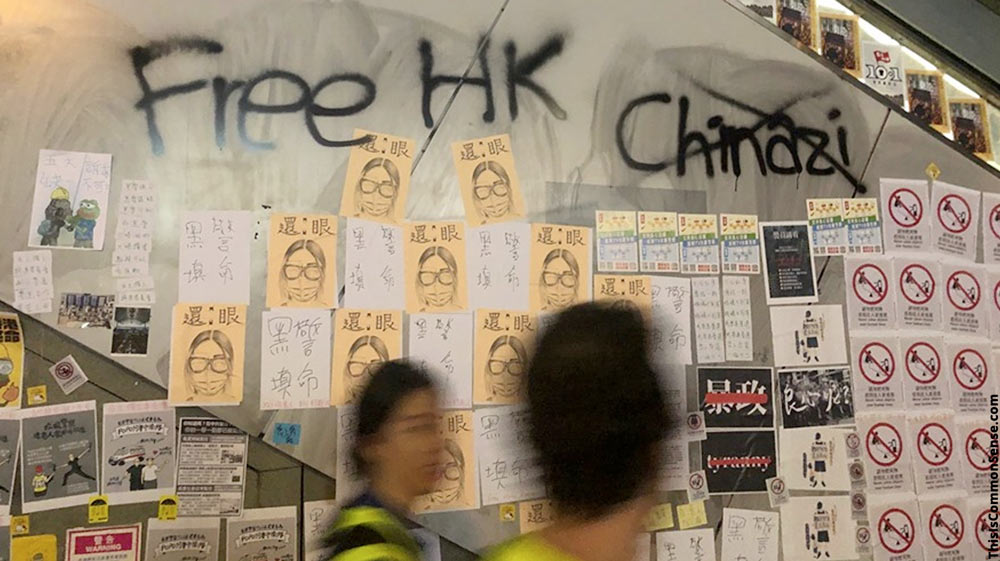
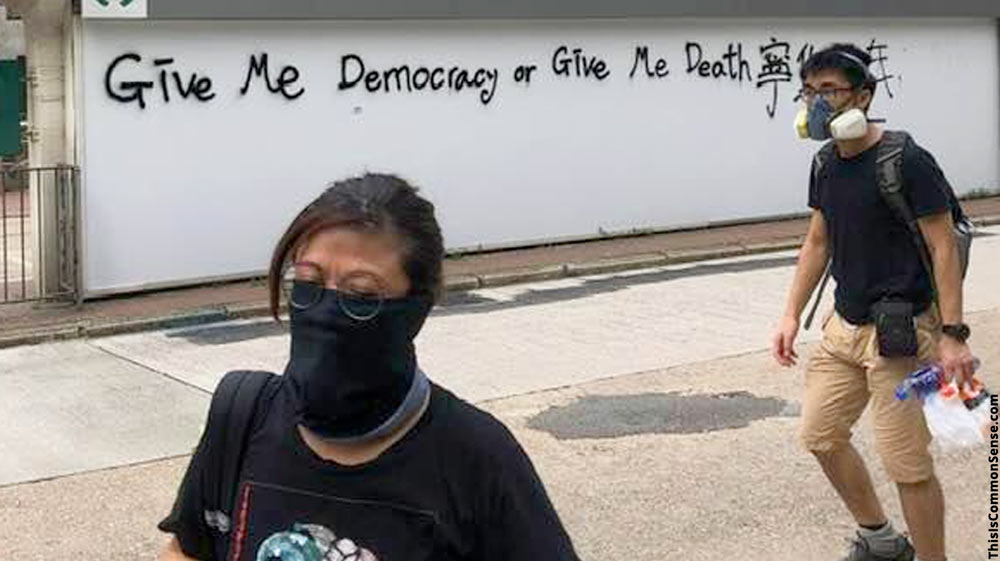
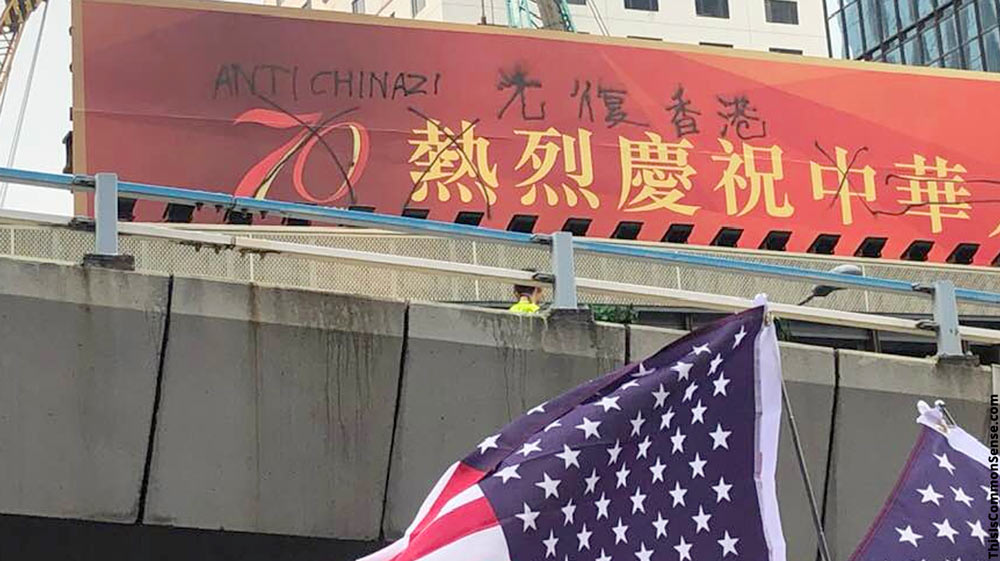
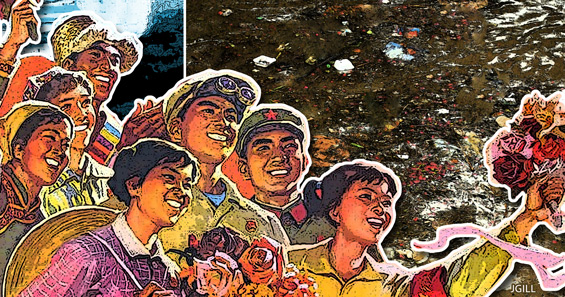
Minding my own business — well, maybe not so much . . . except that “mankind is my business” — I joined Hong Kong’s Global Anti-Totalitarianism Rally.
Is there a more important cause than preventing totalitarian regimes from crushing more lives?
Arriving at the city government complex, I discovered that protesters were marching from another location and would not be there for another 30 minutes or so.
“Hey, I have a plane to catch!” I thought to myself.
Protests are not always punctual.
A convoy of police buses left, leaving press people speculating on whether they were headed to block protesters from getting to the government center at all. Thankfully, about an hour later I saw marchers a block away passing city hall and headed . . . well, to be honest, I had no idea where they were headed. But I hustled up to join their ranks, nonetheless.
After walking for more than half an hour to chants of “Fight for freedom/Stand with Hong Kong,” and “Five demands/Not one less,” I realized had I better get back to the hotel, grab my bags and scoot to the airport.
So I turned around and walked past the long line of marchers, finally reaching city hall where police were set up in riot gear. A small number of protesters were there as well. Suddenly, a policeman fired a volley of tear gas. (I guess such things always seem sudden to those in their sights.) It was followed by several more rounds, which hit both in front of me and behind me.
I saw no cause for the escalation.
“Uh-oh, this is a lot of tear gas,” I realized, holding my breath as I attempted to run outside the range of the rapidly spreading gas. No surprise, but tear gas really burns your eyes — and lungs, too, making it difficult to breathe.
Now it really hit home just how right-on my Friday commentary was to laud Alex Ko, the Taiwanese fellow who raised money to send 2,000 gas mask kits to HK protesters.
As I exited the cloud of smoke, a young man wearing a gas mask came up to me and told me, “Breathe.” It was sound advice.
I was carrying a bottle of water and poured it into both eyes soaking my “Got Liberty?” t-shirt. Which helped a great deal. (I mean the water, not the shirt.)
Another protester handed me a pre-packaged vial of sterilized water. Yet another gave me something labeled “Disposable Surgical Earloop Face Mask.” Neither was effective, frankly, but I certainly appreciated their concern. (And I kept the items as souvenirs.)
Getting back to the hotel was not so simple, either. The subway stations in the surrounding area had been closed by police. And there was a dearth of available taxis. After walking for ten minutes or so, I finally found one and left.
I made my flight, barely, jetting to the greater freedom of Taiwan, and to the Global Forum on Modern Direct Democracy where I’m speaking later this week.
Some wonder why I would take this risk. Well, if these brave young people can continually take much larger risks to fight tyranny, I feel compelled to take much smaller risks to support them. I’m honored to have been with them, to stand with them. Even to cough and gasp and tear up with them.
Those are the tears of future freedom . . . I certainly hope.
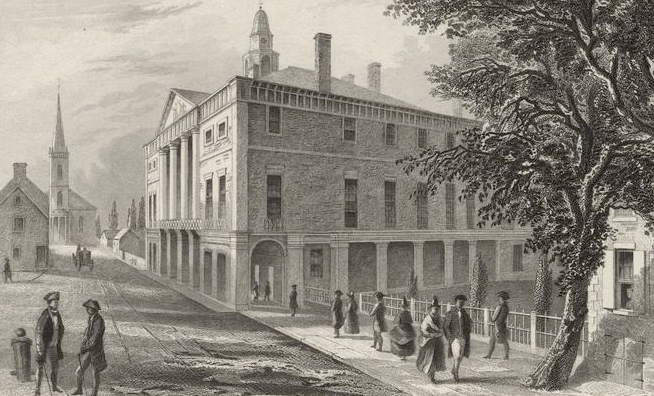
A state too expensive in itself, or by virtue of its dependencies, ultimately falls into decay; its free government is transformed into a tyranny; it disregards the principles which it should preserve, and finally degenerates into despotism. The distinguishing characteristic of small republics is stability: the character of large republics is mutability.
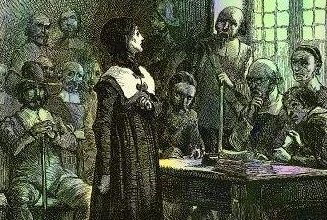
If any come to my house to be instructed in the ways of God what rule have I to put them away? Do you think it not lawful for me to teach women and why do you call me to teach the court?
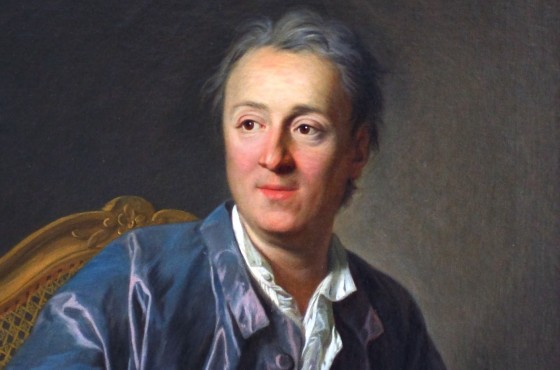
There are three principal means of acquiring knowledge… observation of nature, reflection, and experimentation. Observation collects facts; reflection combines them; experimentation verifies the result of that combination.