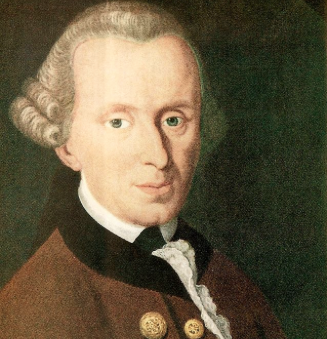
The civil state regarded purely as a lawful state, is based on the following a priori principles:
The freedom of every member of society as a human being.
The equality of each with all the others as a subject.
The independence of each member of a commonwealth as a citizen.
These principles are not so much laws given by an already established state, as laws by which a state can alone be established in accordance with pure rational principles of external human right.
“The Trump years may have cemented Colorado’s blue-state status — time will tell,” writes Alex Burness in the Denver Post, “but voters in the Centennial State continue to hold a hard line on anything that has even a whiff [of] new tax.”
Burness is talking about Proposition CC, a measure placed on Tuesday’s ballot by the state’s Democratic-controlled legislature, which would have allowed state government to keep and spend $37 million annually coming into government coffers over the state’s constitutional spending cap, rather than refunding those dollars to taxpayers as required by the Taxpayer Bill of Rights passed back in the 1990s.
The elite supporters of Proposition CC devoted more than $4 million to promoting the measure, outspending opponents better than two-to-one and arguing that government desperately needed the money for education and transportation. Opponents cried foul over the official ballot summary voters read, which began with the words “Without a tax increase . . .”
“But the measure lost,” Burness informs, “and it wasn’t close.”
“The measure’s failure amounts to a significant victory for supporters of the Taxpayer’s Bill of Rights,” Colorado Public Radio reports. “That constitutional amendment requires voter approval for all tax increases, sets a revenue limit for every government in the state and requires any surpluses be returned to taxpayers.”
“Who’s in charge?” TABOR author Douglas Bruce asked years ago. “We, the people, who earn the money, or the politicians who want to spend it?”
The answer from supposedly blue-leaning Colorado voters was unequivocal.
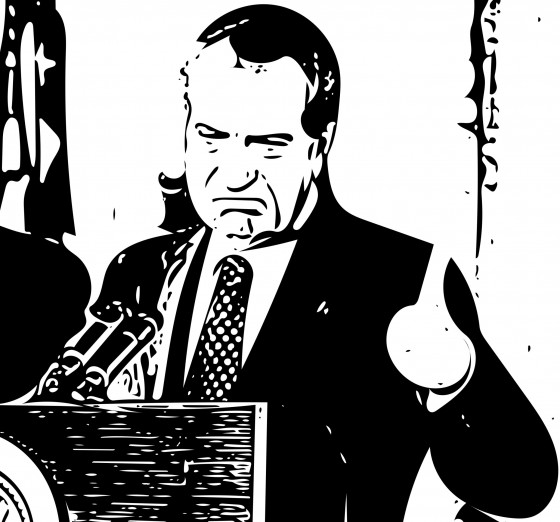
The U.S. Congress overrode President Richard M. Nixon’s veto of the War Powers Resolution on November 7, 1973. This resolution ostensibly limits presidential power to wage war without congressional approval, hence Nixon’s veto. Nowadays, however, it is often referred to as the expansive terms for the “Imperial President’s” license to engage in military conduct, and a dereliction of congressional duty to direct the United States’ foreign policy and warfare.
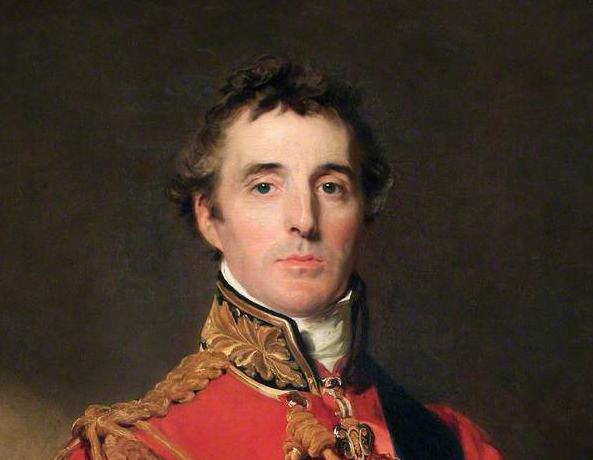
All the business of war, and indeed all the business of life, is to endeavour to find out what you don’t know by what you do; that’s what I called ‘guessing what was at the other side of the hill.’
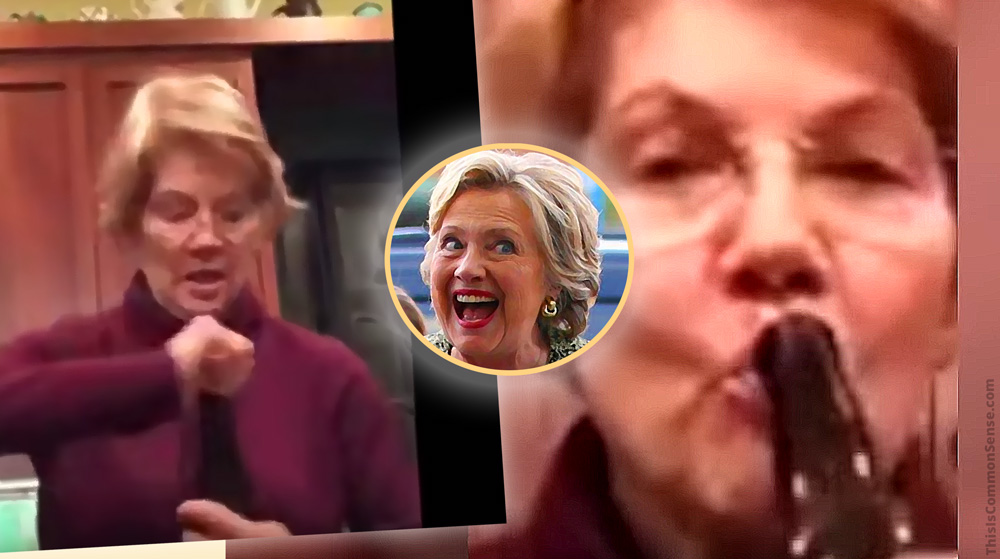
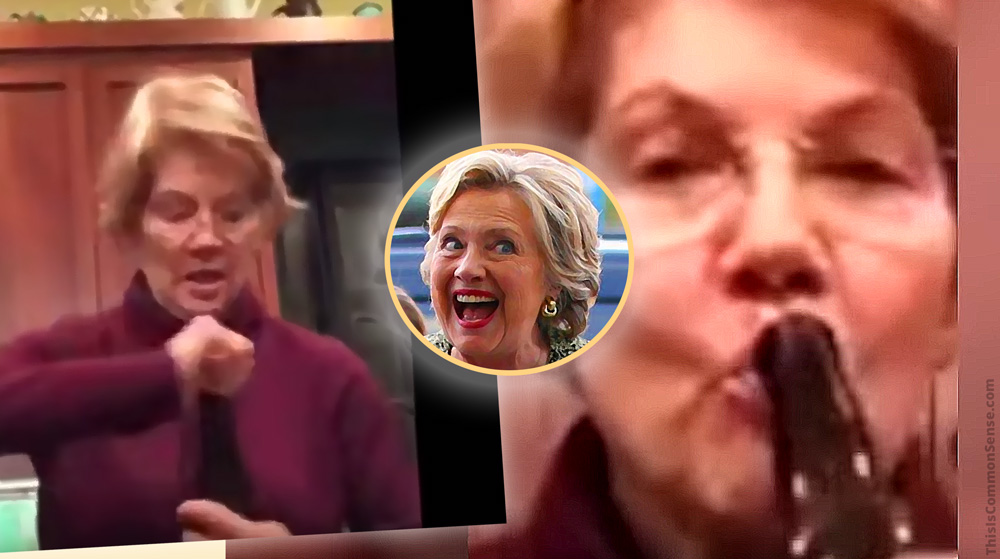
The one thing the Elizabeth Warren for president campaign cannot afford is ‘I’m With Her’ redux.
Hillary ‘the “her”’ Clinton came off as ultra-phony. She tried too hard to be something she is not — that is, likable and not an elitist. Mrs. Clinton’s attempts to seem normal were transparently clumsy. Even cringe-worthy, as when on The Breakfast Club with ‘Charlemagne the God,’ she said that she carried hot sauce in her purse.
You know, because, just like black Americans, she really loves her hot sauce.
The faux-Cherokee Senator from Harvard already has an honesty problem to deal with, just like Hillary. She doesn’t need a Witless/Senescent Boomer aura on top of that.
But that she suffers from just this sort of insincerity became clear in her first livestream, the most inauthentic aping of normalcy most of us have ever seen. And now there is ‘Warren’s Meme Team,’ a Twitter account designed to marshal young people to make ‘memes’ that will support Warren just the way Trump’s supporters Pepe-d Trump’s success in 2016.
Publicizing the notion of “saving the nation with selfies and memes” (in the words of the account) sinks Warren below Hillary down to Biden-level cluelessness. As Dave Cullen relates on Bitchute, the ham-fisted and “unintentionally hilarious” scheme “smacks of sterile, joyless corporate marketing jargon.”
If Warren loses to Trump next year, it won’t be cause of sub-par memes, of course. It will be because of mimesis — that is, mimicry — of Hillary Clinton.
Or because Warren, the self-professed capitalist, is viewed as a socialist.
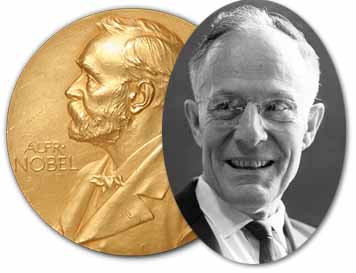
Whereas the governments of some low-income countries are improving their economics policies, in the United States the proliferation of political movements that view economics with disdain, along with apparent general public support for government market interventions, are in considerable measure contributing to the decline in the performance of the U.S. economy.
Theodore W. Schultz, Investing in People: The Economics of Population Quality (1981), p. 143-4
Three measures on ballots today are particularly worth watching.
Two issues in Washington State represent the only citizen-initiated measures out of 32 propositions voters will see in eight states: Washington Referendum 88 allows voters to re-decide the issue of racial and gender preferences, so-called “affirmative action,” while Washington Initiative 976 offers voters a chance to cap their vehicle taxes.
More than two decades ago, in 1998, Washingtonians passed Initiative 200 to end racial and gender preferences in state employment and education. This year, the state legislature enacted a virtual repeal of I-200, by allowing the state to employ such a preference provided it was not the “only factor” used.
Washington’s vibrant Asian-American community, which stands to be discriminated against should affirmative action return, rose up to petition Referendum 88 onto the ballot. A “yes” vote upholds the legislature’s new pro-preference policy; a “no” vote restores the prior voter-enacted policy prohibiting such preferences.
Initiative 976 is yet another effort from Tim Eyman, the state’s most prolific initiative practitioner. “This measure,” as the official summary states, “would repeal or remove authority to impose certain vehicle taxes and fees; limit state and local license fees to $30 for motor vehicles weighing 10,000 pounds or less, except charges approved by voters . . .”
Like virtually every Eyman initiative, powerful opponents have dramatically outspent supporters — by greater than a 6-to-1 margin — funding ads that have been less than truthful. Additionally, government officials have broken campaign laws in pushing a “no” vote.
Nonetheless, a mid-October poll showed 48 percent of voters support I-976 against 37 percent who oppose it. Could Eyman again thwart the state’s behemoth Blue Establishment?
Lastly, New York City voters will decide a ballot question on whether to use ranked choice voting in future primary and special elections for mayor, city council and other offices. It would mark a major victory for a reform growing in popularity.
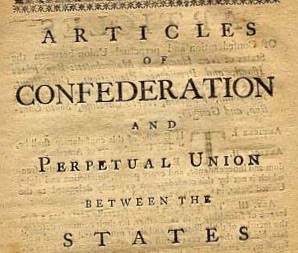
On November 5, 1781, the second session of the United States in Congress Assembled began, in Philadelphia, Pennsylvania. This “Second Confederation Congress,” as it is popularly known, ended on November 2, 1782.
And on that Fifth of November, 1781, John Hanson of Maryland was elected to serve as president of the United States in Congress Assembled. He would become the first president of Congress to serve a full one-year term as specified under the Articles of Confederation, for the second session of the Confederation Congress. Of course, this presidency was nothing like the presidencies under the Constitution. Hanson merely presided over Congress.
On November 5, 1872, Susan B. Anthony defied the law to vote, and was later fined $100.
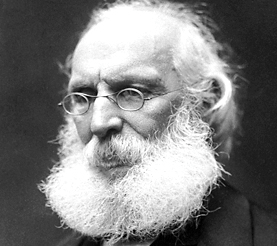
There are people who think the natives of Dahomey very barbarous, because, on the accession of a king, they believe it well to sail a little vessel in human blood in order to tell the fortunes of the new monarch. Now the blood of a thousand slaves is enough for the purpose, whilst in our so-called civilized countries, the great powers, for prestige, or power, or revenge, will shed the blood, not of a thousand, but of 10,000, of 500,000, of millions of persons, enough to make bloody the mightiest river of Europe or America. And yet we dare to treat as barbarians the people of Dahomey.
Frédéric Passy, from a speech promoted widely in its day (late 19th century) by The Peace and Arbitration Society.