Categories
Thought

Aristotle

It is absurd to hold that a man ought to be ashamed of being unable to defend himself with his limbs but not of being unable to defend himself with speech and reason, when the use of reason is more distinctive of a human being than the use of his limbs.

Aristotle, Rhetoric, Book I.
Categories
media and media people national politics & policies

Insincerely Simulated Insanity

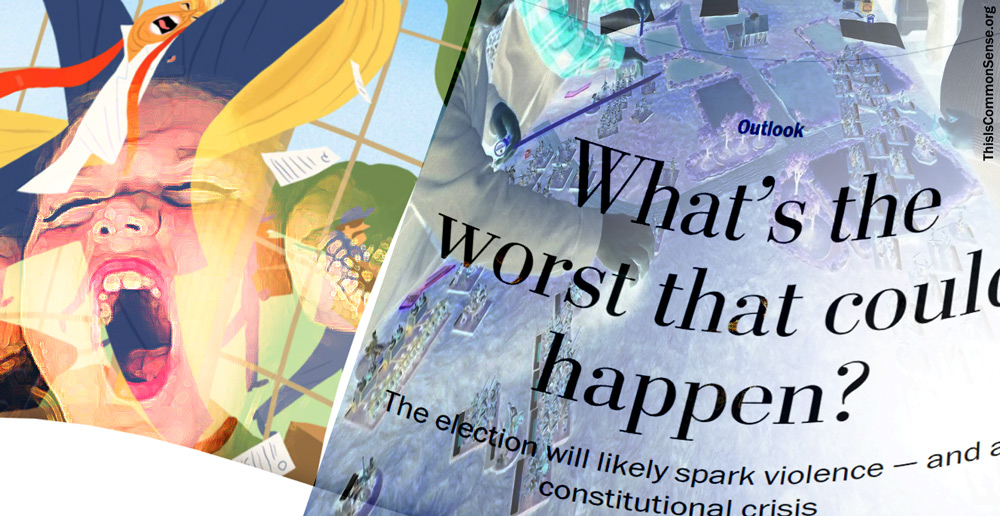
“What’s the worst that could happen?” 

That question, splashed across the lead opinion offering in Sunday’s Outlook section of The Washington Post, was answered by the sub-heading: “The election will likely spark violence — and a constitutional crisis.”

Happy Labor Day!

Rosa Brooks, a Georgetown University law professor and co-founder of the Transition Integrity Project, authored the commentary about a group of political insiders — “some of the most accomplished Republicans, Democrats, civil servants, media experts, pollsters and strategists around” — she assembled for “a series of war games” about “a range of election and transition scenarios.”

The group “explored” four different simulations: “a narrow Biden win; a big Biden win . . .; a Trump win with an electoral college lead but a large popular-vote loss, as in 2016; and finally, a period of extended uncertainty” as the country witnessed following the 2000 election.*

“Over and over, Team Biden urged calm, national unity and a fair vote count,” explained Brooks, “while Team Trump issued barely disguised calls for violence and intimidation against ballot-counting officials and Biden electors.”

Team Biden participants included John Podesta, Hillary Clinton’s 2016 campaign chair; Donna Brazile, Al Gore’s 2000 presidential the campaign chair; and former Michigan Gov. Jennifer Granholm.

“Team Biden repeatedly called for peaceful protests, while Team Trump encouraged provocateurs to incite violence,” she added, “then used the resulting chaos to justify sending federalized Guard units or active-duty military personnel into American cities to ‘restore order,’ leading to still more violence.”

“In each scenario, Team Trump — the players assigned to simulate the Trump campaign and its elected and appointed allies — was ruthless and unconstrained right out of the gate,” informed the professor.  

Wait . . . who were these Team Trump “players”? 

Conservative Bill Kristol, a longtime #NeverTrumper and “one of President Trump’s most vocal opponents,” was one. Another was former RNC chairman Michael Steele, who has not only endorsed Biden, but serves as a senior advisor to The Lincoln Project, now spending millions on attack ads against the president.

Shamefully unfair and intellectually dishonest by Professor Brooks — and the ‘dying in partisan darkness’ Washington Post. 

But here’s the rest of the story . . . 

Even with Bidenites played as angels and Trumpians as devils, both Biden victory scenarios nonetheless resulted in peace by Inauguration Day. 

Not so for a Trump win . . . which “the Left” is not projected to peacefully accept.  

This is Common Sense. I’m Paul Jacob.


* Obviously not considered was Trump winning a solid majority of the vote. Not likely according to today’s polls, but if polls had been accurate in 2016, Trump wouldn’t be president.

PDF for printing

See all recent commentary
(simplified and organized)
See recent popular posts

Categories
Thought

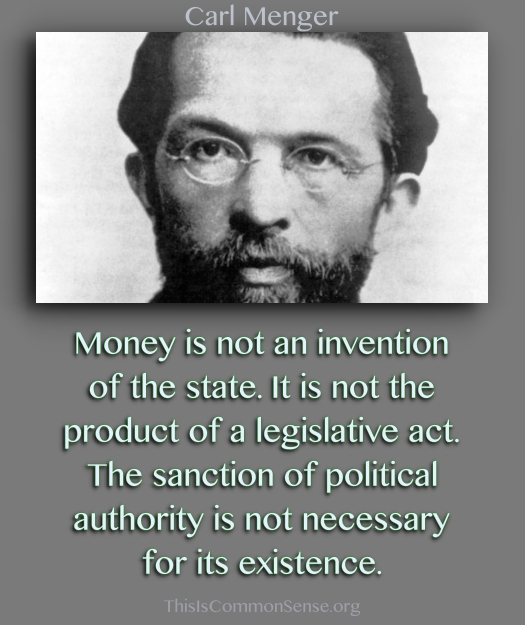
Carl Menger

Money is not an invention of the state. It is not the product of a legislative act. Even the sanction of political authority is not necessary for its existence. Certain commodities came to be money quite naturally, as the result of economic relationships that were independent of the power of the state.

Carl Menger, “The Nature and Origin of Money” (1892).
Categories
Today

Fannie and Freddie

On September 7, 2008, the U.S. Government “took control” of the two largest mortgage financing companies in the United States, Fannie Mae and Freddie Mac. Both of these had been created by Congress as part of a concerted plan to make home ownership easier, and both had gotten completely out of hand during the many years of their existence, especially under new rules established by politicians in the 1990s. The after-market that they helped create — the packaged mortgage market — was what imploded in 2007–2008, leading to the economic slump that Nicholas Nassim Taleb referred to as setting the U.S. government on President Obama’s economic policy course of “eight years of Novocain.”

Categories
by Paul Jacob video

Watch: So Now What?

Paul asks and answers more than one question in this vlog edition of the weekend podcast:

This Week in Common Sense, August 31-September 4, 2020.

Categories
Thought

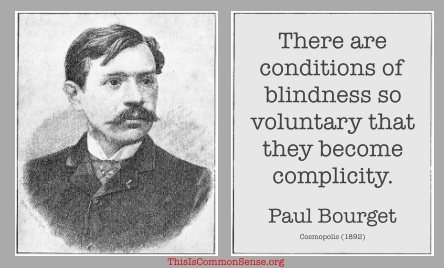
Paul Bourget

There are conditions of blindness so voluntary that they become complicity.

Paul Bourget, Cosmopolis (1892), Chapter 5 “Countess Steno.”

Categories
Today

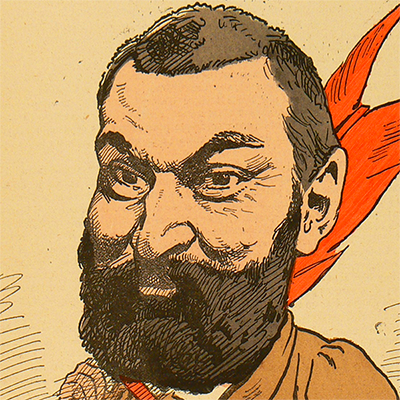
Yves Guyot

On September 6, 1843, Yves Guyot was born. A journalist, economist, and political activist, he once endured a six-month prison term for his campaign against the prefecture of police. He served as minister of public works under the premiership of P.E. Tirard in 1889, retaining his portfolio in the cabinet of Charles de Freycinet until 1892. A free-trade liberal, he lost his seat in the election of 1893 owing to his militant attitude against socialism. His many books included The Principles of Social Economy (1892), The Tyranny of Socialism (1894), The Comedy of Protection (1906), Socialistic Fallacies (1910), and Where and Why Public Ownership Has Failed (1914). He served as editor of Journal des Économistes, following the Belgian economist Gustave de Molinari.


Illustration is a detail from a caricature by artist André Gill (1840-1885).

Categories
audio podcast

Listen: What/Now

Paul answers the burning question, now what?

Categories
Thought

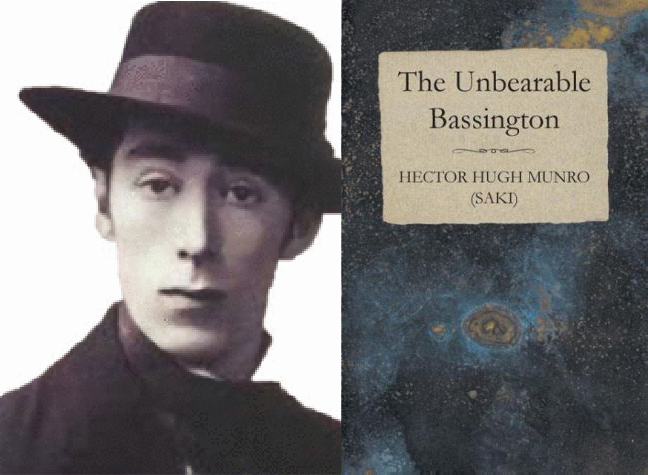
Saki

We all know that Prime Ministers are wedded to the truth, but like other wedded couples they sometimes live apart.

Saki, The Unbearable Bassington, ch. 13 (1912).

r

Categories
Today

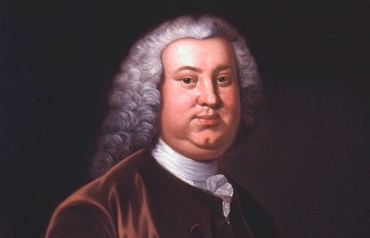
First President of Congress

Responding to British Parliament’s enactment of the Coercive Acts in the American colonies, the first session of the Continental Congress convened at Carpenter’s Hall in Philadelphia, on September 5, 1774. Virginian Peyton Randolph (pictured) was appointed as the first president of Congress. John Adams, Patrick Henry, John Jay and George Washington were among the delegates.