The week’s biggest stories, from Seattle’s soft-on-theft socialism to our planet’s biggest Maybe Benefactors: the Galactic Federation — in full video:
This Week in Common Sense, December 2020: #3.

The week’s biggest stories, from Seattle’s soft-on-theft socialism to our planet’s biggest Maybe Benefactors: the Galactic Federation — in full video:
This Week in Common Sense, December 2020: #3.
On December 20, 1740, Arthur Lee — Revolutionary Era diplomat, spy, and Virginia delegate to the Continental Congress — was born. He practiced law in London from 1770 to 1776, where he wrote polemics against slavery and in defense of the American colonies’ resistance to the Townshend acts and other tyrannical British policies.
He was brother to Richard Henry Lee and Francis Lightfoot Lee.
On November 30, 1804, the United States House of Representatives began impeachment hearings against Supreme Court Justice Samuel Chase. The House thought he was too partisan, too “Federalist.”
The Senate later acquitted Chase.
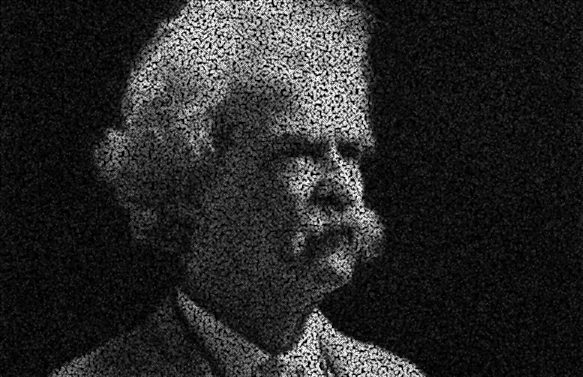
On 1835 on this date, Samuel Clemens was born, later to achieve world fame as author and humorist under the pseudonym Mark Twain (pictured above). His most beloved books include The Adventures of Tom Sawyer (1876) and his masterpiece, Adventures of Huckleberry Finn (1885). He died in 1910.
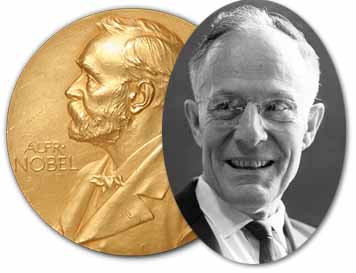
[T]here is an abundance of rhetoric consisting of dire predictions that the soils of the earth are being depleted, natural resources are being exhausted, the land that is suitable for crops cannot produce enough food for the still growing population, and that massive famines will soon occur. These predictions are not a true reckoning of the limits of the earth, because the future productivity of the economy is not foreordained by space, energy, and cropland. It will be determined by the abilities of human beings. It has been so in the past and there are no compelling reasons why it will not be so in the years to come.
Theodore W. Schultz, Investing in People: The Economics of Population Quality (1981), p. 140.
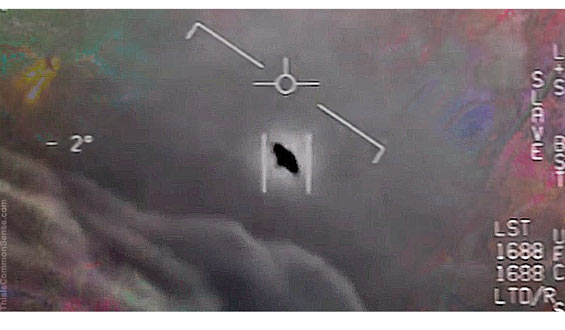
Paul wraps up the big stories of the week, from theft-excusing socialists to war-stopping UFOs.
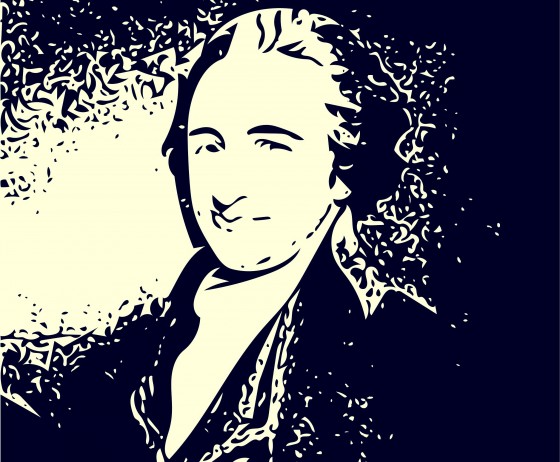
On December 19, 1776, Tom Paine published one of a series of pamphlets in the Pennsylvania Journal titled The American Crisis. Exactly one year later, George Washington’s Continental Army went into winter quarters at Valley Forge, Pennsylvania.
On December 19, 1828, Vice President of the United States John C. Calhoun penned the South Carolina Exposition and Protest, protesting the Tariff of 1828, a key moment in what became known as the Nullification Crisis.

Instead of civilization being artificial, it is a part of nature; all of a piece with the development of the embryo or the unfolding of a flower. The modifications mankind have undergone, and are still undergoing, result from a law underlying the whole organic creation; and provided the human race continues, and the constitution of things remains the same, those modifications must end in completeness.
Herbert Spencer, Social Statics: or, The Conditions essential to Happiness specified, and the First of them Developed (London: John Chapman, 1851), Chapter 1, § 4.
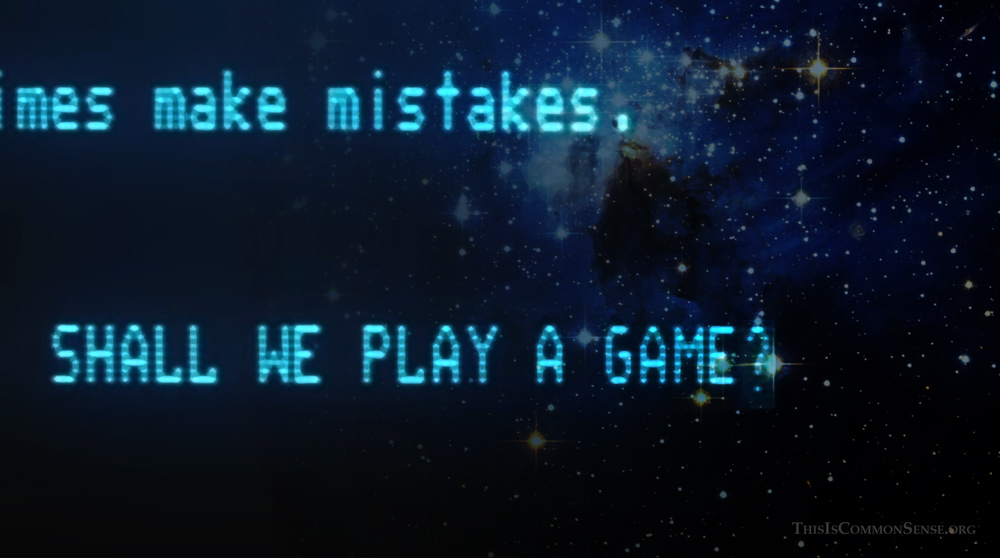
The year was 1983. One man, trusting his instincts and his knowledge of how technology can fail, averted catastrophe by not “pushing the button” to launch Soviet missiles at the United States.
It was September 26, and we celebrate it here, at Common Sense with Paul Jacob, as Petrov Day, after the day’s hero — indeed, the world’s hero — Stanislav Yevgrafovich Petrov. Though tensions were running high in the early Eighties, Petrov suspected a false alarm. Events proved him right.
Petrov is not alone on this specific heroes’ list. There’s also Vasily Alexandrovich Arkhipov, who averted disaster during the Cuban Missile Crisis.
But the oddest list candidates might not be human.
A week ago or so, when I reported that a former head of the Israel space programs, Professor Haim Eshed, had talked, in an interview, about Israeli and American diplomatic relations with a “Galactic Federation” — yes, of extra-terrestrial aliens — I failed to mention that he had also claimed aliens had averted nuclear war.
Is he crazy? Lying?
Well, ufology lore and de-classifed military documents tell of repeated — and unnerving — UFO incursions into the operations of both Russian and American military nuclear missile installations. We could easily dismiss these claims when the U.S. military was denying any mysterious UFO reality out there — after all, people like to tell tall tales — but that’s not the case now, when the Pentagon has confessed that something very real and really weird is indeed going on in our oceans and atmosphere.*
But the Pentagon is not admitting to treaties with alien civilizations. The “official position” of the U.S. military, despite increasing numbers of disclosures, is that the UFO phenomenon “appears to remain a mystery,” as Tim McMillan concludes his recent extensive survey of official congressional briefings for The Debrief.
Still, the official, accepted reason we have not experienced massive thermonuclear war is merely game-theoretic: no winners being possible, as we learned in a popular movie a few months before Stanislav Petrov had to make his big decision, rational players wouldn’t start one.
Yet, Mutually Assured Destruction is initialized MAD, and those with limited faith in human reasonableness not unreasonably consider, at least, other explanations for our continued survival.
So, hail Petrov; honor Arkihipov; and . . . consider . . . aliens?
This is Common Sense. I’m Paul Jacob.
* As we have learned in the reporting, “Flying Saucers” aren’t the only form seemingly inexplicable UFOs take. The latest is “triangle.”
See all recent commentary
(simplified and organized)
See recent popular posts
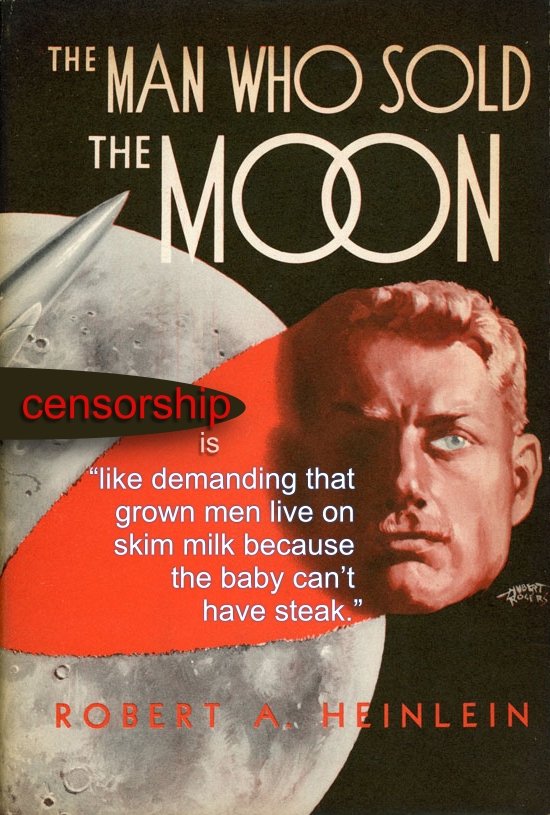
censorship, n,
The whole principle is wrong. It’s like demanding that grown men live on skim milk because the baby can’t have steak.
Robert A. Heinlein, The Man Who Sold the Moon (1951), p. 188.
This quotation is reminiscent of one often misattributed to Mark Twain:
Censorship is telling a man he can’t have a steak just because a baby can’t chew it.
(Unknown)
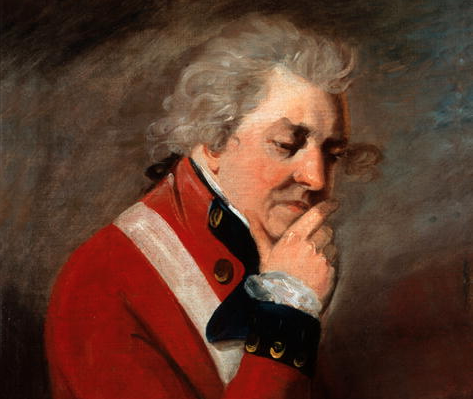
On December 18, 1777, the United States celebrated its first official Thanksgiving, marking the then-recent October victory by the Americans over General John Burgoyne in the Battle of Saratoga.