Categories
Today

Dictator Overthrown

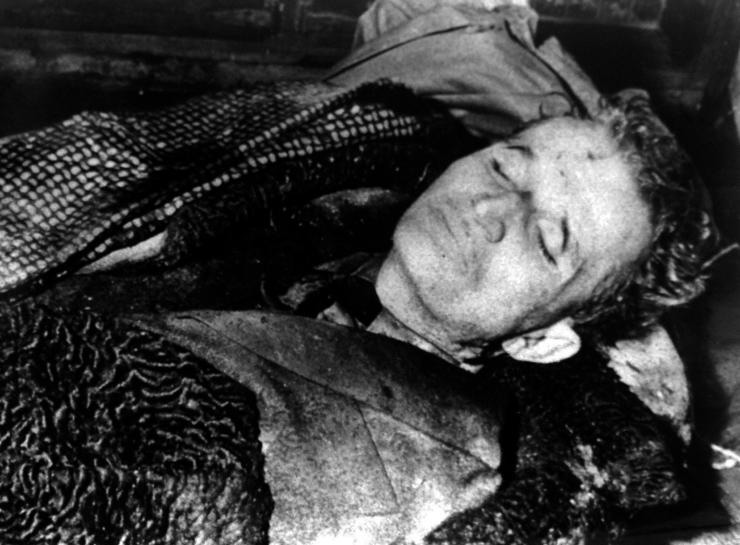
On December 22, 1989, Communist President of Romania Nicolae Ceaușescu was overthrown by Ion Iliescu after days of bloody confrontations. The deposed dictator and his wife fled Bucharest with a helicopter as protesters erupted in cheers.

The couple was quickly caught and, on Christmas day, tried by a military tribunal and executed by firing squad.

Categories
First Amendment rights international affairs

The Censors’ Conceit

Is it okay to stop people from talking to prevent them from saying things that are possibly incorrect?

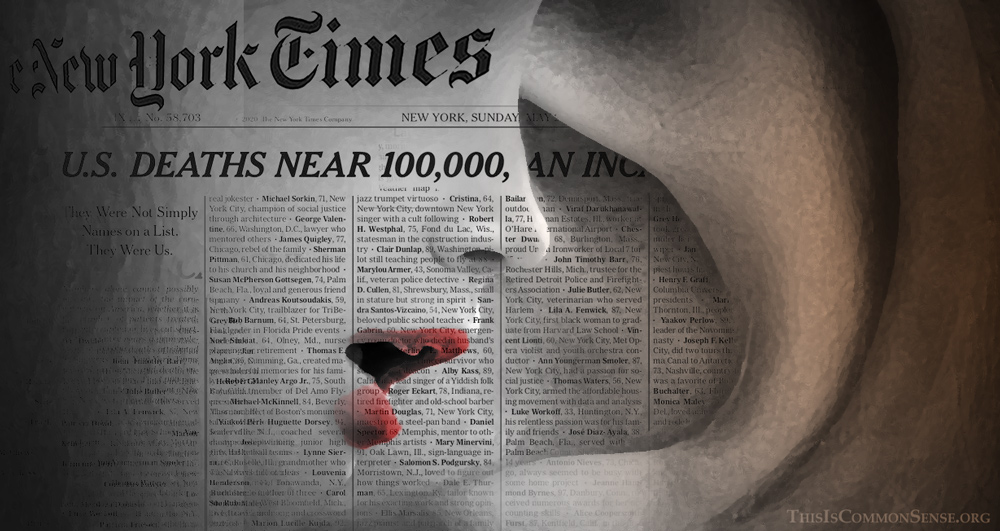
A New York Times article about Chinese censorship of discussion of COVID-19 seems to imply that the Chinese government would have been justified in choking off discussion to “debunk damaging falsehoods.”

A mass of government documents recently obtained by hackers “indicate that Chinese officials tried to steer the narrative not only to prevent panic and debunk damaging falsehoods domestically. They also wanted to make the virus look less severe — and the authorities more capable. . . .”

The government’s efforts included hiring hundreds of thousands of people to publish party-line posts on social media as well as detaining people “who formed groups to archive deleted posts” about the death of Dr. Li Wenliang, who had warned about COVID-19.

The Chinese government has also issued endless instructions to providers of nominally private social-media platforms to control what people say about the pandemic.

Thank the Gray Lady for the report confirming the known details about Chinese censorship. But how do you draw a line between censorship “only” to “debunk falsehoods” and censorship to spread official lies and suppress the very appearance of truth? You can’t.

Discussion itself helps us determine what is true and what is false.

The notion that the government (or any society-wide institution obeying the government) can neatly and unilaterally shape discussion to prevent only “bad” discussion — without inflicting massive damage on “good” discussion — is itself false.

This is Common Sense. I’m Paul Jacob.


PDF for printing

See all recent commentary
(simplified and organized)
See recent popular posts
Categories
Thought

Herbert Spencer

Duplicate men are not to be found. There is in each a different balance of desires. Therefore the conditions adapted for the highest enjoyment of one, would not perfectly compass the same end for any other. And consequently the notion of happiness must vary with the disposition and character; that is, must vary indefinitely.

Herbert Spencer, Social Statics: or, The Conditions essential to Happiness specified, and the First of them Developed (London: John Chapman, 1851), Introduction, § 2.

Categories
Today

Rock and Rebellion

On December 21, 1620, William Bradford and the Mayflower Pilgrims landed on what is now known as Plymouth Rock in Plymouth, Massachusetts.

American settlers in Nacogdoches, Mexican Texas, declared their independence on December 21, 1826, starting the Fredonian Rebellion.

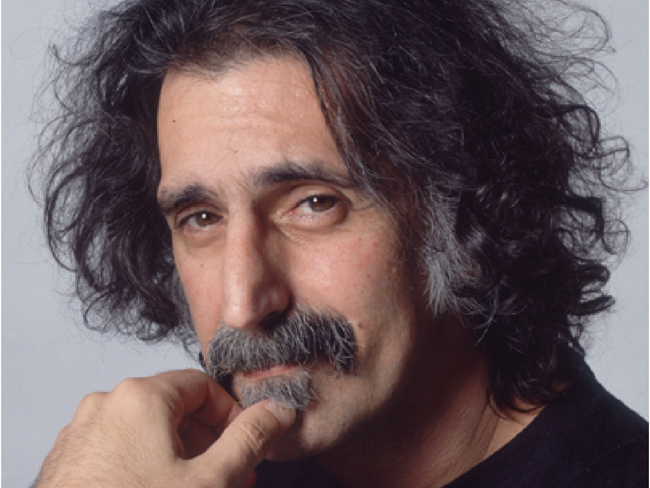
Avant-garde rock ’n’ roll guitarist, band leader, and composer Frank Zappa was born on this date in 1940. In 1985, Zappa testified before the United States Senate Commerce, Technology, and Transportation committee, attacking the Parents Music Resource Center or PMRC, a music organization co-founded by Tipper Gore, wife of then-senator Al Gore. Zappa was a passionate advocate for freedom of speech, self-education, political participation and the abolition of censorship. Describing his political views, Frank Zappa categorized himself as a “practical conservative,” or “independent.” He died in 1993.

Categories
by Paul Jacob video

Watch: Nightmares Not Yet Over

The week’s biggest stories, from Seattle’s soft-on-theft socialism to our planet’s biggest Maybe Benefactors: the Galactic Federation — in full video:

This Week in Common Sense, December 2020: #3.

Categories
Today

Diplomat and Spy

On December 20, 1740, Arthur Lee — Revolutionary Era diplomat, spy, and Virginia delegate to the Continental Congress — was born. He practiced law in London from 1770 to 1776, where he wrote polemics against slavery and in defense of the American colonies’ resistance to the Townshend acts and other tyrannical British policies.

He was brother to Richard Henry Lee and Francis Lightfoot Lee.

Categories
Today

Chase and Clemens

On November 30, 1804, the United States House of Representatives began impeachment hearings against Supreme Court Justice Samuel Chase. The House thought he was too partisan, too “Federalist.”

The Senate later acquitted Chase.

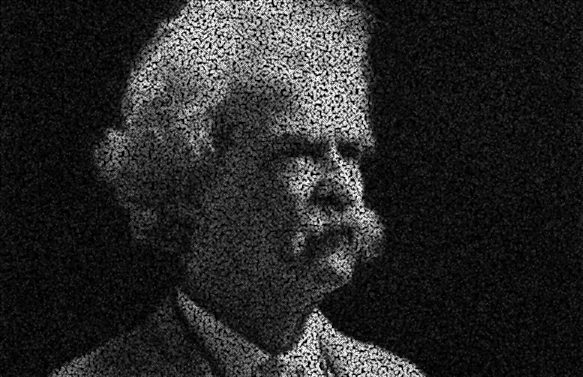
On 1835 on this date, Samuel Clemens was born, later to achieve world fame as author and humorist under the pseudonym Mark Twain (pictured above). His most beloved books include The Adventures of Tom Sawyer (1876) and his masterpiece, Adventures of Huckleberry Finn (1885). He died in 1910.

Categories
Thought

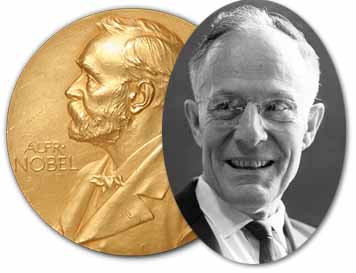
Theodore W. Schultz

[T]here is an abundance of rhetoric consisting of dire predictions that the soils of the earth are being depleted, natural resources are being exhausted, the land that is suitable for crops cannot produce enough food for the still growing population, and that massive famines will soon occur. These predictions are not a true reckoning of the limits of the earth, because the future productivity of the economy is not foreordained by space, energy, and cropland. It will be determined by the abilities of human beings. It has been so in the past and there are no compelling reasons why it will not be so in the years to come.

Theodore W. Schultz, Investing in People: The Economics of Population Quality (1981), p. 140.

Categories
audio podcast

Listen: National Nightmare NOT Over!

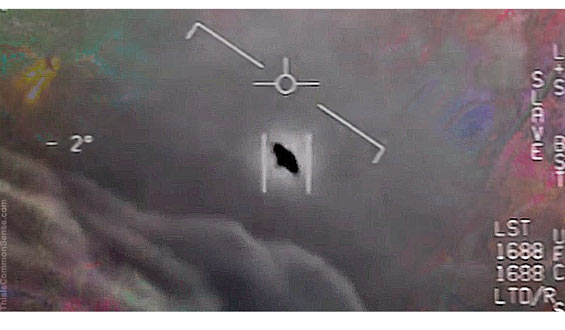
Paul wraps up the big stories of the week, from theft-excusing socialists to war-stopping UFOs.

Categories
Today

American Crises

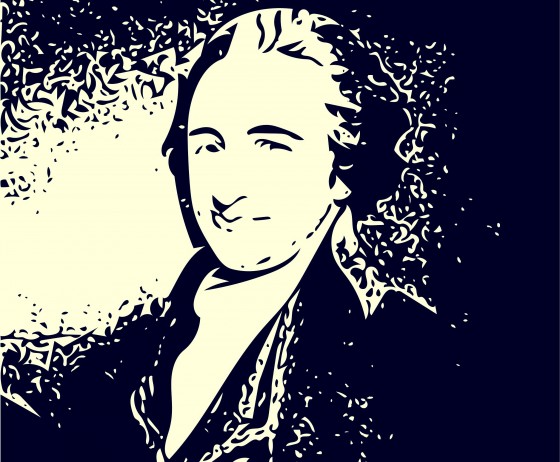
On December 19, 1776, Tom Paine published one of a series of pamphlets in the Pennsylvania Journal titled The American Crisis. Exactly one year later, George Washington’s Continental Army went into winter quarters at Valley Forge, Pennsylvania.

On December 19, 1828, Vice President of the United States John C. Calhoun penned the South Carolina Exposition and Protest, protesting the Tariff of 1828, a key moment in what became known as the Nullification Crisis.