Categories
Today

The XXIInd!

On February 27, 1830, American economist and free trade advocate Arthur Latham Perry was born.


The Twenty-second Amendment (Amendment XXII) of the United States Constitution, which sets a term limit for election and overall time of service to the office of President of the United States, was ratified by the requisite 36 of the then-48 states on February 27, 1951.

Congress had passed the amendment on March 21, 1947.

Categories
term limits U.S. Constitution

Happy Term Limits Day!

Saturday is Term Limits Day. 

Boy, this holiday season really sneaked up on me. 

No excuse, though, because Term Limits Day falls on February 27th every year. On that date in 1951, the 22nd Amendment to the Constitution was ratified, limiting the president to two terms in office. 

Call it the constitutionalization of the small-r republican example George Washington set so well by voluntarily stepping down after two terms as chief executive. That “tradition” lasted for nearly 150 years . . . until FDR sought and won a third term in 1940.

In addition to presidential limits, tomorrow let’s also cheer term limits on 15 state legislatures (including big states such as California, Florida, Ohio, Michigan), and those covering 36 governors as well as thousands of local elected officials, including in nine of the nation’s ten largest cities.

Of course, while we celebrate Term Limits Day — in this pandemic, mostly on social media — let’s remember where mandatory rotation out of elected office does not exist, yet is most desperately needed: Congress.

Since career politicians aren’t going to term-limit themselves, U.S. Term Limits has launched a “national effort to bypass Congress and put term limits on House and Senate through the Term Limits Convention.” The convention requires 34 state legislatures to take action and that in turn requires us to act at the grassroots in our states. 

Already there is impressive movement. In the last week, resolutions for a Term Limits Convention have passed through key committees and entire chambers in Arizona, Georgia, and North Dakota. Much more is in the pipeline.

Term Limits Day, tomorrow, makes a great day for a contribution to the term limits cause. But there’s no time better than the present.

This is Common Sense. I’m Paul Jacob.


PDF for printing

See all recent commentary
(simplified and organized)
See recent popular posts
Categories
Thought

Ortega y Gasset

Life is fired at us point blank.

Categories
Today

Dominican Independence

February 26 marks the Dominican Republic’s Independence Day.

Categories
First Amendment rights

Dissidents. Disagreement. Disinformation.

Politicians are ramping up assaults on political disagreement (with them) . . . only they call the disagreeable data “disinformation.”

The latest is a threatening letter by Democratic Representatives Anna Eshoo and Jerry McNerney to cable companies and digital providers such as Apple and Roku. Sample: “Are you planning to continue carrying Fox News, OANN and Newsmax on your platform both now and beyond the renewal date? If so, why?”

Bottom line: Do more to deprive dissidents of a forum! (Here we loosely define “dissident” as “anyone who disagrees with Eshoo and McNerney.”)

With such epistolary conduct the threat is implied. When congresspeople write a complaint like this, the “gun under the table” is understood. They can make laws or use existing laws — antitrust laws or 10,000 other possibilities in the kit bag of the federal leviathan — to pummel speech-enablers.

On Monday, I noted next month’s scheduled congressional inquisition of Twitter, Facebook and Google CEOs, the third such “hearing” in the last five months. That alone imposes a punishment of sorts . . . and to what purpose?

As Glen Greenwald cogently points out: “Congress violates the First Amendment when it attempts to require private companies to impose viewpoint-based speech restrictions which the government itself would be constitutionally barred from imposing.”

Congressmen who oppose what Eshoo and McNerney are doing should take this attack on our right to speak very, very seriously. Government must not silence voices, directly or indirectly. If there’s a battle to pick in defense of our freedom, this is it.

Freedom of speech is our first, last, and most important defense against tyranny. Tyrants have never been fans. We must be. 

This is Common Sense. I’m Paul Jacob.


* It reminds me of President Trump complaining on Twitter about “Fake News out of NBC and the Networks” and asking

PDF for printing

See all recent commentary
(simplified and organized)
See recent popular posts

Categories
Thought

Voltaire

It is dangerous to be right in matters on which the established authorities are wrong.

Categories
Today

Grimke and Revels

February 25, 1805, saw the birth of Angelina Emily Grimké Weld, American abolitionist and feminist. She was the younger sister of the equally famed Sarah Moore Grimké.

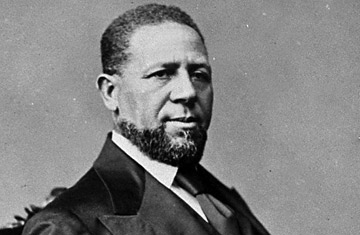
On February 25, 1870, the first African-American entered Congress to serve in the U. S. Senate. Hiram Rhodes Revels (Sep 27, 1827 – Jan 16, 1901) was a minister in the African Methodist Episcopal Church, a Republican politician, and college administrator. Born free in North Carolina, he later lived and worked in Ohio, where he voted before the Civil War. He was elected as the first African American to serve in the United States Senate, and was the first African American to serve in the U.S. Congress. He represented Mississippi in the Senate in 1870 and 1871 during the Reconstruction era.


In Law #46 of February 25, 1947, the Allied Control Council formally proclaimed the dissolution of Prussia.

Categories
First Amendment rights

Rewriting Amendment Number One

People once wondered — perhaps not very seriously — whether falsely shouting “Fire!” in a theater and telling hit men “Here’s $50,000; you will get the rest when you finish the job” count as speech that should be protected as a matter of right.

They do not. 

And it’s not so puzzling that freedom to exercise a legitimate right does not entail license to violate the rights of others.

But some people are eager to prohibit us from uttering statements that don’t come within twenty parsecs of such alleged quandaries. These censorious ones include big-tech firms and big DC politicians like, for example, U.S. Senator Richard Blumenthal, a bully urging social-media firms to crack down harder on the speech of “‘antivax’ groups.”

Such persons seem to think that the First Amendment as presently worded, at least the part protecting freedom of speech, is a big dumb mistake. What would they like it to say instead?

Maybe:

“Congress shall make no law abridging the freedom of speech, or of the press, unless a would-be speaker wishes to dispute government-endorsed or Google-Twitter-Facebook-Amazon-endorsed conclusions about medicine, vaccines, pandemics, masks, lockdowns, transgenderism, euthanasia, abortion, or election fraud; to spend ‘too much’ money on campaign speech; to utter ‘hate speech’ about chess pieces; to speak freely; etc.”

But then the First Amendment would be about as valuable as yesterday’s toilet paper as a bulwark against tyranny. 

Don’t flush our freedom of speech.

This is Common Sense. I’m Paul Jacob.


PDF for printing

See all recent commentary
(simplified and organized)
See recent popular posts
Categories
Thought

Ortega y Gasset

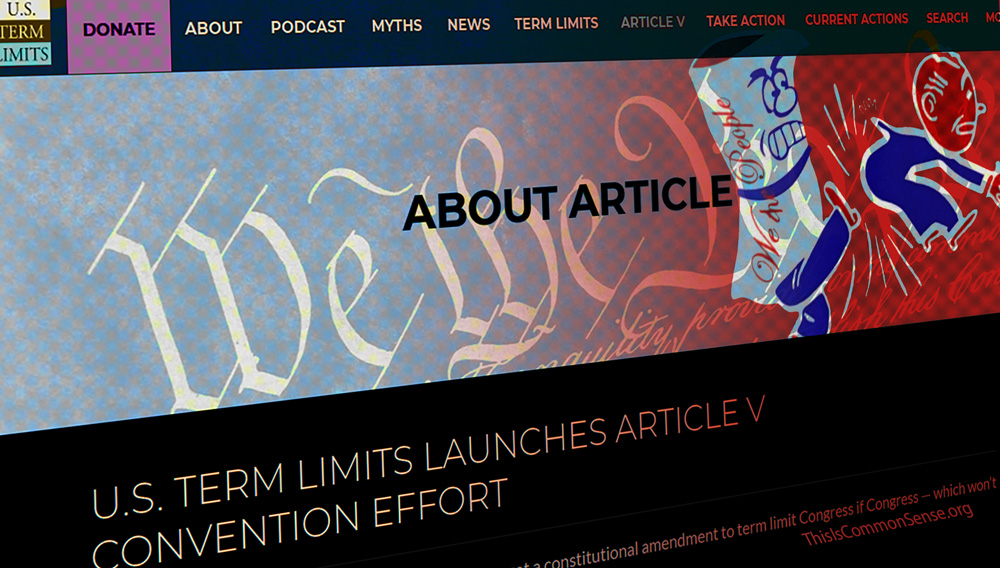
Whether he be an original or a plagiarist, man is the novelist of himself.

José Ortega y Gasset, “Man has no nature,” in History as a System (1962).
Categories
Today

A telegram

On February 24, 1917, United States ambassador to the United Kingdom, Walter Hines Page, was shown the intercepted Zimmermann Telegram, in which Germany offered to give the American Southwest back to Mexico if Mexico were to declare war on the United States.

On February 24, 1803, the Supreme Court, in Marbury v. Madison, established the principle of judicial review.