Categories
Thought

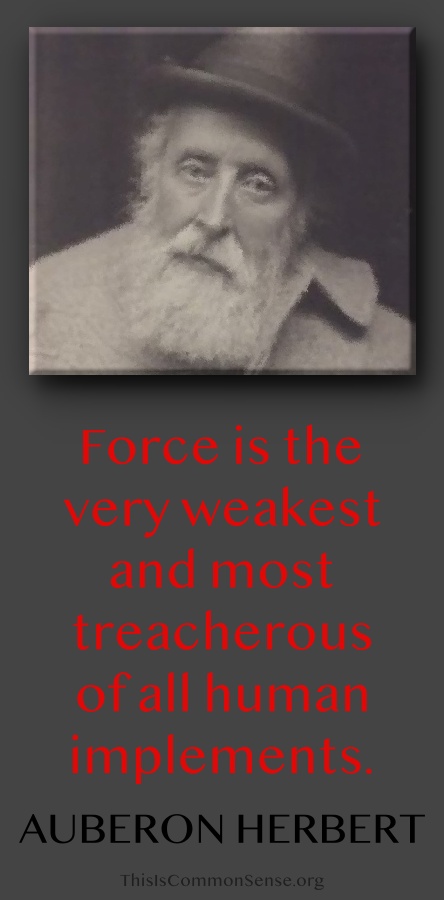
Auberon Herbert

If we cannot by reason, by influence, by example, by strenuous effort, and by personal sacrifice, mend the bad places of civilization, we certainly cannot do it by force. Force is the very weakest and most treacherous of all human implements. 

Auberon Herbert, “The Ethics of Dynamite,” The Contemporary Review (Volume 65, 1894), p. 686.
Categories
Today

Term limits

On May 22, 1995, in U.S. Term Limits v. Thornton, the U.S. Supreme Court struck down Arkansas’s congressional term limits law, 5-4, overturning the congressional term limits then the law in 23 states: Arizona, Arkansas, California, Colorado, Florida, Idaho, Louisiana, Maine, Massachusetts, Michigan, Missouri, Montana, Nebraska, Nevada, New Hampshire, North Dakota, Oklahoma, Ohio, Oregon, South Dakota, Utah, Washington and Wyoming.

Other May 22 events include

* 1856: South Carolina Congressman Preston Brooks savagely beat Massachusetts Senator Charles Sumner in the halls of Congress as tensions rise over the expansion of slavery. Sumner did not return to the Senate for three years while he recovered.

* 1848: Slavery was abolished in Martinique.

* 1807: A grand jury indicted former Vice President of the United States Aaron Burr on a charge of treason. Burr (in portrait, above) was later acquitted.

Categories
audio podcast

Listen: How Few Politicians Are Hanged

Paul reports from Michigan, where he is engaged in a huge initiative drive. He has some choice words for the politicians whose unconstitutional and lying maneuvers require us to spend time and money to oppose.

Categories
Thought

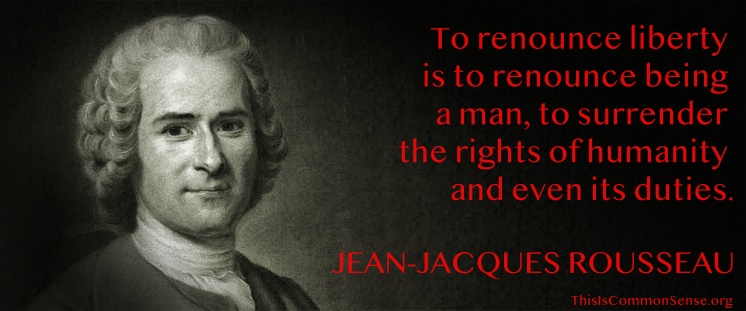
Jean-Jacques Rousseau

To renounce liberty is to renounce being a man, to surrender the rights of humanity and even its duties. For him who renounces everything no indemnity is possible. Such a renunciation is incompatible with man’s nature; to remove all liberty from his will is to remove all morality from his acts.

Categories
Today

Colombia

On May 21, 1851, slavery was abolished in Colombia, South America.

Categories
free trade & free markets general freedom national politics & policies

Quota Requirement Overturned

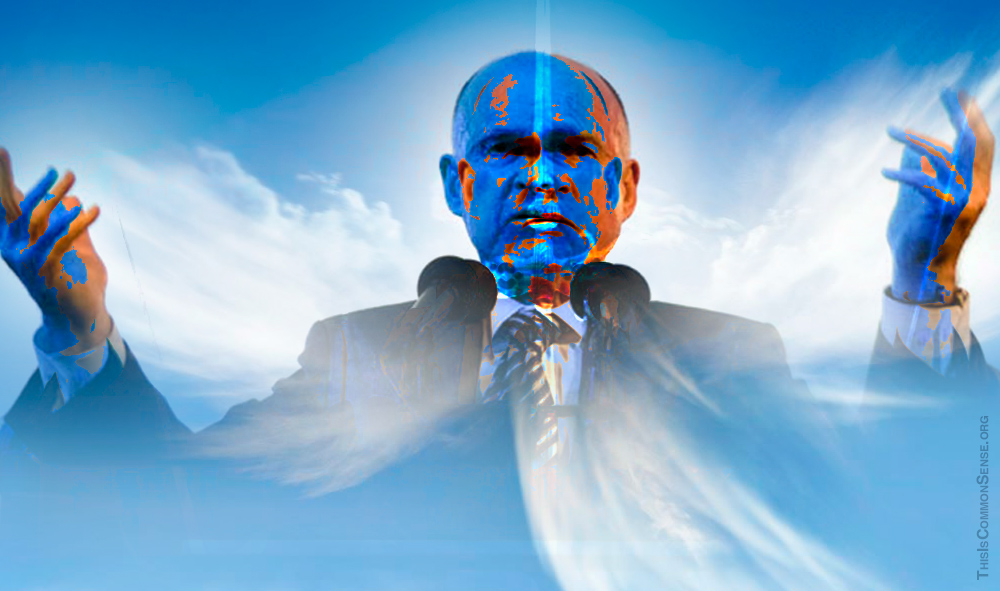
In 2018, Jerry Brown, then California governor, signed a bill requiring corporate boards to include a high percentage of women. 

Now a Los Angeles County Superior Court judge has determined that the state failed to show that “gender-based classification was necessary to boost California’s economy, improve opportunities for women in the workplace, and protect California taxpayers, public employees, pensions and retirees.”

No news yet on whether the state will appeal.

In 2018, Brown had conceded that the law was probably doomed to be judged unconstitutional. But he apparently regarded questions of legality or constitutionality as irrelevant.

“It’s high time corporate boards include the people who constitute more than half the ‘persons’ in America,” he burbled in his signing message.

Fines for disobedience were to be steep: $100,000 for initial violations, $300,000 for subsequent violations.

Of course, it is neither immoral nor a crime to choose a man instead of a woman for a post. Making specific hires criminal depending upon the complexion of a business’s other hires amounts to the politicization of everything, swapping the goals of business for the goals of ideologues. It is destructive of individual rights and the requirements of conducting business profitably to compel employers choosing personnel to be guided by any considerations other than relevant qualifications. Or by any assessment but their own.

Managers of all non-government organizations should be free to use their own best judgment in hiring and contracting, whether the work involved is that of clerk, CEO, or board member. 

This is Common Sense. I’m Paul Jacob.


PDF for printing

See all recent commentary
(simplified and organized)
See recent popular posts
Categories
Thought

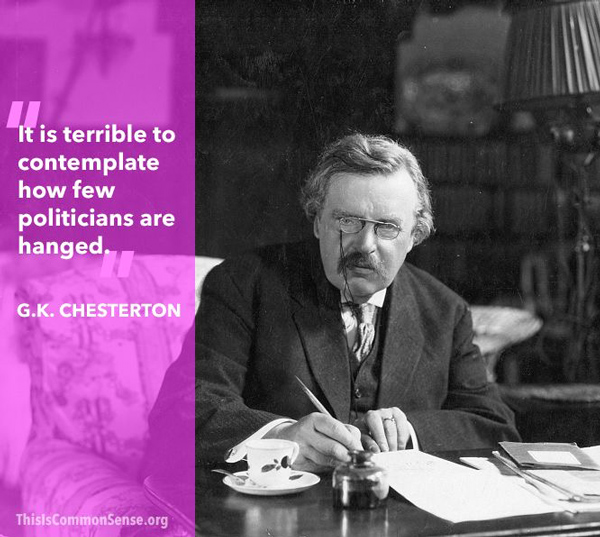
G.K. Chesterton 

It is terrible to contemplate how few politicians are hanged.

Gilbert Keith Chesterton, Cleveland Press (March 1, 1921).

Categories
Today

Mill and Passy

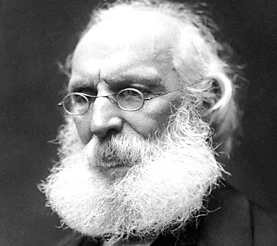
French economist and co-winner of the first (1901) Nobel Prize for Peace, Frédéric Passy (pictured above), was born on May 20, 1822.

English economist and philosopher John Stuart Mill was born exactly 16 years earlier.

Categories
First Amendment rights general freedom term limits

Too Many Words

The Institute for Justice (IJ) asks a question: “Does the First Amendment protect your right to criticize public officials without being subject to frivolous lawsuits?”

Kelly Gallaher is an activist in Mount Pleasant, Wisconsin, who provoked the ire of Village Attorney Chris Smith.

Seeking punitive damages, Smith has sued Gallaher for inflicting “emotional distress.” Her sin is penning “hundreds of posts on social media” criticizing Smith and other officials and their policies. (Hundreds! So many scribblings by just one person?)

The issue that apparently caused him to say “By Gawd, this is the last dang straw!” is term limits.

Recently, the town’s board of trustees voted to lengthen their elective term from two to three years. Gallaher and others called for a referendum to reverse the term-fattening.

To assuage concerns, Smith claimed that changing term limits had been discussed since 2018; in other words, the change wasn’t something being sprung without prequel. When Gallaher, remembering no such previous discussion, found no evidence of it, she suggested that Smith had lied.

Smith demanded a retraction. Gallaher didn’t want to retract, but did, fearing a lawsuit. Smith sued her anyway.

“The village attorney thinks he can use his law license to bully a political opponent into silence,” says Robert McNamara, the IJ attorney assigned to defend Gallaher. “But government officials are not in charge of how members of the public talk about politics, which is something we’ll be happy to explain to him in court.”

A politician so far from the spirit of American free speech is a politician who needs something more than a withering rebuttal in court. Think: recall vote.

This is Common Sense. I’m Paul Jacob.


PDF for printing

See all recent commentary
(simplified and organized)
See recent popular posts

Categories
Thought

H. Belloc

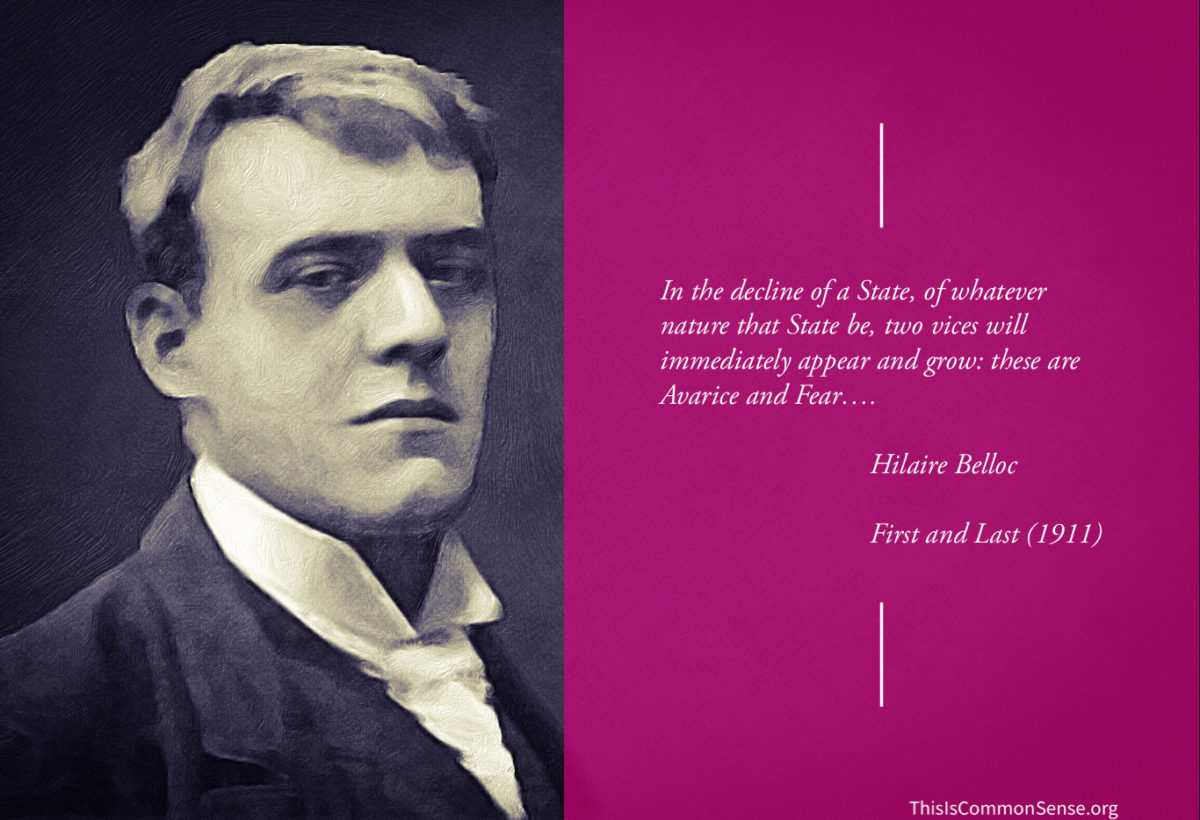
In the decline of a State, of whatever nature that State be, two vices will immediately appear and grow: these are Avarice and Fear; and men will more readily accept the imputation of Avarice than of Fear, for Avarice is the less despicable of the two — yet in fact Fear will be by far the greatest passion of the time.

Hilaire Belloc, ”The Decline of a State,” in First and Last (1911).