Categories
initiative, referendum, and recall

Punishing Productivity

California Governor Jerry Brown just vetoed Senate Bill 168, writing, “It doesn’t seem very practical to me to create a system that makes productivity goals a crime.”

Senate Bill 168 makes it illegal to pay someone circulating an issue petition based either directly or indirectly on the number of signatures gathered. In fact, had Brown signed SB 168 into law, you’d get thrown in jail for awarding a prize, say a campaign t-shirt, to the volunteer who gathers the most signatures.

Petition campaigns like productivity. They don’t want folks locked up for it.

Could undercutting productivity and doubling the cost of petitioning be the real goal of SB 168?

Perhaps outlawing incentives isn’t intended to slow the pace and super-size the cost of a petition drive. But it does. Californians have only 150 days to gather hundreds of thousands of voter signatures, so a slowdown and added cost means issues blocked from reaching the voters.

In a Sacramento Bee op-ed, Sen. Ellen Corbett, SB 168’s author, addressed concerns about diminished democracy, writing, “[I]n states that have enacted a similar law there has been no change in the number of initiatives qualifying for the ballot.”

But a review of those states shows a change — for the worse. Oregon saw a roughly 50 percent reduction in initiatives. In Montana and North and South Dakota the number of citizen measures dropped. After passage of productivity bans in Nebraska and Wyoming, neither state’s voters have seen another initiative on their ballot.

This is Common Sense. I’m Paul Jacob.

Categories
ideological culture media and media people

Frummious Bandersnatch

Columnist David Frum buys what Washington’s establishment is selling. Consider the seven theses of his recent screed, “Wake up GOP”:

  1. “Unemployment is a more urgent problem than debt.” Maybe. So what are you going to do about it — accumulate more debt to fund unstimulating stimulus packages, as mass unemployment calcifies?
  2. “The deficit is a symptom of America’s economic problems, not a cause.” Sure, the deficit is worse because of decreased revenues. But deficits were high before the bust, and debt was increasing. Deficits are a symptom of a governance problem.
  3. “The time to cut is after the economy recovers.” So why didn’t politicians — Frum’s beloved Republicans, while he was personal manservant to George W. Bush — cut spending before the bust?
  4. “The place to cut is health care, not assistance to the unemployed and poor.” The place to cut is over-spending everywhere. Pentagon. The medical-industrial complex. “Discretionary spending.” And start by freezing the baseline spending. And cut federal salaries across the board.
  5. “We can collect more revenue without raising tax rates.” Uh, maybe “we” shouldn’t raise revenues! And yet establishing a simpler, flat income tax rate probably would raise revenues, so . . .
  6. “Passion does not substitute for judgment.” Yes. And it’s about time Frum showed some of the latter.
  7. “You can’t save the system by destroying the system.” If the system has put America on a crash course with disaster, then that system must be replaced. With a better one.

It’s arguments like Frum’s that stand in the way.

This is Common Sense. I’m Paul Jacob.

Categories
general freedom ideological culture

Population Prophecies Go Poof

Are today’s problems caused by the sheer quantity of people?

No.

A week ago or so, the Los Angeles Times wasted space arguing the wrong side, “The world’s biggest problem? Too many people.” Laura Huggins responded with an able rejoinder, showing that such doomspeak is old hat, falsified by experience.

She mentions Paul Erlich’s The Population Bomb, in particular, 1968’s classic in the hysterically overblown prophecy genre. Not mentioned, however, is Julian Simons’s brilliant 1981 rejoinder to Ehrlich, The Ultimate Resource. Simons marshals economic argument and a vast array of factual evidence to demonstrate that human ingenuity and the market order provide amazing solutions to problems of scarcity and limited resources. The more people you have, the more solutions can be found. With greater prosperity comes the best possible amelioration to the resource scarcity that so worries and befuddles environmentalists of the Ehrlich stripe.

But really, this is much older hat than that.

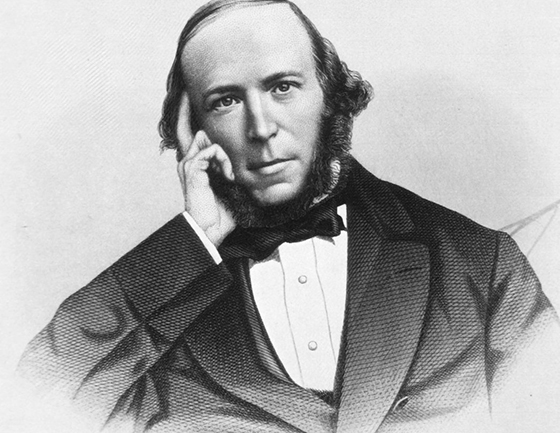
The Rev. Thomas Robert Malthus wrote the first book on the subject, back in 1798, and, even  in the course of his life had to expand his tract — and radically tone down his thesis — to make himself look less of a fool. Later, writers such as Nassau Senior and Herbert Spencer demonstrated why Malthus was wrong. Population growth does not necessarily outstrip agricultural productivity. Human co-operation through markets more than makes up for our physical limitations.

We have the history of the past 200 years to prove it.

This is Common Sense. I’m Paul Jacob.

Categories
national politics & policies too much government

Fiddling in the Flames?

The president and congressional leaders came to some sort of an agreement last night. It sounded a tad vague to me. Apparently, politicians still fear taking pride in identifying actual cuts.

Harvard economist Jeffrey Miron, writing last week, argues that the deals then on the table amounted to “fiddling while Rome burned.”

The only thing surprising about the above sentence, to savvy readers, might be the suggestion that “Harvard economist” is not a contradiction in terms. But hey: Judge for yourself.

“The problem with the Democratic position is that it regards redistribution, rather than economic productivity, as the prime goal of government policy,” Miron reasonably asserts. The problem with the Republicans? A “refusal to distinguish between the tax revenue that comes from higher rates and that which comes from fixing tax loopholes that inappropriately privilege certain consumption or production.”

Higher tax rates won’t work, because “the available revenue from the wealthy is far too small. And higher taxes discourage economic growth, making deficits worse.”

But Obama’s idea of closing some loopholes is not a horrible idea, Miron argues. These so-called loopholes are bad policy to begin with, integral, as they are, to bipartisan folly, favoring some folk at the expense of the rest. Picking winners — what some tart up as “industrial policy,” but most of us identify as “buying votes.”

Miron says that Medicare, though, is the biggest ongoing fiscal destabilizer. Cuts must be made there.

Those will likely be the hardest to secure.

This is Common SEnse. I’m Paul Jacob.

Categories
term limits

How Not to Fix a Failed State

“As long as unions and business buy our politicians and take every advantage for themselves . . .” writes Ron Kaye at Fox and Hounds Daily, “California will keep declining.”

Mr. Kaye notes a rare agreement between business and union lobbies, which have united “to pour millions into a ballot measure next June to sell us on the idea that giving legislators 14 years in the house of their choice is better than making them serve eight years in the Senate and six in the Assembly.”

Kaye has the figure wrong: It’s twelve years in either body. Though billed as a tightened term limit, down from the 14 years now theoretically possible (by switching houses) to the proposed dozen, few politicians are able to manage such switches, so in actuality the limit would be weakened, from a tight six or eight to twelve.

This, Kaye argues, would make it easier for special interests to buy instead of rent politicians. The measure is “just another political charade.”

But I think Kaye errs by going on to say that today’s leadership failure “can’t be fixed by law.”

California suffers from a political infrastructure problem far worse than any other state: too small a ratio between politicians and citizens, insulating representatives in huge districts.

While no fix is guaranteed, the state could use more representatives, not fewer.

And that’s a constitutional fix. Added to existing term limits, it might help nudge California government out of its current (and disastrous) rut.

This is Common Sense. I’m Paul Jacob.

Categories
too much government

Don’t Spend that Penny

Cato Institute’s Chris Edwards succinctly explains that not only does Rep. Boehner’s budget plan fail to cut spending $1 trillion over the next ten years — as advertised — but it “doesn’t actually cut spending at all.”

Zilch. Spending goes up.

“Why doesn’t the House leadership propose real cuts?” asks Edwards. He means identify specific line items that can be cut back — now, as in today or this week — rather than setting optimistic and unenforceable spending caps on future congresses. This especially goes for “caps” that don’t actually cap spending, but allow it to grow by, say, $7–8 trillion over the next decade.

Boehner’s plan allows debt to continue to pile up at historically huge levels. But he’s not alone. Obama has no plan. Reid’s plan? Calling it “smoke and mirrors” gives smoke and mirrors a bad name.

The Penny Plan, introduced by Florida Rep. Connie Mack and endorsed by Kentucky Sen. Rand Paul, has some merit. It would cut the budget by one percent for six years and then cap federal government spending at 18 percent of GDP.

Yes, cutting federal spending by only one penny on each dollar (one percent) for six years, rather than increasing spending by upwards of 7 percent a year under the Congressional Budget Office’s baseline budget, would balance the budget in eight years.

But to restore balance and end the debt crisis, a penny cut has to actually be a cut.

This is Common Sense. I’m Paul Jacob.

Categories
free trade & free markets insider corruption national politics & policies

The Clipping and Culling Crisis

I just came across a paper on an old bout of hyperinflation — the “Kipper- und Wipperzeit” financial crisis in 17th century Germany — worth studying, considering that today’s smart money is on the radical debasement of today’s already-undermined dollar.

The Kipper- und Wipperzeit hyperinflation started out as a government program to bilk the people of wealth, but got out of hand. It became a free-for-all.

Back before credit money and fiat money, governments made special deals with miners and minters and the like, to coin money to spec. Those insiders put less metal into the coins than before, but called the coins the same. Debasement, pure and simple: Theft — fraud, to be exact.

It helped make a few major fortunes, fund some wars and the like.

But apparently moneylenders caught on, and began “clipping” the coins. Minters employed subcontractors to look for better-quality coins in circulation, paying for them in clipped coins. Soon everyone was clipping coins, and then culling them (hence the term “Kipper- und Wipperzeit” — “clipping and culling time”) to hoard the highest-value coins (with the most metal) and pawn off into the general circulation the lowest-value coins (with the least). Gresham’s Law in action led to spiraling prices and the breakdown of trade.

A great example of calculated, “clever” government policy spilling into the general population, leading first to rampant moral corruption and then ruin.

Something to remember, as clever folks contemplate “monetizing” today’s sovereign debt.

This is Common Sense. I’m Paul Jacob.

Categories
initiative, referendum, and recall

Creating a New Crime

California is wild and crazy, fruity and nutty. Not in Hollywood, but in Sacramento.

The state’s enormous prison population — so large that the Feds recently ordered California to release overcrowded prisoners — feeds an otherwise expensive prison system, straining the state’s strapped budget.

So what did Golden State solons go and do?

They created a new crime.

Almost. Senate Bill 168 has passed both houses of the state’s General Assembly and sits on Governor Jerry Brown’s desk.

The bill would make it “a misdemeanor for a person to pay or to receive money or any other thing of value based on the number of signatures obtained on a state or local initiative, referendum, or recall petition. . . .”

The penalties are up to a year in jail or a $25,000 fine or both.

What is the compelling reason to criminalize paying people for being productive and gathering more signatures, rather than less?

Fraud. Or so supporters say.

But instances of fraud on initiative petitions in California have dropped a whopping 78 percent over the last decade. Moreover, there’s no evidence that paying people on the number of signatures they gather induces fraud.

The Sacramento Bee urged Governor Brown to veto SB-168 and prevent it from “raising the cost of qualifying measures, freezing out less wealthy groups, and making direct democracy more of a captive of well-heeled interest groups.”

If you live in California, call the Governor’s office at (916) 445-2841 and respectfully ask him to veto SB 168.

This is Common Sense. I’m Paul Jacob.

Categories
crime and punishment ideological culture

Becoming What You Oppose

A bombing, then a shooting. Norwegians reel from the Oslo and Utoya massacres. The casualty count has hit the nineties.

Early reports mentioned jihadist terrorism, but the malefactor appears to be Norwegian, white, and Christian. “It’s not just that Anders Behring Breivik is not a jihadist,” wrote Jesse Walker at Reason.com. “It’s that he hails from the wing of the right that defines itself by its opposition to jihad, and to the leftists that it sees as jihad’s enablers.”

Like so many examples of jihad in the Mideast, Breivik’s “anti-jihad jihad” is as puzzling and self-defeating as was the anarchist “propaganda by the deed” of just over a century ago, as pointless as it is horrific.

What’s worth noting is the demonstration of that too-human propensity to adopt the tactics of one’s enemies. Desperate, hate-filled zealots of Islam commit horrible crimes, indiscriminately killing innocents. Everyone with a lick of sense opposes such horrible actions (including most Muslims). But some people really worked up about this decide not only that “some have got to pay,” but that terrorism itself is worth emulating.

Human history is filled with such irrational over-reaction: feuds, vendettas, even wars.

Norway’s prime minister immediately assured everyone that his government’s reaction will be “more democracy, more openness.” “More democracy” might be vague, but he foreswore naivety, and besides, the sentiment is spot on. We who oppose violence must never resort to matching the criminals’ criminality.

This is Common Sense. I’m Paul Jacob.

Categories
national politics & policies too much government

A “Progressive” Reform

The money’s running out; the government is on a timeline. Something must be done before going into default.

Of course, the Executive Branch could prioritize spending, fiddle with accounts and still pay the interest on the federal debt as well as pay Social Security recipients — to year’s end. But it looks like the Obama Administration is just as committed to brinksmanship as the (heroic!) Tea Party folks who refuse to raise the debt ceiling.

And now the infamous “Gang of Six” re-emerge with a cockamamie proposal to “solve” the problem, mostly by saying they’ll “cut in the future” but keep mum, for now, what those cuts would be. It’s the typical lily-livered politician’s move.

The worst of the Gang of Six proposal, as fed-spending watchdog Dan Mitchell noticed, is that the alleged spending cuts don’t actually cut spending overall, just (get ready for it…) cut spending over planned increases.

We’ve been hearing this since the Carter era.

Something I haven’t heard from anyone (except my colleagues, of course — nothing from politicians, naturally) is a real cut that could substantially help.

Since the government is running out of money, cut federal wages across the board.

And make the cuts “progressive.”

How? Take any current federal government salary. Exempt the first (say) $60,000. And then cut the remaining salary level above that by (say) 20 percent. The exemption makes the rate cut in effect progressive. The “rich” would face greater income reductions.

Progressives should like that, no?

This is Common Sense. I’m Paul Jacob.