Categories
Today

May 5, Magna Carta and Cinco de Mayo

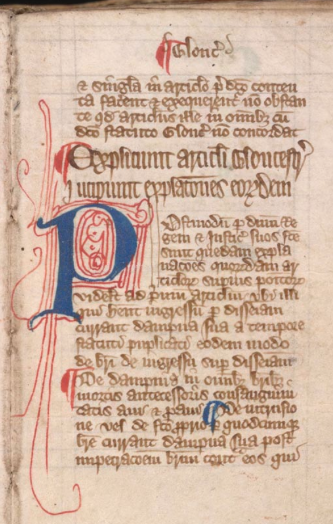
On May 5, 1215, rebel barons renounced their allegiance to King John of England, which eventually led to the signing of the Magna Carta.

In 1862, troops led by Ignacio Zaragoza stopped a French invasion in the Battle of Puebla in Mexico — an event leading to the popular “Cinco de Mayo” celebration.

Categories
individual achievement

It’s Going to Be a Non-bumpy Ride

Gilad Woolf, an Israeli farmer, had a problem.

He had broken his leg . . . but that wasn’t the problem. The problem was the bumpy ride he often had to endure while using a wheelchair until his leg could heal. And so — discomfort and inconvenience being the mother of reinvention — Woolf came up with an idea for a kind of wheel that could soak up the impacts of uneven terrain.

Developed over the last three years by the startup Tel Aviv firm SoftWheel, the hub of this special wheel shrinks or expands as needed to smooth out the ride. The wheel absorbs most of a shock instead of transmitting it to the vehicle and the person driving it.

“Very quickly we understood it’s not just about putting the suspension inside the wheel,” SoftWheel CEO Daniel Barel told The Jerusalem Post. “The beauty of our technology is not only that it’s an integral part of the wheel, it’s selective and symmetric. That’s the game-changer.” (See video of a Softwheel wheelchair on steps.)

The company will first create its wheels for wheelchairs, the bikes and aircraft landing gear. After several more years of work, SoftWheel expects that the technology can be applied to cars.

Thus, five or six thousand years after somebody came up with the wheel, we’ve got a smart and flexible solution for the problem of stairways, potholes and other bumps in the road.

Very cool. I can’t wait to see what’s next.

This is Common Sense. I’m Paul Jacob.
Categories
Thought

Magna Carta Libertatum, Clause 39

No freeman shall be taken, or imprisoned, or outlawed, or exiled, or in any way harmed, nor will we go upon him nor will we send upon him, except by the legal judgement of his peers or by the law of the land.

Categories
Today

Birth of Prescott

On May 4, 1796, American historian William H. Prescott was born. Prescott’s “History of the Conquest of Mexico” and his “Conquest of Peru” remain classic works of well-researched, “scientific history.”

Categories
links

Townhall: Term Limits, Now More Than Ever

A recent poll determined that Illinois citizens are the most restive. That is, more of them than citizens of any other state would leave their state, if their situations allowed.

Why? The weather?

More like the political climate: corruption.

But they are doing something about that. Click on over to Townhall.com for this weekend’s dose of Common Sense. Then come back here to root around the story in greater depth.

Categories
Thought

Alexis de Tocqueville

[A]bsolute excellence is rarely to be found in any legislation.

Categories
video

Video: Initiatives and Referendums in Colorado

Two anti-initiative bills were defeated this week by a unanimous vote in a state senate committee in Colorado. This outcome, thanks to a coalition of groups and civic leaders from left, right and in-between that rallied people to get involved. Here two leaders, Elena Nunez with Colorado Common Cause and Dennis Polhill with the Independence Institute, speak with Jon Caldara (also with II). All three are very knowledgeable about how initiatives work and also understand why the initiative process is so important.

Categories
Today

Constitution of May 3

In 1791, the Constitution of May 3, the first modern constitution in Europe, was proclaimed by the Sejm of the Polish–Lithuanian Commonwealth.

On May 3 in 1915, Lieutenant Colonel John McCrae composed the poem “In Flanders Fields.”

Categories
Thought

Alexis de Tocqueville

Whithersoever we turn I our eyes, we perceive the same revolution going on throughout the Christian world. The various occurrences of national existence have everywhere turned to the advantage of democracy: all men have aided it by their exertions, both those who have intentionally labored in its cause, and those who have served it unwittingly; those who have fought for it, and those who have declared themselves its opponents, have all been driven along in the same track, have all labored to one end; some ignorantly and some unwillingly, all have been blind instruments in the hands of God.

Categories
local leaders too much government

How to Be a Bad-Law Killer

You have a golden opportunity to help kill some of the bad laws infesting San Francisco’s city code.

The news is being passed along by the indefatigable champions of liberty and property rights at the Institute for Justice. Wherever local governments have assaulted the right of citizens to use and dispose of their own property, IJ has fought and won legal battles on behalf of the victims. Now the Institute urges us to accept the invitation of City Supervisor Mark Farrell to help root out the city’s bad laws.

Farrell wants to “clear any unnecessary laws from San Francisco’s books and to tweak laws that need updating.”

IJ has already fingered some of the more egregious San Fran laws that need “tweaking.” For example, there’s Chapter 6 of housing code, which demands that “Private and public storage garages in apartment houses and hotels shall be used only for storage of automobiles.” Thus, residents like Kimberly Conley are breaking the law when they stow their bikes in their garages, and can be fined up to $500 per infraction.

There are onerous regulations on food trucks, onerous rent control laws, a “transient occupancy” tax on rentals by homeowners to travelers, onerous dog-walking licenses. Just for starters. (“Don’t worry, there’s plenty of work for everyone,” IJ assures us.)

The San Francisco Code is presented at a website that seeks to demystify its legal jargon. Mark Farrell’s email address is mark.Farrell@sfgov.org.

Happy hunting.

This is Common Sense. I’m Paul Jacob.