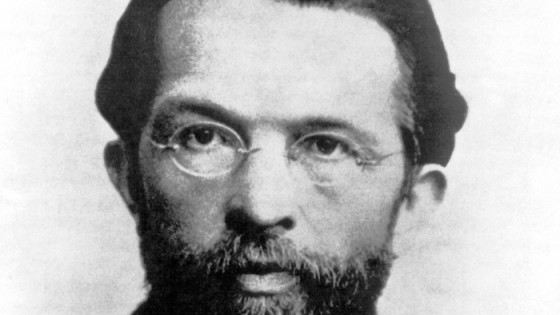
The propensity of men to trade must accordingly have some other reason than enjoyment of trading as such. If trading were a pleasure in itself, hence an end in itself, and not frequently a laborious activity associated with danger and economic sacrifice, there would be no reason why men . . . should not trade back and forth an unlimited number of times. But everywhere in practical life, we can observe that economizing men carefully consider every exchange in advance, and that a limit is finally reached beyond which two individuals will not continue to trade at any given time.
Carl Menger, Principles of Economics (1871; English translation, 1950), Spring 1977, chapter IV, “The Theory of Exchange.”
Sincere enthusiasm is the only orator who always persuades. It is like an art the rules of which never fail; the simplest man with enthusiasm persuades better than the most eloquent with none.
La Rochefoucauld, Réflexions ou sentences et maximes morales, (1665, 1678), 411th maxim.
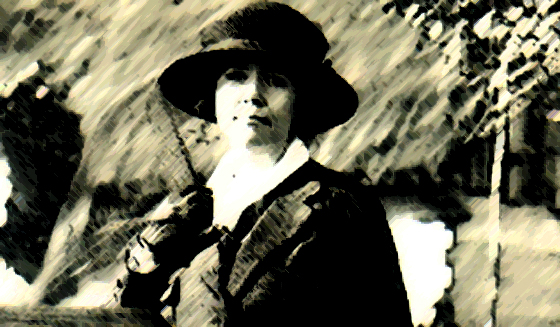
Life is a thin narrowness of taken-for-granted, a plank over a canyon in a fog. There is something under our feet, the taken-for-granted. A table is a table, food is food, we are we — because we don’t question these things. And science is the enemy because it is the questioner. Faith saves our souls alive by giving us a universe of the taken-for-granted.
Rose Wilder Lane, journal entry (1923), as quoted in The Ghost in the Little House, ch. 7, by William V. Holtz (1993).
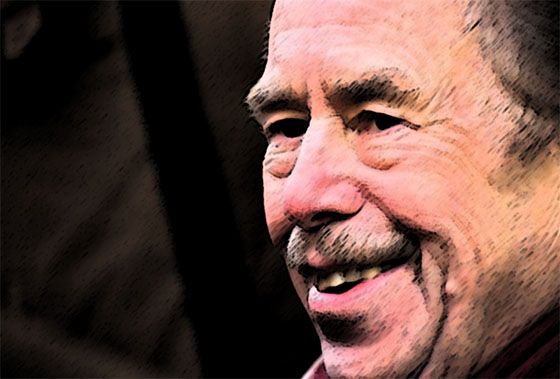
Even a purely moral act that has no hope of any immediate and visible political effect can gradually and indirectly, over time, gain in political significance.
Václav Havel, Letter to the downthrown Czechoslovak Communist Party chairman Alexander Dubček (August 1969), as translated in Disturbing the Peace (1986), Ch. 5: The Politics of Hope, p. 115.
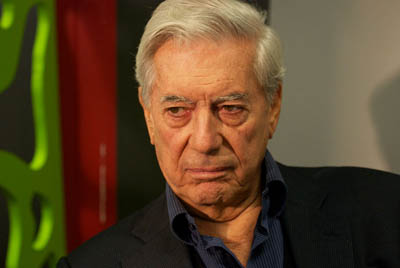
On March 28, 1936, Peruvian author Mario Vargas Llosa was born. This recipient of the 2010 Nobel Prize in Literature ran, in 1990, for the presidency of Peru, but lost to Alberto Fujimori. His novels include La casa verde (The Green House), La guerra del fin del mundo (The War of the End of the World), La fiesta del chivo (The Feast of the Goat), and Aunt Julia and the Scriptwriter, which was filmed as Tune in Tomorrow.
On the same date in 1970, Vince Vaughn, American actor, producer, and screenwriter, was born. Vaughn is one of a small minority of non-left-leaning Hollywood stars; his ideas on politics and economic policy were greatly influenced by Ron Paul.
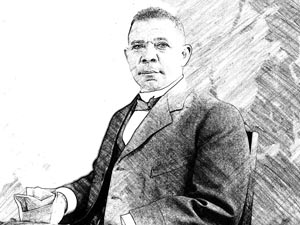
The world cares very little what you or I know, but it does care a great deal about what you or I do.
Booker T. Washington, Address to the African Methodist Episcopal Zion Church, Boston, Massachusetts (30 July 1903), printed in “Account of the Boston Riot,” Boston Globe (July 31, 1903).
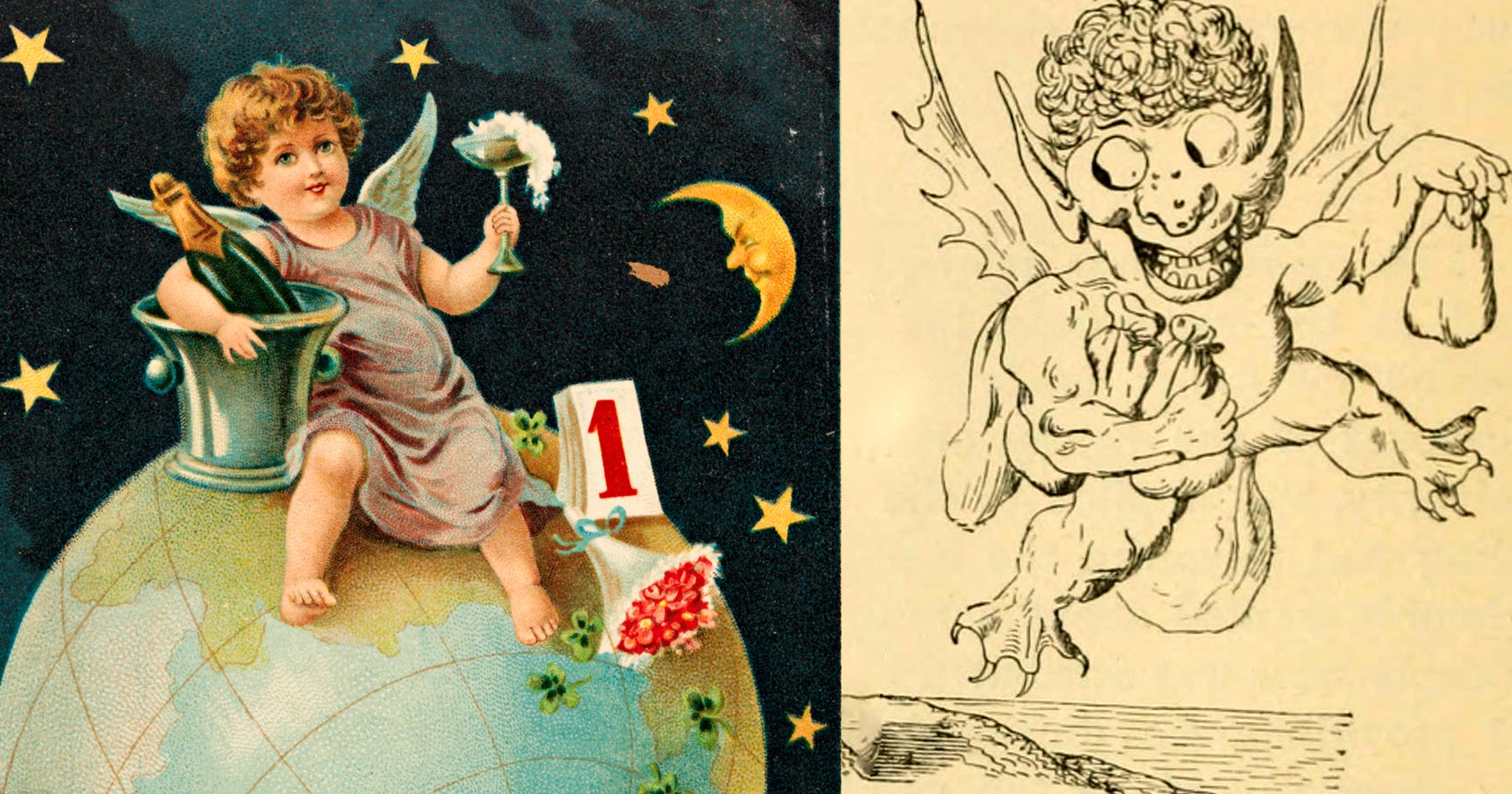
Today’s the traditional day for New Year’s “Resolutions,” but instead of resolutions, how about some solutions?
Sure, Thomas Sowell has sagely reminded: there are no solutions in social life, only trade-offs.
But, utopian perfection aside, let’s agree that some changes would be better than others, and, let us resolve to solve some nagging problems — or at least trade up. And since the really nagging problems are political . . .
For Republicans:this could be the year to give up on government as society’s chief moral agent, empowered to regulate everybody’s medicine cabinets and bloodstreams. End the failed War on Drugs, with legalizing marijuana the simplest first step. Vice will continue, as it always has. But it’s another kind of vice to think that force, policing and imprisoning folks, will “solve” the problem. Much less even reduce the availability of drugs.
For Democrats: this could be the year to give up on government as micromanager of markets — and people’s marketplace choices. Face it: folks will make decisions that liberals don’t like. They’ll eat at McDonalds and buy large sodas — and the wrong stocks. And guns! But adding to the mass of regulations doesn’t make consumers choose better, it makes stuff more expensive and business less open to competition. Indeed, almost all the regulations designed to help “the little guy” backfire, helping big business by hobbling their upstart competitors.
Our leaders, at present, cannot even balance budgets. They are addicted to debt. To pretend we must have more and more government to prevent our addictions or save us from personal debt is ludicrous.
Can we resolve to stop pretending that bigger government is always the solution?
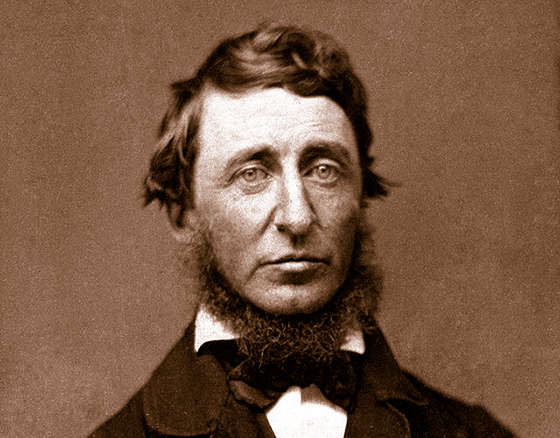
“It is not a man’s duty, as a matter of course, to devote himself to the eradication of any, even the most enormous wrong; he may still properly have other concerns to engage him; but it is his duty, at least, to wash his hands of it, and, if he gives it no thought longer, not to give it practically his support. If I devote myself to other pursuits and contemplations, I must first see, at least, that I do not pursue them sitting upon another man’s shoulders. I must get off him first, that he may pursue his contemplations too.”
Henry David Thoreau, “Resistance to Civil Government,” Aesthetic Papers, 1849 (republished in a variety of titles, including On the Duty of Civil Disobedience).
On November 28, 1893, women voted in a national election for the first time . . . in New Zealand. On the same date in 1917, the Estonian Provincial Assembly declared itself the sovereign power of Estonia. November 28 also marks the independence of Mauritania from France (1960), and East Timor from Portugal.
In 1894, on November 28, economics journalist Henry Hazlitt was born. Hazlitt went on to write Economics in One Lesson, Time Will Run Back, and many other books, including several criticizing Keynesianism. He was the main proponent of the work of Ludwig von Mises and F. A. Hayek in America during the 1940s and 1950s.