Categories
Today

Representative Rainey

On December 12, 1787, Pennsylvania became the second state to ratify the U.S. Constitution.

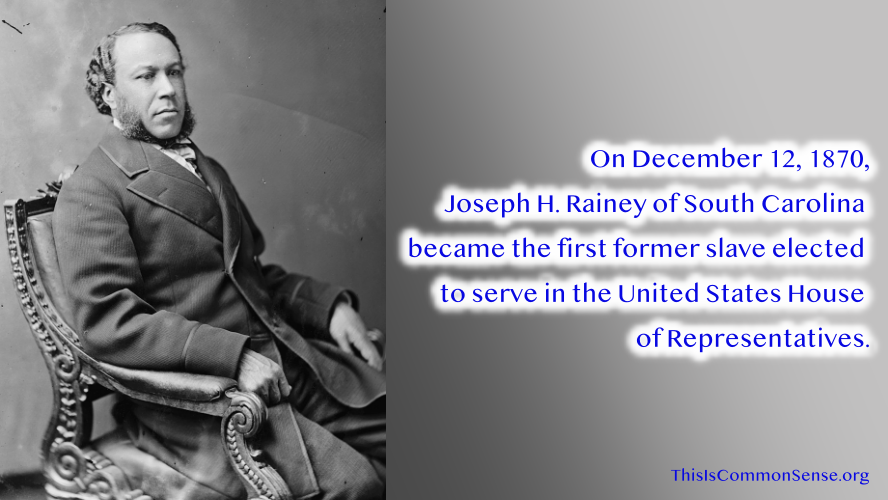
On the same date in 1870, Joseph H. Rainey of South Carolina became the first former slave elected to serve in the United States House of Representatives. His father had emancipated him as a child, and he had worked as a barber before the Civil War.

Categories
Today

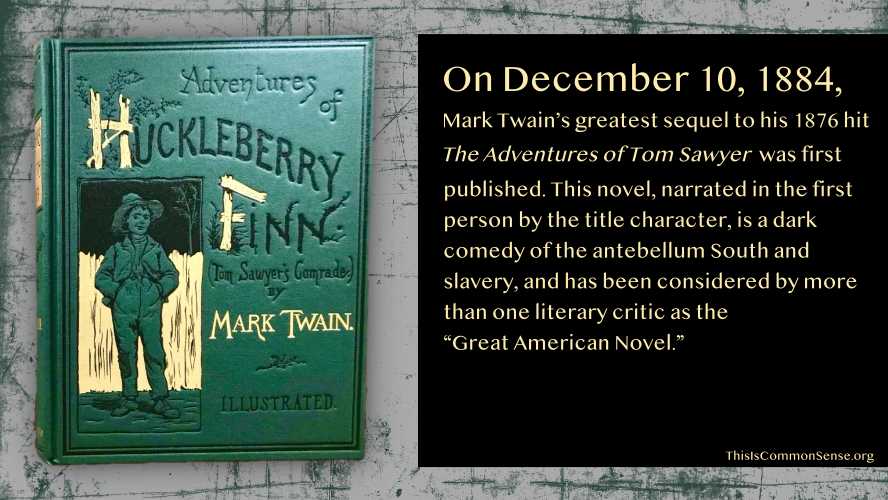
He’s Our Huckleberry

On December 10, 1884, Mark Twain’s Adventures of Huckleberry Finn was first published. This novel, narrated in the first person by the title character, is a dark comedy of the antebellum South and slavery, and has been considered by more than one literary critic as the “Great American Novel.”

On this date in 1901, the first Nobel Peace Prizes were awarded — to economist Frédéric Passy (pictured above), co-founder of the Inter-Parliamentary Union; and to Henry Dunant the founder of the International Committee of the Red Cross.

Passy was an admirer of Richard Cobden and an active member in the French Liberal School of Political Economy that developed in the tradition of J. B. Say, Destutt de Tracy, and Frédéric Bastiat. His published works include Leçons d’économie politique (1860-61); La Démocratie et l’Instruction (1864); L’Histoire du Travail (1873); Malthus et sa Doctrine (1868); and La Solidarité du Travail et du Capital (1875).
Categories
Today

Three Johns + the Anarchist Prince

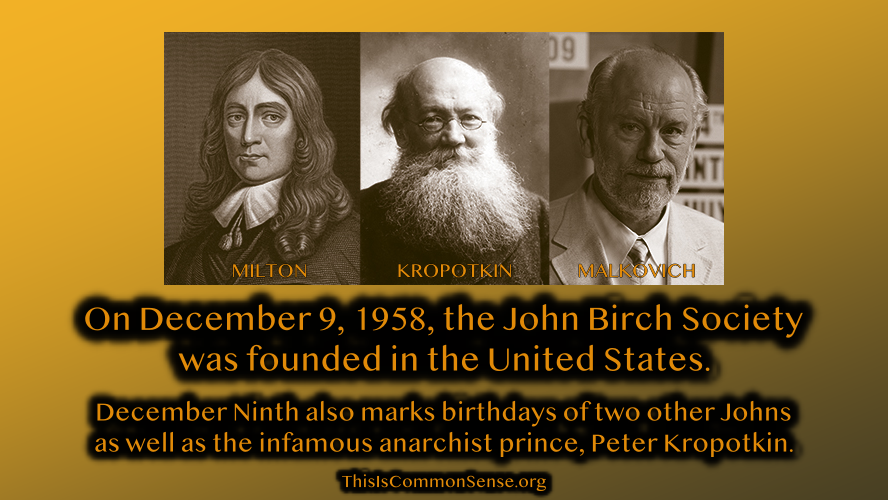
On December 9, 1958, the John Birch Society was founded in the United States. December 9 also marks the birthdays of

  • Poet and anti-censorship advocate John Milton (1608), author of Paradise Lost (1667), the masterpiece of blank verse narrative, and a classic prose defense of free speech and the press, Areopagitica (1644).
  • Russian prince and anarchist theoretician Peter Kropotkin (1842), author of Mutual Aid and other books and pamphlets.
  • Filmmaker John Malkovich (1953), who directed The Dancer Upstairs (2002) and starred in the odd eponymous film Being John Malkovich (1999).
Categories
Today

Greek Monarchy Ended

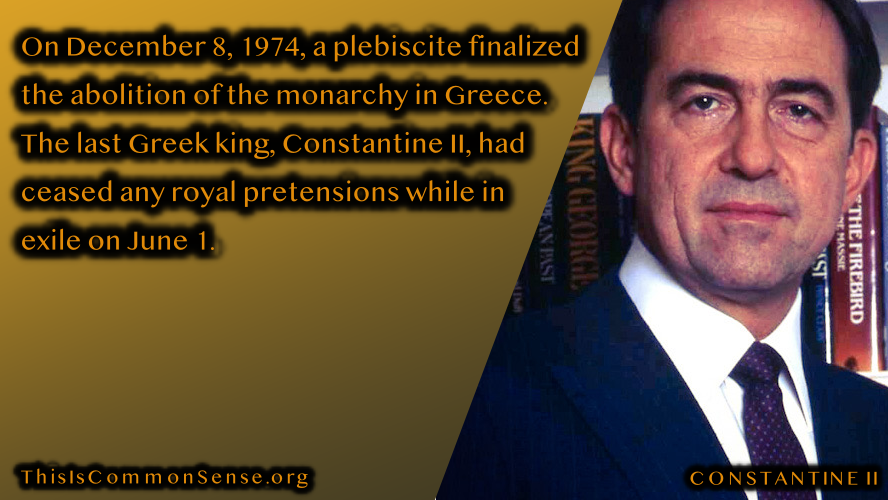
On December 8, 1974, a plebiscite finalized the abolition of the monarchy in Greece. The last Greek king, Constantine II, had ceased any royal pretensions while in exile on June 1. The December referendum was something of a formality.

Categories
Today

Blue Marble

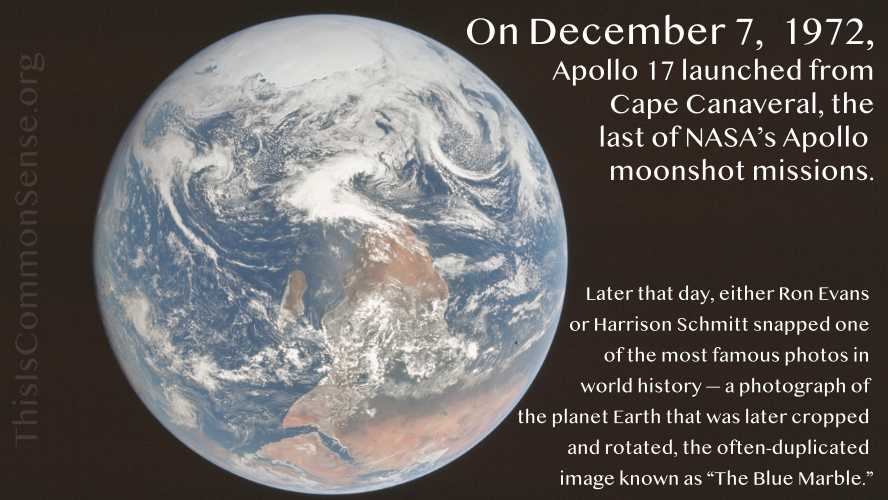
On December 7, 1972, Apollo 17 launched, the last of the Apollo Moon missions. Later that day, one of the astronauts — either Ron Evans or Harrison Schmitt — snapped the photo that would later become famous as “The Blue Marble.”

Categories
Today

The 13th & Paul Jacob

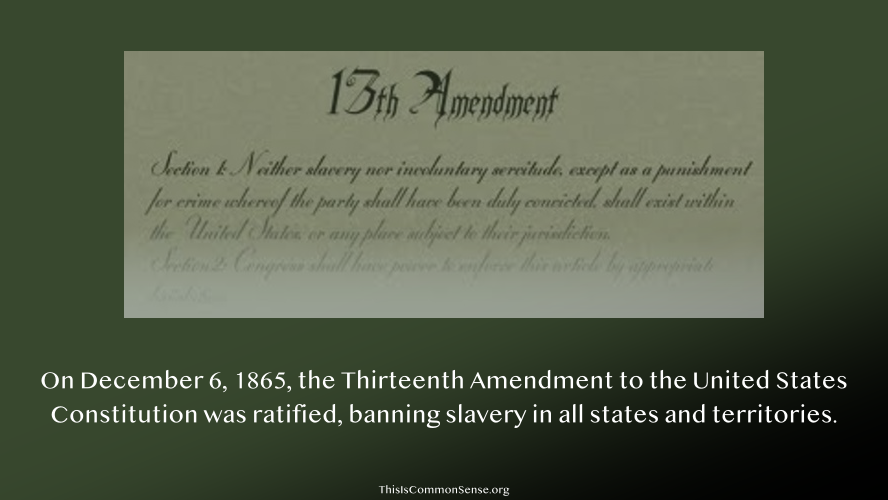
On December 6, 1865, the Thirteenth Amendment to the United States Constitution was ratified, banning slavery in all states and territories.

One-hundred-and-nineteen years later, to the day, in 1984, Paul Jacob (of ThisIsCommonSense.org, LibertyiFund.org, and the Citizens in Charge Foundation) was arrested by the FBI for his refusal to register with Selective Service System (the draft people). The Government was probably not attempting to make a commemorative point about involuntary servitude.

Categories
Today

Prohibition Ends

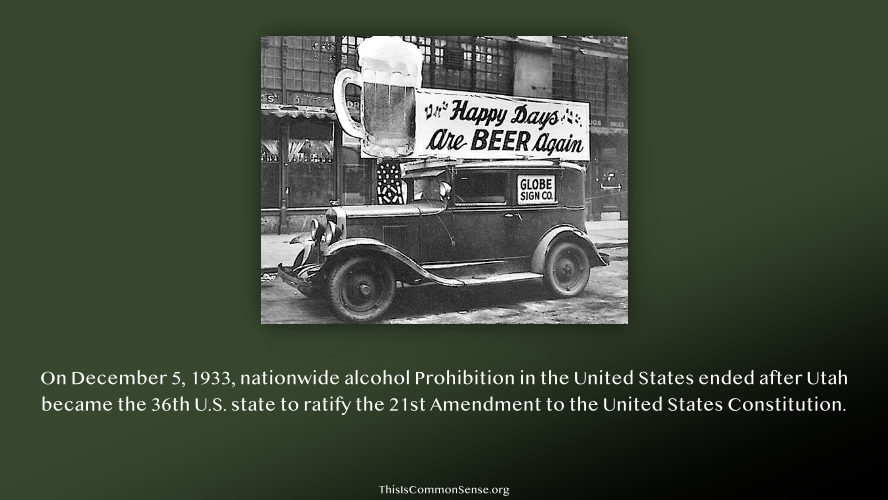
On December 5, 1933, nationwide alcohol Prohibition in the United States ended after Utah became the 36th U.S. state to ratify the 21st Amendment to the United States Constitution, thus establishing the required 75 percent of states needed to enact the amendment that overturned the 18th.

Categories
Today

A Farewell to Arms

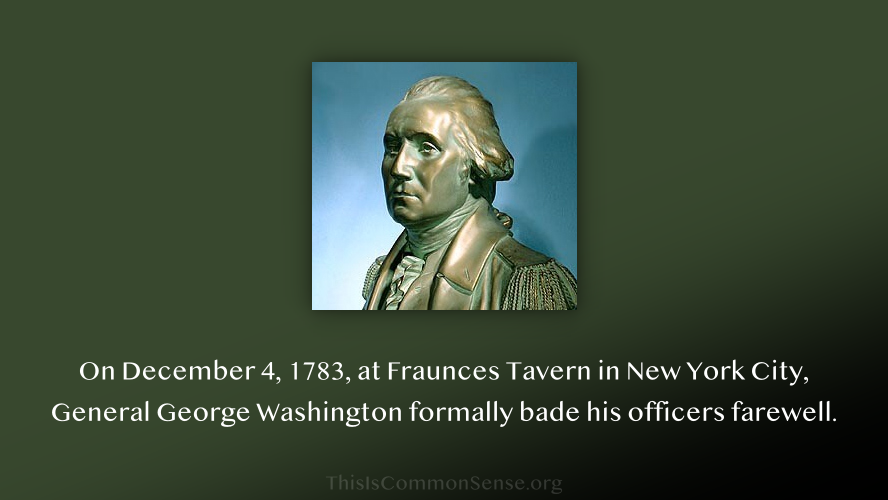
On December 4, 1783, at Fraunces Tavern in New York City, General George Washington formally bade his officers farewell.

Categories
Today

Cold War Ends

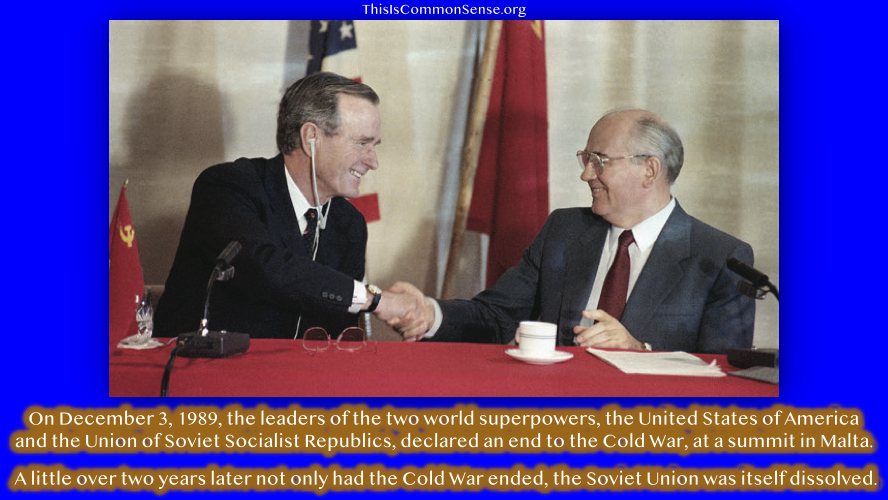
On December 3, 1989, the leaders of the two world superpowers, the United States of America and the Union of Soviet Socialist Republics, declared an end to the Cold War, at a summit in Malta. A little over two years later not only had the Cold War ended, the Soviet Union was itself dissolved.

Categories
Today

Monroe Doctrine

On December 2, 1823, U.S. President James Monroe delivered a speech establishing American neutrality in future European conflicts. The policy became known as the Monroe Doctrine.

Though a much-discussed principle of American foreign policy, it was undermined by the Spanish-American War and proved a dead letter as the U.S. entered World War I.