On June 2, 1924, President Calvin Coolidge signed the Indian Citizenship Act into law, granting citizenship to all Native Americans born within the territorial limits of the United States.
Categories
Citizenship
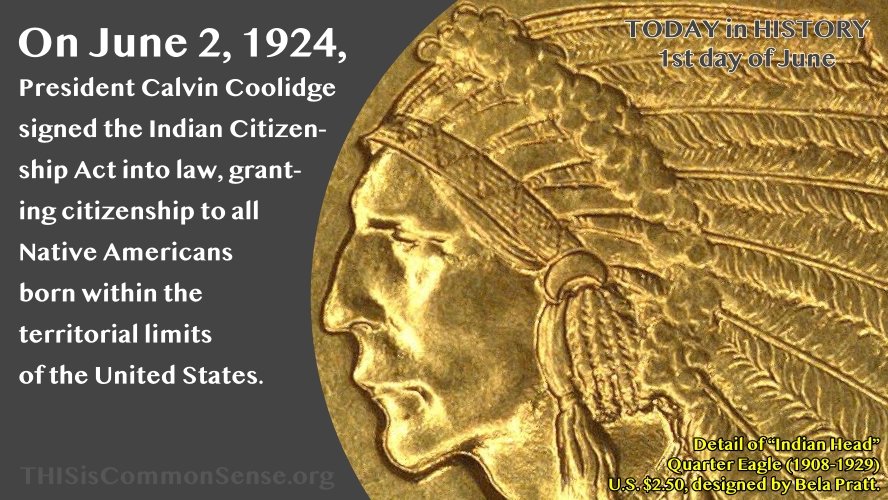
On June 2, 1924, President Calvin Coolidge signed the Indian Citizenship Act into law, granting citizenship to all Native Americans born within the territorial limits of the United States.

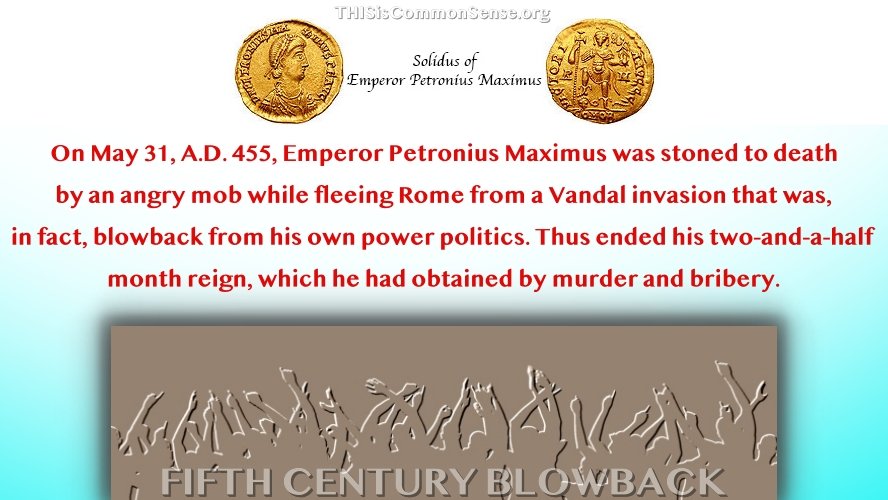
On May 31, A.D. 455, Emperor Petronius Maximus was stoned to death by an angry mob while fleeing Rome from a Vandal invasion that was, in fact, blowback from his own power politics. Thus ended his two-and-a-half month reign, which he had obtained by murder and bribery.
Petronius Maximus made at least one strategic mistake, attempting to strengthen his position by forcing Licinia Eudoxia, the previous emperor’s widow, to marry him — and forcing her daughter Eudocia to marry his son. This latter arrangement canceled Eudocia’s betrothal to the son of the Vandal king Genseric, infuriating both Eudocia and Genseric, who sent a fleet to Rome. Maximus failed to obtain troops from the Visigoths and he fled as the Vandals arrived. In the hubbub, he became detached from his retinue and bodyguard and was killed by fellow Romans.

In one of the most consequential sieges in western history, Titus Caesar Vespasianus and his Roman legions breached the Second Wall of Jerusalem on May 30 of A.D. 70. Jewish defenders retreated to the First Wall, but were overcome before summer’s end. Titus’s armies crucified thousands and destroyed the historic Second Temple.

Rhode Island became the last of North America’s revolutionary thirteen colonies to ratify the United States Constitution, on May 29, 1790.

After two months of vigorous revolutionary acts — from “social democratic” reforms to public executions — the Paris Commune fell on May 28, 1871.
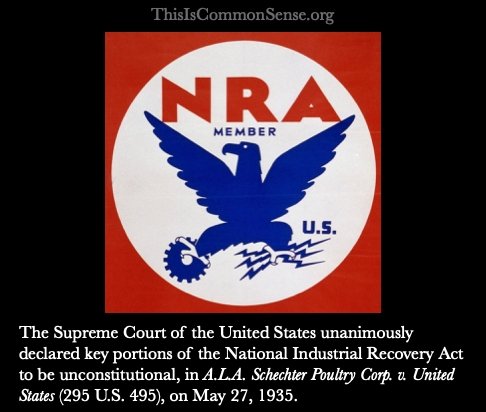
The Supreme Court of the United States unanimously declared key portions of the National Industrial Recovery Act to be unconstitutional, in A.L.A. Schechter Poultry Corp. v. United States (295 U.S. 495), on May 27, 1935.

Capitalism’s 26th of May milestones:
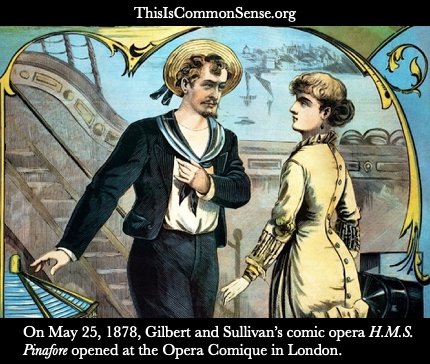
On May 25, 1878, Gilbert and Sullivan’s comic opera H.M.S. Pinafore opened at the Opera Comique in London. (Image is a detail from an 1879 theater poster.)
On the same date in 1895, playwright, poet and novelist Oscar Wilde was convicted of “committing acts of gross indecency with other male persons” and sentenced to serve two years in prison — becoming history’s most famous prosecutions for homosexual activity.
In 1895 on the 25th of May, the Republic of Formosa was formed, with Tang Jingsong as its president. It lasted less than half a year, dissolving upon conquest by Japan.

On May 24, 1689, the English Parliament passed the Act of Toleration, protecting dissenting Protestants.
Pointedly, Roman Catholics were excluded from this official tolerance.