Categories
Today

Watergate!

On May 17, 1973, televised hearings regarding the Watergate scandal began in the United States Senate. Sen. Sam Ervin chaired.

Little did participants know that the name of the hotel in which the White House-arranged break-ins occurred would provide a template for most future political scandals: “-gate” would be suffixed to nearly every other possible designator of scandal. Hillary Clinton’s problems regarding a private Internet server has been called “Emailgate,” for instance.

This could be called a suffix meme. Or insufferable meme, if you prefer.

Categories
Today

Oregon Trail

On May 16, 1843, one thousand pioneers from Elm Grove, Missouri, set off for the Pacific Northwest, blazing what became known as the “Oregon Trail.”

Categories
Today

Virginia for Independence

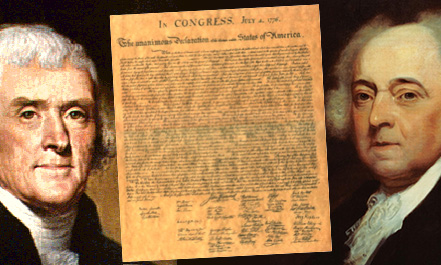
On May 15, 1776, the Virginia Convention instructed its Continental Congress delegation to propose a resolution of independence from Great Britain, paving the way for the United States’ Declaration of Independence.

Categories
Today

Constitution, huzzah?

On May 14, 1787, delegates convened a Constitutional Convention, in Philadelphia, Pennsylvania, to write a new Constitution for the United States. George Washington presided over the convention.

On the same day a century later, Lysander Spooner — author of the pamphlets titled “The Constitution of No Authority” — died.

Categories
Today

Brazilian slavery

On May 13, 1888, Brazil abolished slavery with the passage of the Lei Áurea (“Golden Law”).

Categories
Today

Axis in Africa

On May 12, 1943, Axis forces in North Africa surrendered.

Categories
Today

Union, disunion

On May 11, 1858, Minnesota was admitted as the 32nd U.S. State.

Nine years later, to the day, the Grand Duchy of Luxembourg’s independence and neutrality were affirmed in the Second Treaty of London.

Categories
Today

Victoria Woodhull

On May 10, 1872, Victoria Woodhull became the first woman nominated for President of the United States.

In a landmark Supreme Court decision on May 10, 1893, the tomato was ruled a vegetable, not a fruit.

Categories
Today

John Brown

On May 9, 1800, abolitionist revolutionary (and, technically, terrorist) John Brown was born.

In 1883 on this date, Spanish philosopher José Ortega y Gasset was born.

Categories
Today

Mill and Hayek . . . and bang!

On May 8, 1899, Austrian-English economist and philosopher Friedrich August von Hayek was born. He signed the bulk of his books written in the English language as “F.A. Hayek,” and is best known for The Road to Serfdom, The Constitution of Liberty, The Fatal Conceit, and many essays, several of them which are widely cited, including “Individualism, True and False” and “The Use of Knowledge in Society.”

Years earlier, on the same date in 1873, English philosopher and economist John Stuart Mill died. Now best known for On Liberty and Utilitarianism, Mill’s letters to his wife were edited into book form by Hayek.

On May 8, 1946, two Estonian school girls (Aili Jõgi and Ageeda Paavel) blew up the Soviet memorial which stood in front of the Bronze Soldier in Tallinn.