On July 22, 1937, the U.S. Senate voted down Franklin Delano Roosevelt’s court packing scheme.
Categories
Only Nine?
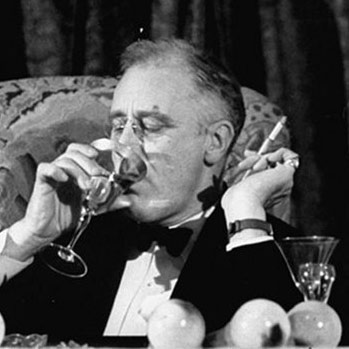
On July 22, 1937, the U.S. Senate voted down Franklin Delano Roosevelt’s court packing scheme.
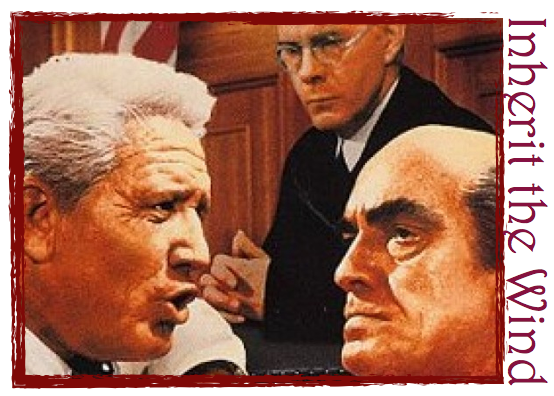
On July 21, 1925, in Dayton, Tennessee, high school biology teacher John T. Scopes was found guilty of teaching evolution in a public school classroom, and fined $100. The ambiguous legacy of the trial would continue — for decades, even to the present — to reveal the tensions inherent within a school system run by government and funded by taxpayers.
Pictured above, publicity for Inherit the Wind, a 1960 movie about the trial, but with the names changed, fictionalized. The movie starred Spencer Tracy in the Clarence Darrow (lawyer for the defense) role; Frederic March in the prosecutorial part, “Matthew Harrison Brady,” the pseudonymous name for politician William Jennings Bryan; Dick York as the defendant, Mr. Scopes; and Gene Kelly as the Baltimore journalist, a stand-in for H. L. Mencken, whose infamous coverage of the story shocked the nation almost as much as the trial itself.
At the end of the movie (spoiler alert!) the famous prosecutor dies in the courtroom. In the historical case, Bryan died five days after the verdict. The movie was based on the 1955 play of the same name, written by Jerome Lawrence and Robert Edwin Lee, directed by Stanley Kramer. The script was adapted by Nedrick Young (originally as Nathan E. Douglas) and Harold Jacob Smith.
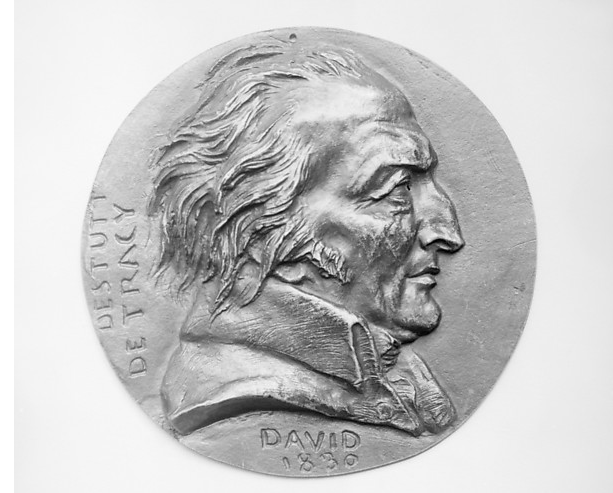
Born on July 20, 1754, Antoine Louis Claude Destutt, comte de Tracy, French philosopher and economist. Perhaps best remembered for coining the term “ideology,” he didn’t mean by that term what scornful Napoleon and communist Karl Marx later turned it into — for Destutt de Tracy ideology meant “the science of ideas,” a unified approach to all knowledge, from epistemology to social theory.
Though his family had been enobled twice, he renounced the title and entered the 1789 Estates General conference as a member of the Third Estate. During the Reign of Terror, he was imprisoned, and would have been executed had not Robespierre got to the scaffold ahead of him.
Two of his books became popular in early 19th century America, his commentaries on Montesquieu’s Spirit of the Laws, and his Traité de la volonté, which Thomas Jefferson, the editor of the American edition, retitled A Treatise on Political Economy. Tracy’s economics was of a deductivist stripe, familiar to readers of later economists such as Nassau Senior and Ludwig von Mises.
Destutt de Tracy’s political philosophy was republican, and his preferred economic policy was laissez-faire.
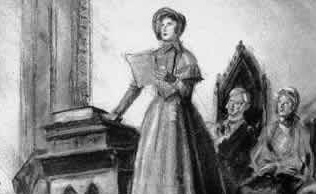
On July 19, 1848, a two-day Women’s Rights Convention opened in Seneca Falls, New York.
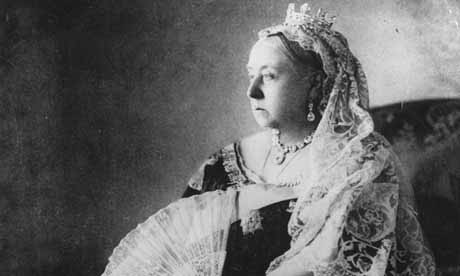
On July 18, 1872, Queen Victoria gave her “Royal Assent” to the Ballot Act, which established secret voting in Great Britain. The bill had been introduced by Prime Minister William Ewart Gladstone — one of the queen’s least favorite prime ministers.

On July 16, 1931, Ethiopia’s Emperor Haille Selassie I signed a new Constitution. Not exactly a model of limited government, the new document proved that the emperor was in keeping with the time, which was a period of weakening constitutional limits in America, Europe, and Britain. A flavor of the document can be gained by its most “rights-oriented” measures:
Art. 22. Within the limits laid down by the law, Ethiopian subjects have the right to pass freely from one place to the other.
Art. 23. No Ethiopian subject may be arrested, sentenced, or imprisoned except in pursuance of the law.
Art. 24. No Ethiopian subject may, against his will, be deprived of his right to be tried by a legally established court.
Art. 25. Except in cases provided for by law, no domiciliary searches may be made.
Art. 26. Except in cases provided by the law, no one shall have the right to violate the secrecy of the correspondence of Ethiopian subjects.
Art. 27. Except in cases of public necessity determined by the law, no one shall have the right to deprive an Ethiopian subject of any movable or landed property which he owns.
Art. 28. All Ethiopian subjects have the right to present to the Government petitions in legal form.
Art. 29. The provisions of the present chapter shall in no way limit the measures which the Emperor, by virtue of his supreme power, may take in the event of war or public misfortunes menacing the interests of the nation.

On July 15, 1976, Jimmy Carter accepted the nomination of the Democratic Party to run for the presidency.
Three years later, as president, he gave his infamous “malaise” speech, in which he focused on energy but did not mention the one thing that actually helped turn the ’70s’ energy crisis around: the phased deregulation of oil prices that had started three months earlier, under his own directive. Instead of touting this deregulatory effort, Carter did the usual politic thing and promised a number of new government programs, extensively ground home a “crisis of confidence” message, and vaguely talked of a spiritual challenge.
The deregulation was startlingly effective, in the long run — though the immediate effect was a rocketing of prices. These high prices presented profit opportunities, and (lo and behold!) domestic production greatly increased, allowing for many, many years of lower prices. Those high prices would have worked better as market signals had not Carter and Congress also established “windfall profits” taxes, to take away those temporary gains to existing business.
Had Carter deregulated prices earlier, he would probably have been re-elected president. Had he emphasized deregulation, he probably would have beat back Ronald Reagan’s free market rhetoric — with actual action.
The price controls had been put in place earlier in the decade by the Republican president at the time, Richard M. Nixon, with the great help of his aides Dick Cheney and Donald Rumsfeld.
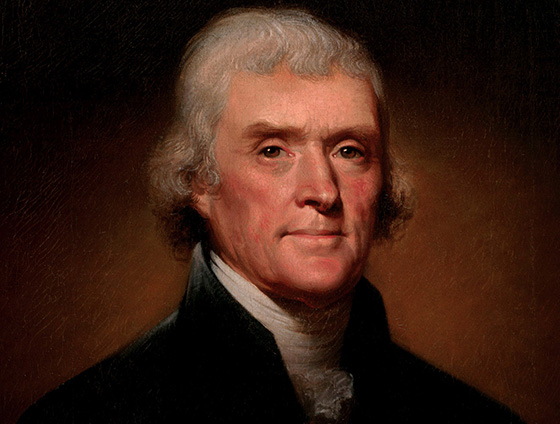
On July 14, 1789, Paris citizens stormed the Bastille. On the same date nine years later, in America, the Sedition Act prohibited the writing, publishing, or speaking false or malicious statements about the United States government.
The passage of this repressive law spurred the formation of the first opposition party in the United States, with Thomas Jefferson [above] as its leader and figurehead.

On July 13, 1973, the minority (Republican) counsel on the Senate Watergate investigative committee, Donald Sanders, asked Nixon aide Alexander Butterfield if he knew of any recordings made in the Nixon White House, and Butterfield responded, “everything was taped” at least while Nixon was in attendance, and that “there was not so much as a hint that something should not be taped.”
This revelation of the Nixon Tapes transformed the Watergate scandal into a major legal as well as political event, and proved to be one of the most astounding examples of “government transparency” in modern times — indeed, it helped demystify and desanctify the Office of the Presidency, a very republican (if not pro-Republican Party) development.
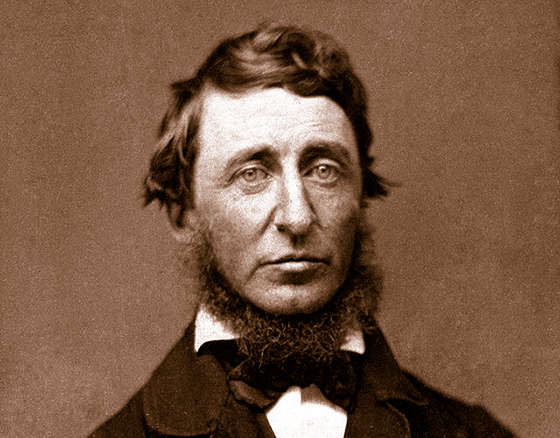
On July 12, 1817, American poet, abolitionist, businessman, and Transcendentalist philosopher Henry David Thoreau was born. He is perhaps best known, today, for his book of meditations on the simple life, Walden, and his influential essay on civil disobedience.