Despite being outnumbered 16 to one, forces of the Old Swiss Confederacy proved victorious over the Archduchy of Austria in the Battle of Näfels, April 9, 1388.
On this date in 1991, Georgia declared its independence from the Soviet Union.
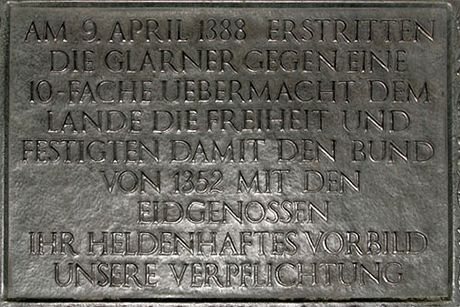
Despite being outnumbered 16 to one, forces of the Old Swiss Confederacy proved victorious over the Archduchy of Austria in the Battle of Näfels, April 9, 1388.
On this date in 1991, Georgia declared its independence from the Soviet Union.

On April 8, 1913, the 17th amendment to the Constitution, providing for the popular election of U.S. senators, was ratified.
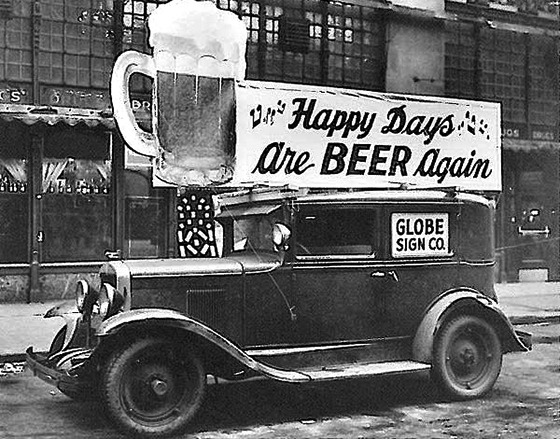
On April 7, 1933, Prohibition in the United States was repealed for beer of no more than 3.2 percent alcohol by weight — eight months before the ratification of the XXI amendment, which repealed the 18th (or Prohibition) Amendment.
The enabling legislation was the Cullen–Harrison Act, which figured the low alcohol content as the excuse to get around the 18th Amendment’s prohibition of intoxicating beverages. The act passed Congress on March 21, 1933, and was signed into law by Franklin Delano Roosevelt the next day.

On April 6, 1930, Mohandas K. Gandhi raised a lump of mud and salt, declaring, “With this, I am shaking the foundations of the British Empire.”
Thus began the Salt Satyagraha.
On April 5, 1792, George Washington exercised the first presidential veto of a congressional bill, a new plan for dividing seats in the House of Representatives, which would have increased the number of seats for northern states. Washington vetoed only one other bill during his two terms in office, an act that would have reduced the number of cavalry units in the army.
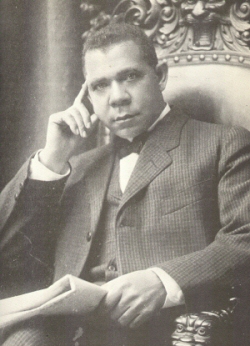
On April 5, 1856, Booker T. Washington, American educator, first leader of the Tuskegee Institute in Alabama, author of 14 books, including his autobiography, “Up From Slavery,” was born a slave in southwestern Virginia. Though Washington faced criticism from leaders of the new NAACP, especially W. E. B. Du Bois, for not protesting the lack of civil rights more strongly, he secretly funded litigation for civil rights cases, such as challenges to southern constitutions and laws that disfranchised blacks.
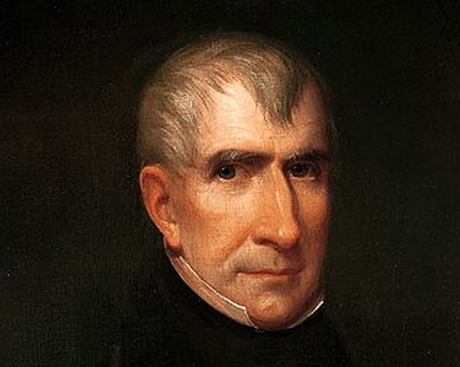
On April 4, 1841, William Henry Harrison died of pneumonia, becoming the first President of the United States to die in office and the one with the shortest term served (he died on his 32nd day as president). A renowned Indian killer (having risen to fame for his part in 1811’s Battle of Tippecanoe), a proponent of the expansion of slavery into Northwest Territories, and a Whig, Harrison won the presidency in part by turning the Democrats’ “log cabin and hard cider” aspersions on his character as the basic symbols of the campaign.
Though hardly a “limited government man,” some limited government history buffs proclaim him the Greatest President, on the ostensibly droll and possibly cynical grounds that he spent so little time in office.
On a much sadder note, Martin Luther King, Jr., was assassinated on this day in 1968.
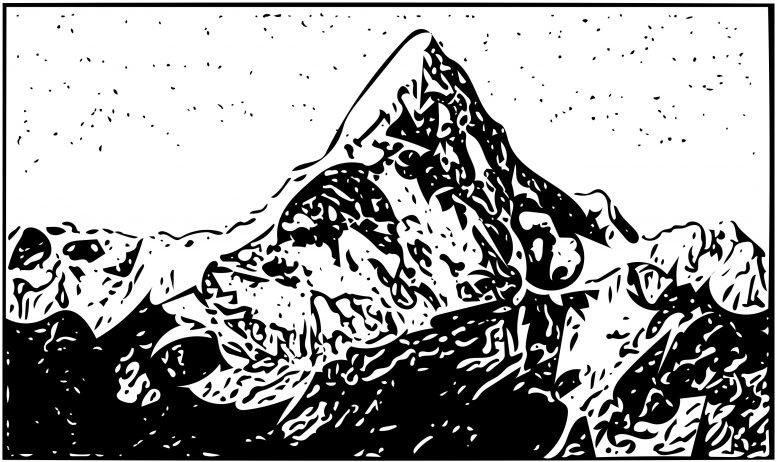
On April 3, 1968, Martin Luther King, Jr., delivered his “I’ve Been to the Mountaintop” speech.
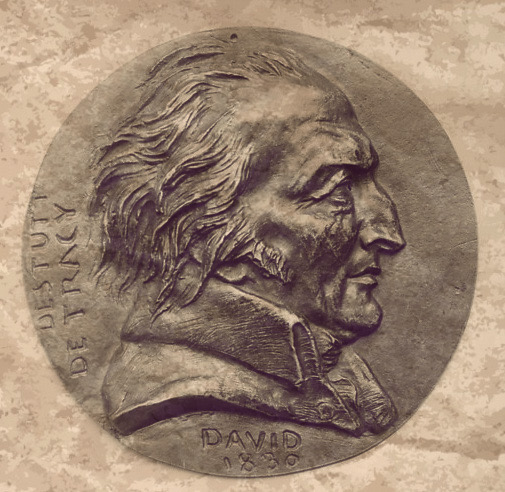
With the Acte de déchéance de l’Empereur (“Emperor’s Demise Act”) of April 2, 1814, France’s Sénat conservateur officially recognized the downfall of Napoléon I of France. The original resolution to remove the Emperor was moved on the legislative body’s floor, by Thomas Jefferson’s friend Destutt de Tracy (according to Tracy himself — official records do not name the member), and was drawn up by Charles Lambrechts. The final paragraph summarized the new reality concisely:
The Senate declares and decrees as follows: 1. Napoleon Buonaparte is cast down from the throne, and the right of succession in his family is abolished. 2. The French people and army are absolved from their oath of fidelity to him. 3. The present decree shall be transmitted to the departments and armies, and proclaimed immediately in all the quarters of the capital.
Nine days later, after attempting to put his son on the throne, Napoléon abdicated unconditionally. The Allies exiled him to Elba, which was to be the whole extent of this reign as “Emperor.”
This arrangement proved unstable, with Napoléon staging a comeback, eventually leading to more war, his defeat at Waterloo, and his exile to an island in the South Atlantic.
American author, art critic, and commentator Camille Paglia was born April 2, 1947.

On April Fools’ Day, 1957, the BBC offered for viewers of the current affairs program “Panorama” the infamous spaghetti harvest report hoax.
By sheer coincidence, one definition of “noodle” is “fool.”
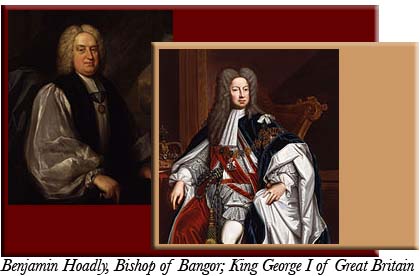
On March 31, 1717, a sermon on “The Nature of the Kingdom of Christ,” by Benjamin Hoadly, the Bishop of Bangor, provoked the Bangorian Controversy.
The sermon’s text was John 18:36, “My kingdom is not of this world,” and from that Hoadly deduced — supposedly at the request of King George I himself, who was present in the assembly — that there was no Biblical justification for any church government. Hoadly identified the church with the kingdom of Heaven, noting that Christ had not delegated His authority to any representative.
King George’s preference for the Whig Party, and for latitudinarianism in ecclesiastical policy, is widely thought to have been a strategic maneuver to degrade church power in political government.