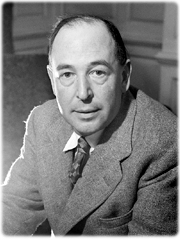
 Of all tyrannies, a tyranny sincerely exercised for the good of its victims may be the most oppressive. It would be better to live under robber barons than under omnipotent moral busybodies. The robber baron’s cruelty may sometimes sleep, his cupidity may at some point be satiated; but those who torment us for our own good will torment us without end for they do so with the approval of their own conscience.
Categories
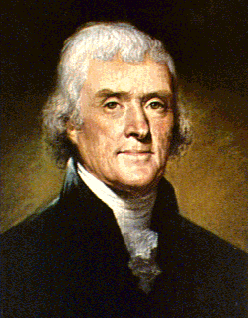 Truth will do well enough if left to shift for herself. She seldom has received much aid from the power of great men to whom she is rarely known & seldom welcome. She has no need of force to procure entrance into the minds of men. Error indeed has often prevailed by the assistance of power or force. Truth is the proper & sufficient antagonist to error.
 Democracy and socialism are not interdependent concepts. They are not only different, but opposing philosophies. Is it consistent with democracy to institute the most meddlesome, all-encompassing and restrictive government, provided that it be publicly chosen and that it act in the name of the people? Would the result not be tyranny, under the guise of legitimate government and, by appropriating this legitimacy assuring to itself the power and omnipotence which it would otherwise assuredly lack? Democracy extends the sphere of personal independence; socialism confines it. Democracy values each man at his highest; socialism makes of each man an agent, an instrument, a number. Democracy and socialism have but one thing in common—equality. But note well the difference. Democracy aims at equality in liberty. Socialism desires equality in constraint and in servitude.
 Political freedom means the absence of coercion of a man by his fellow men. The fundamental threat to freedom is power to coerce, be it in the hands of a monarch, a dictator, an oligarchy, or a momentary majority. The preservation of freedom requires the elimination of such concentration of power to the fullest possible extent and the dispersal and distribution of whatever power cannot be eliminated — a system of checks and balances.
 The inefficiency of political control of an economy has been demonstrated more often, in more places, and under more varied conditions, than almost anything outside the realm of pure science.