Freedom without the strength to support it and, if need be, defend it, would be a cruel delusion.
Jamsetji Tata
Categories
Jamsetji Tata
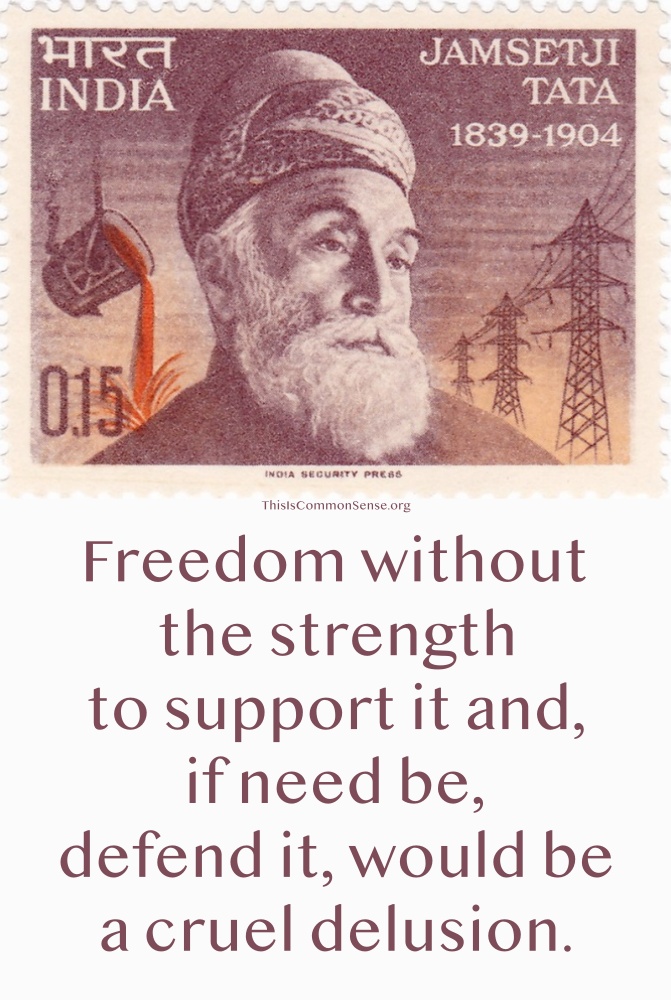
Freedom without the strength to support it and, if need be, defend it, would be a cruel delusion.
Jamsetji Tata

Power dements even more than it corrupts, lowering the guard of foresight and raising the haste of action.
Will & Ariel Durant, The Story of Civilization: The Age of Napoleon (1975), Ch. IV: The Convention: September 21, 1792 – October 26, 1795, Part V: The Reign of Terror: September 17, 1793 – July 28, 1794, § 4: The Revolution Eats Its Children.

As I mentioned before, exposure to true information does not matter anymore. A person who is demoralized is unable to assess true information. The facts tell him nothing, even if I shower him with information, with authentic proof, with documents and pictures. . . . he will refuse to believe it . . . That’s the tragedy of the situation of demoralization.
Yuri Alexandrovich Bezmenov, 1983 interview, as quoted in “38 years ago, a KGB defector chillingly predicted modern America” (July 18, 2018), Big Think.
Picture credit: Yuri Bezmenov — “Original publication: “Black is Beautiful, Communism is Not.” ISBN 0-935090-18-5
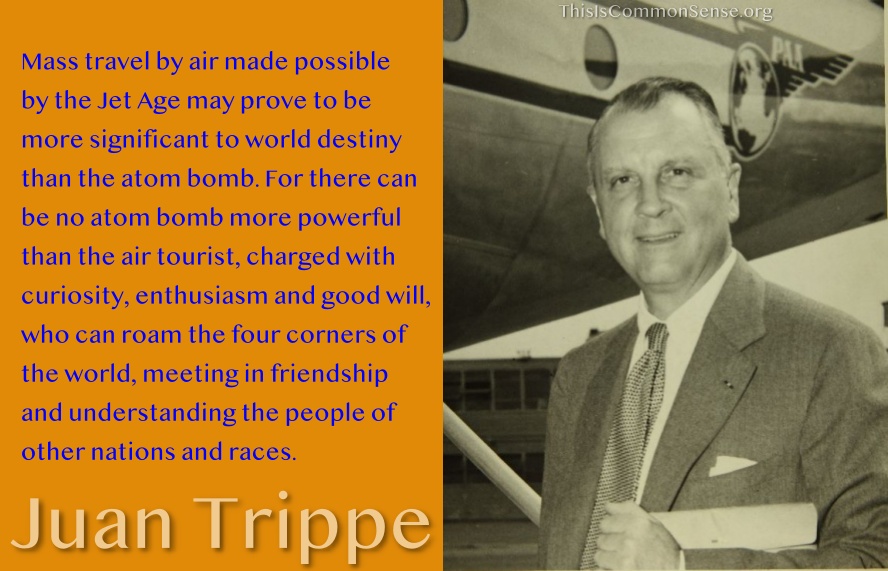
Mass travel by air made possible by the Jet Age may prove to be more significant to world destiny than the atom bomb. For there can be no atom bomb more powerful than the air tourist, charged with curiosity, enthusiasm and good will, who can roam the four corners of the world, meeting in friendship and understanding the people of other nations and races.
Juan Trippe, The Pan Am Story (1958), p. 8.
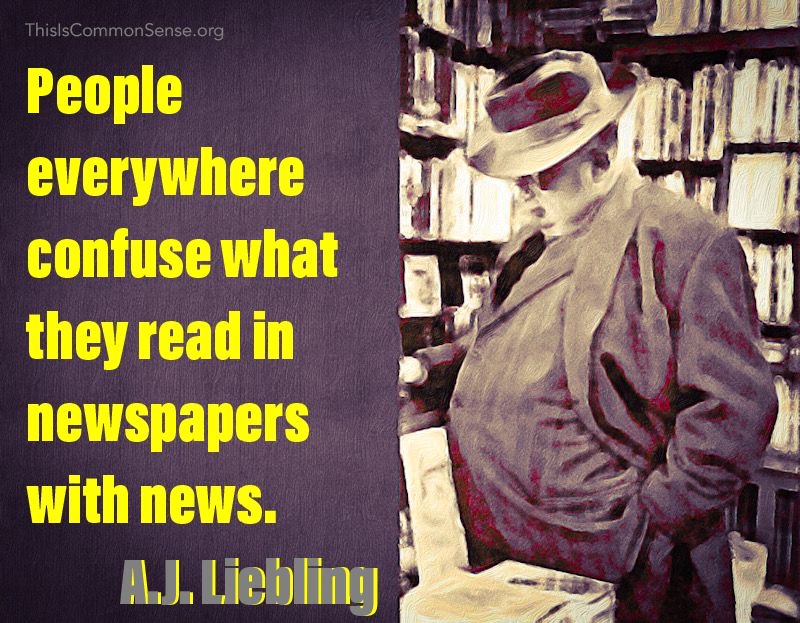
People everywhere confuse what they read in newspapers with news.
A.J. Liebling, The New Yorker (April 7, 1956).

Freedom is the possibility of isolation . . . If you can’t live alone, you were born a slave.
Fernando Pessoa, The Book of Disquiet (Richard Zenith, translator, 2001), text 283.

The only real revolution is in the enlightenment of the mind and the improvement of character, the only real emancipation is individual, and the only real revolutionists are philosophers and saints.
Will & Ariel Durant, The Lessons of History (1968), p. 72.
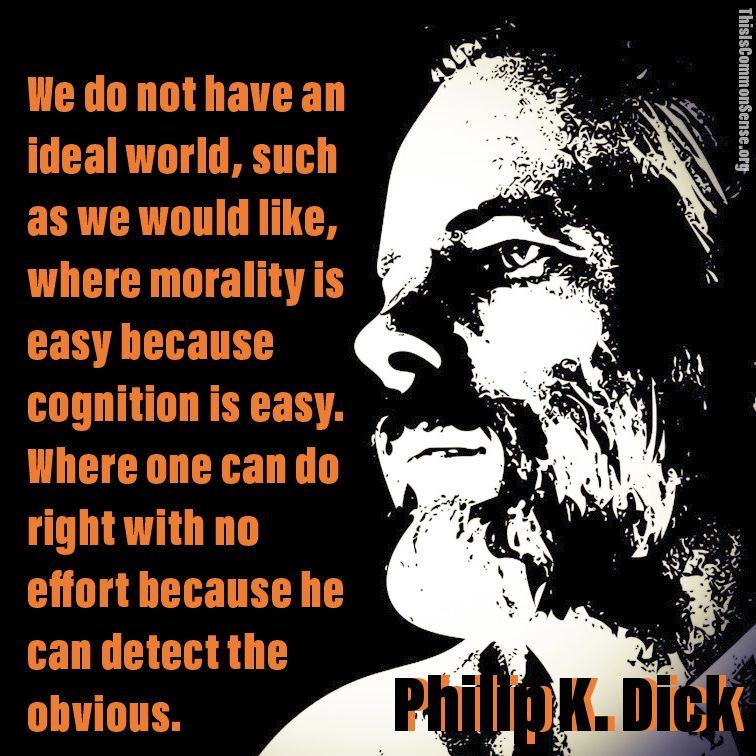
We do not have an ideal world, such as we would like, where morality is easy because cognition is easy. Where one can do right with no effort because he can detect the obvious.
Philip K. Dick, Man in the High Castle (1962).

No intelligent idea can gain general acceptance unless some stupidity is mixed in with it.
Fernando Pessoa, The Book of Disquiet (Richard Zenith, translator, 2001).
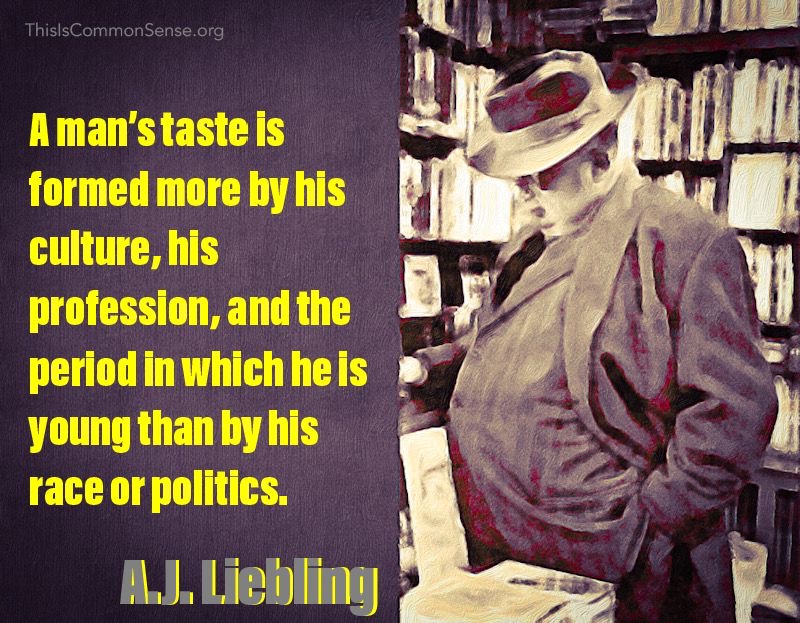
A man’s taste is formed more by his culture, his profession, and the period in which he is young than by his race or politics.
A.J. Liebling, The Road Back to Paris (1988).