There are some things so serious you have to laugh at them.
Author: Redactor
January 25, 1787
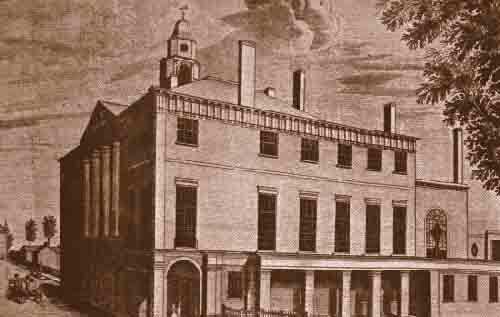
On January 25, 1787, Shays’ Rebellion experienced its largest confrontation, outside the Springfield Armory, with four of the rebels dead, and 20 wounded. The rebellion was a key moment in United States history. Daniel Shays and his followers objected to Massachussetts’ high taxes and rampant cronyism. The revolt, which was completely suppressed, led to the adoption of the U.S. Constitution and drawing George Washington from his retirement.
Townhall: But One Life to Give for My Metro
The DC Metro story is going through its predictable stages of decline and folly. The irrational fanaticism of its supporters is the latest stage.
Click on over to Townhall for an expansion of the story covered here earlier this week. Come back here for the usual extra credit.
- Aaron Wiener in The Washington Post: “Metro’s a mess. All the more reason to ride it”
- Aaron Wiener in The City Paper: “In Deadly Metro Incidents, Lessons Learned (and Not Learned)”
- ABCNews.com: “Smoke-Filled Subway Train Leaves 1 Dead, 84 Hospitalized in Washington”
- Washington Post: “1 dead, dozens hurt after Metro car fills with smoke”
- Washington Post: “Radio communication was nonexistent in smoke-filled Metro tunnel”
- WeLoveDC.com: “NTSB Finds Systemic WMATA Safety Issues From Red Line Crash Investigations”
- Paul Jacob at Townhall: “Profits: A Matter of Life and Death”
Niels Bohr
An expert is a man who has made all the mistakes which can be made, in a narrow field.
Video: Vivisecting Obama’s SOTU
The folks at Cato have something to say about the State of the Union:
Beaumarchais, Jan 24
On January 24, 1732, French playwright, watchmaker, inventor, musician, diplomat, fugitive, spy, publisher, horticulturalist, arms dealer, satirist, financier, and revolutionary (both French and American) Pierre-Augustin Caron de Beaumarchais was born. He proved instrumental in securing armaments for the America Revolution, but remains best known for his three “Figaro” plays, Le Barbier de Séville, Le Mariage de Figaro, and La Mère coupable.
Niels Bohr
Every great and deep difficulty bears in itself its own solution. It forces us to change our thinking in order to find it.*
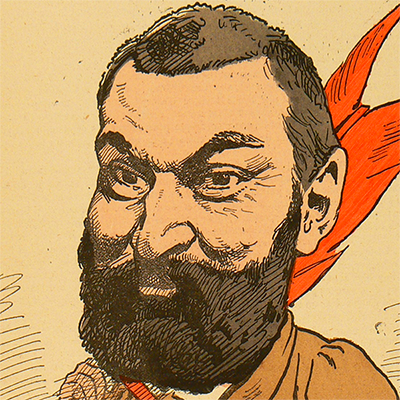
Stendhal, Jan 23
On January 23, 1783, novelist Marie-Henri Beyle, known by his pen name Stendhal, was born. Stendahl was an avid student of the French liberal philosophical tradition, a follower of Destutt de Tracy and an attendant at the count’s salons. His most famous works include the novel “The Red and the Black” and a treatise on romantic love.
On January 23, 1860, the Cobden–Chevalier Treaty was signed between France and Great Britain. The treaty was named after the two main proponents of the agreement, Richard Cobden (in England) and economist Michel Chevalier (in France). The treaty had been suggested the year earlier, in British Parliament, by Cobden’s colleague John Bright, who saw the measure as a peace measure, and an alternate to a military build-up.
Ever have a nightmare . . . about school?
I can’t remember enduring a “dog ate my homework” or “naked in front of the class” dream recently — it’s been a long time since graduation — but economist Bryan Caplan discusses a different variety on EconLog: those nightmares in which one “realizes” that one lacks a credit to have graduated, and so must go back to college, late in life, etc., etc.
Caplan says many people have such unsettling dreams.
More interestingly, he muses that “I’ve never ever heard of someone dreaming about suddenly forgetting whatever job skills they learned in school.”
That is, people worry about trivial infractions of arcane qualifiers for a credential, but people don’t worry about the alleged purpose for going to school and getting credentials: learning something.
This Kafkaesque comedy rests on our “deeply rooted beliefs” that
crossing educational finish lines has a big effect on employability but little effect on job skills. The nightmare isn’t that you suddenly can’t do your job. The nightmare is that you’re the same person you were yesterday, but society throws you into limbo because your papers aren’t in order.
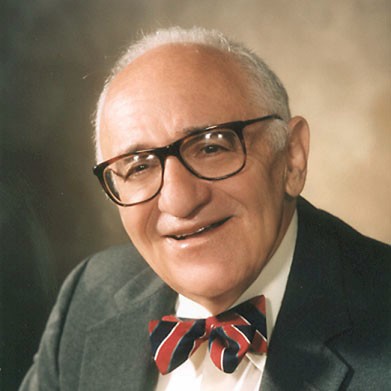
Caplan is writing a book titled The Case Against Education. He argues that we’ve come to rely too much on credentials, that pushing schooling and accreditation has not produced a net benefit to society.
He, a college professor, happily admits that, for bright people who test well, schooling can provide enormous private benefits. But that’s no ground for public subsidy.
Policy should surely encourage increasing skills, not making it easier for some folks to get jobs regardless of skills.
This is Common Sense. I’m Paul Jacob.
You can’t keep a good Eyman down.
“Who says politicians don’t listen?” asked Tim Eyman in a recent email to his Washington State supporters.
“OK, you got me: we normally do. 😉 But not today.”
Pleased as punch, Eyman announced the resurrection of the two-thirds requirement for legislators to raise taxes. Three times voters have passed initiatives promoted by Mr. Eyman mandating a 2/3 legislative vote or a vote of the people before taxes can rise — in 2007, 2010 and again in 2012, the last two times by a whopping 64 percent vote.
But in 2013, the state supreme court ruled voters could not so limit their state legislature, short of a constitutional amendment. And — you guessed it — the Evergreen State lacks a statewide initiative process for voters to amend the constitution . . . without the permission of their legislators.
Eyman was blocked; the voters thwarted. Legislators could go back to raising taxes as usual.
Not so fast!
Enter State Sen. Mike Baumgartner (R-Spokane), who helped motivate a narrow GOP majority to pass a new Senate rule, 26-23, that no new tax may pass the chamber without garnering a 2/3 vote.
Democrats are livid. “Going around the voters is not only disingenuous,” bemoaned Washington State Democrats Chairman Jaxon Ravens, “it is wrong.”
Going around the voters? Really? It must have slipped his mind that “the voters” had previously voted (and been thwarted) three times.
“[H]as the Senate already nullified any attempt by Gov. Jay Inslee to create a carbon emissions charge or a capital gains tax — solely by rearranging its own internal rules?” asked John Strang at Crosscut.com.
Yes is the answer from those pesky voters.
And from their representatives who listen.
This is Common Sense. I’m Paul Jacob.