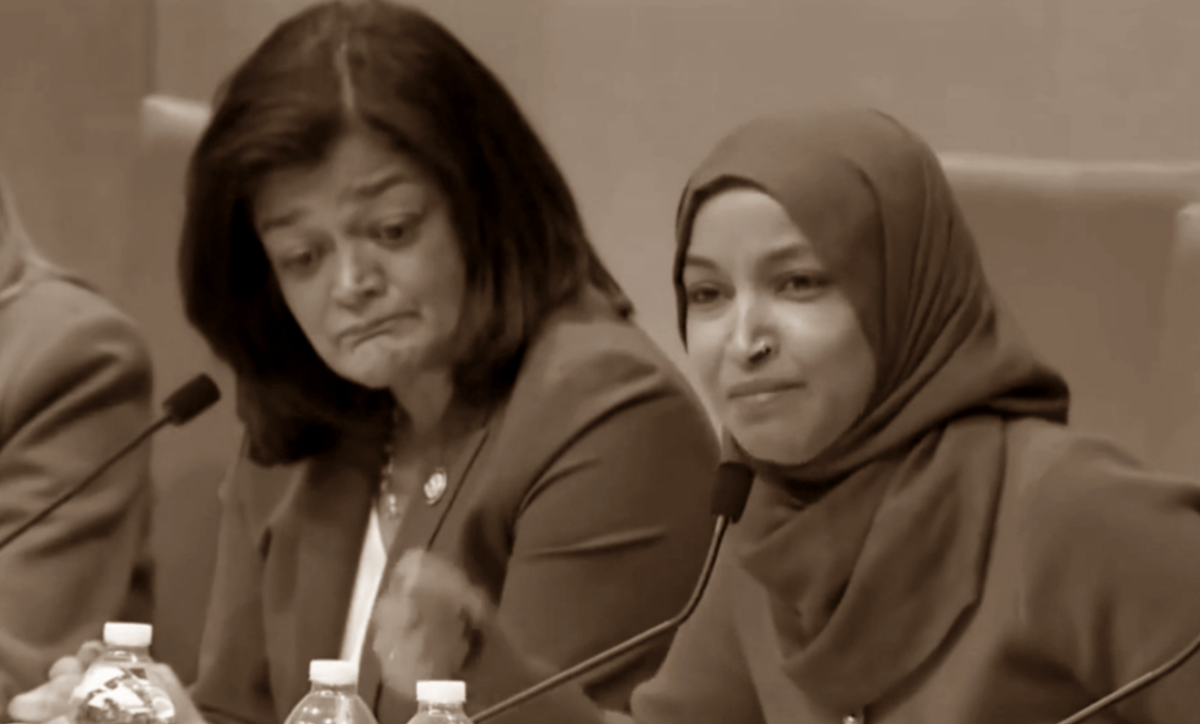
The attitude of Somalian refugees to their United States hosts does not usually, these days, seem like one of gratitude. But then, we cannot expect them to be thrilled with the federales (ICE, actually) arresting, systematically, those Somalians in the country illegally.
Most are legal, considering the mountains moved by politicians to bring them here (starting with the Refugee Act of 1980), but taking sides has largely been a matter of taking sides against, well, “the U.S. ‘god-damned’ States.” A colorful phrasing by Representative to the United States Congress, Ilhan Omar (D-Minn.)
Of course, much of this is about the fraud — about which the Duck.ai search assistant urges caution:
The Somali-American community, particularly in Minnesota, has expressed fear and frustration over recent fraud accusations, feeling that the allegations have led to increased xenophobia and discrimination against them. Community leaders urge individuals to conduct their own research rather than rely on social media narratives that generalize the actions of a few to the entire community.
Consider these bullet points courtesy of Reuters:
- Immigration raids prompt volunteers to share leaflets, accompany elders in Somali community
- Trump invokes fraud scandal to send immigration agents to Minnesota
- Some Somali Americans say they fear immigration raids are bid to suppress future voter turnout
A jaded person might say that these reactions are odd, but human. There is nothing shocking about a refugee crackdown after uncovering what has been reported to be billions of welfare fraud within a refugee community: Many Somali-American immigrants “feared they were being singled out, a worry that revived memories of the state surveillance and arbitrary authority they thought they had left behind when they resettled in the United States.”
This latter point must be at least somewhat dissonant to the meme-obsessed from a decade ago, where Somalia was said to be anarchic, not state-totalitarian. It shows that Somalians have had to weather all sorts of changes. Now, within the U.S., too.
The Reuters article focuses on Kowsar Mohamad, who states that his people, now understandably alarmed by raids and demands for identification, had “just believed the Constitution was going to protect us from this level of interrogation.”
One thing the article does not mention is that the community and its current activists did not think to police their own against illegality, whether that of illegal entry or mass fraud.
One reply on “Refugee Gratitude”
“The American civil rights movement succeeded exactly by persuading a sufficient number of white Americans to act to regulate the behavior of other white Americans; again, it was self-policing. Whites who did no more than insist that not all whites engaged in discrimination were not 𝘵𝘳𝘶𝘭𝘺 part of the problem, but they certainly weren’t part of the solution, and they 𝘰𝘶𝘨𝘩𝘵 to have been.“And likewise for those in other groups who, instead of self-policing, will merely self-righteously insist that the problematic behavior from within their group is not universal to its members. They are not truly part of the problem, but they certainly aren’t part of the solution, and they 𝘰𝘶𝘨𝘩𝘵 to be. Although a people may be not only technically but meaningfully civilized without self-policing, a society or culture that lacks self-policing is none-the-less less civilized than one with self-policing. And, while we are not entitled to 𝘧𝘰𝘳𝘤𝘦𝘢𝘣𝘭𝘺 compel other people in-or-outside of our own culture to self-police, we are entitled to demand such in non-coërcive ways, and to look with contempt upon people or peoples who do not self-police.”